
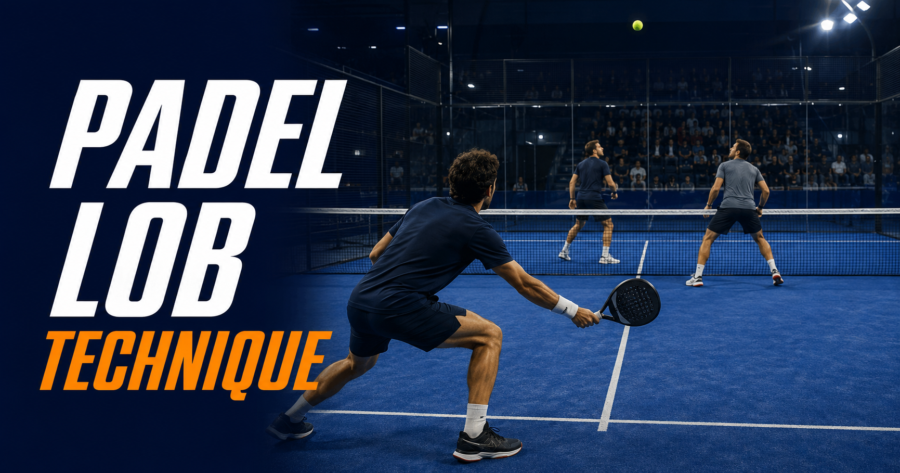
The lob in padel is a controlled high shot played over opponents who are occupying the net. A successful lob lands deep enough to make them retreat, buys your team time and may create an opportunity to take the attacking position.
Although the lob is often associated with defense, it is not merely an emergency shot. It can also be used proactively from a comfortable ball to change the pace, disrupt the opponents’ positioning and turn a neutral rally into an attacking opportunity.
The challenge is combining height with depth. A high ball that lands short gives the opponent time to prepare an overhead, while a deep ball without enough height may be intercepted before it passes them.
What Is a Lob in Padel?
Known as a “globo” in Spanish, the lob is played with an upward trajectory so the ball passes over the net players and lands toward the back of their court. It can be hit from the forehand or backhand side, directly after the bounce or after the ball rebounds from the glass.
The immediate goal is usually to move the opponents away from the net. Once they turn or retreat, your team may have time to recover its defensive formation or move forward and claim the space they have vacated.
A lob does not need to win the point directly to be successful. If it forces an opponent to play a difficult overhead from farther back, it has already improved your position in the rally.
Why the Lob Is So Important in Padel
The net is the main attacking area in padel. Players positioned there can contact the ball earlier, volley downward and reduce the amount of court available to their opponents.
The lob challenges that advantage by sending the ball beyond their comfortable volleying range. It forces them to move backward, play an overhead or allow the ball to bounce and use the back glass.
This makes the lob one of the main ways to transition from the back court toward the net. However, it creates an opportunity rather than guaranteeing that transition. Skilled opponents may still respond with a controlled overhead and retain their attacking position.
Defensive Lob vs Attacking Lob
The basic technique is similar, but the intention and trajectory change according to the situation.
| Type of lob | Typical situation | Trajectory | Main objective |
|---|---|---|---|
| Defensive lob | You need time to recover or neutralize pressure | Higher and slower, with more margin | Reset the rally and improve your defensive position |
| Attacking lob | You are balanced and see space behind the net players | More direct while still safely clearing them | Force a retreat and take the net |
| Return lob | The serving pair is moving forward | Depends on the difficulty of the serve | Prevent the server from establishing an easy net position |
A defensive lob should still be purposeful. Simply sending the ball extremely high is not enough if it lands in the middle of the court.
An attacking lob requires a comfortable incoming ball and greater accuracy. Because its trajectory is usually more direct, the margin above the opponent is smaller and the risk of interception is higher.
When to Use the Lob
Both Opponents Are Close to the Net
This is the clearest opportunity. The closer the opponents move toward the net, the more space they leave behind them and the farther they must travel to reach a deep lob.
Look at their position before starting the swing. If one player has already moved backward in anticipation, consider targeting the other side or selecting a different shot.
You Have a Balanced Contact Point
The most reliable lobs come from balls that give you enough time to position your feet, bend your knees and contact in front. A slower ball or a manageable rebound from the back glass can provide this opportunity.
Being in the back court does not automatically mean you should lob. If you are stretched, falling backward or making contact late, a forced lob is likely to land short.
You Need Time to Recover
A higher defensive lob slows the rally and gives you and your partner time to reorganize. This is useful after being pulled wide or when the opponents have established sustained pressure at the net.
You still need enough control to send the ball beyond their comfortable overhead position. If the incoming ball is too difficult, keeping the next shot low and extending the rally may be safer.
An Opponent Struggles With Overheads
Directing repeated lobs toward a weaker overhead can create errors or force conservative replies. Consider the opponent’s movement, preferred side and ability to play shots such as the bandeja or vibora.
Do not become predictable. An opponent who knows the next ball will be a lob can begin retreating before you make contact.
You Receive a Manageable Serve
The serving pair normally moves forward after the serve, making the return lob an important option. An accurate lob can pass the advancing server and prevent the pair from settling comfortably at the net.
Against a difficult serve that pushes you into the side glass or jams your body, a simple blocked return may be safer. Do not force a precise lob from a poor contact point.
When Not to Play a Lob
Avoid automatically lobbing whenever you feel defensive. The shot becomes dangerous when you cannot control its height and depth.
A lob is usually a poor choice when:
- You are stretched and reaching away from your body.
- You are falling backward or contacting the ball late.
- An opponent has already retreated and is waiting for an overhead.
- Strong wind makes the intended trajectory difficult to control.
- The ball is so low or fast that you cannot establish a stable racket face.
- Your partner is not prepared to move or recover with you.
If there is space around the net players’ feet but insufficient room over their heads, a controlled chiquita may be the better transition shot.
How to Hit a Lob in Padel Step by Step
1. Read the Opponents Early
Check the positions of both net players before committing to the lob. Identify who is closer to the net, who is moving and which side offers the most available space.
Making the decision early allows you to prepare smoothly. A late change from a drive to a lob often produces an unstable racket face and poor depth.
2. Move Into a Balanced Position
Use small adjustment steps to create enough space between your body and the ball. Bend through the knees while keeping your upper body stable.
Avoid leaning backward to manufacture height. The upward trajectory should come from the swing path and racket face, not from losing your balance.
3. Use a Compact Preparation
The preparation should initially resemble a controlled groundstroke. Turn your shoulders, take the racket back and keep the movement compact enough to preserve touch.
The continental grip is a practical default because it makes an open racket face easier to control. Players with established padel forehand and backhand fundamentals may make small grip adjustments, provided they can maintain a stable face through contact.
4. Set the Racket Below the Ball
Position the racket below the intended contact point so you can swing upward and forward. The exact distance depends on the ball’s height, pace and the trajectory you want to create.
Do not drop the racket excessively or attempt to scoop directly underneath the ball. That makes depth harder to judge and can send the lob almost vertically.
5. Open the Racket Face Moderately
The racket face must be open enough to create height but stable enough to control distance. There is no single angle that works for every lob.
A low contact generally requires more lift than a higher, slower ball. Excessively opening the face can send the ball long, especially when the incoming shot already carries significant pace.
6. Contact the Ball in Front
Meet the ball in front of your body at a height that allows a comfortable upward swing. Keep your grip relaxed enough to control the incoming pace without allowing the racket to twist.
Forehand and backhand lobs follow the same principle. Do not run around the backhand if doing so leaves you late or pulls you away from your correct court position.
7. Swing Smoothly Up and Toward the Target
Guide the racket upward and forward rather than accelerating suddenly. The shot requires controlled lift, not maximum racket-head speed.
Use your legs and arm together while keeping the movement continuous. Abruptly straightening the entire body often causes inconsistent contact and makes the lob difficult to disguise.
8. Finish High
Allow the racket to finish high and in the direction of the target. A controlled follow-through supports the desired trajectory and prevents you from stopping the swing at contact.
Remain balanced after the finish. You should be able to move immediately in response to the opponent’s position.
Should a Padel Lob Be Flat or Hit With Spin?
Spin is less important than height, depth and control. A neutral or lightly spun lob is sufficient for most players and is usually the easiest version to repeat under pressure.
Light topspin can help an attacking lob dip toward the back of the court, but it requires additional racket-head speed and precise timing. If the spin attempt reduces your control, return to a simpler contact.
Light underspin may slow the ball and change its rebound, but excessive slicing can make the lob float or land short. Avoid treating heavy spin as a requirement for an effective shot.
Where Should You Aim the Lob?
Crosscourt
The diagonal provides more court length, giving you additional space in which to combine height and depth. This often makes the crosscourt lob the most forgiving option.
However, a predictable crosscourt ball may allow an opponent to move early and prepare a comfortable overhead. Use the available court, but continue reading the opponents rather than following a fixed pattern.
Down the Line
The down-the-line lob has less distance available and therefore requires more precise depth control. Its advantage is that it can pass close to the side fence, potentially making the opponent’s overhead positioning more difficult.
Choose it when the line is clearly available or when the nearest opponent has moved too far toward the middle. Missing slightly long or wide remains a greater risk than on the diagonal.
Through the Middle
The middle provides a large target and can create hesitation between the opponents. It may also reduce the angles available on their next overhead.
A central lob is not automatically harmless, however. If it rebounds high and comfortably from the back glass, the opponent may be able to attack with a bajada.
Over the Weaker Overhead
When possible, direct the lob toward the player with less confident overhead technique or slower backward movement. This can produce a safer reply even if the ball does not reach perfect depth.
Consider the player’s court side as well as whether the lob reaches their forehand or backhand overhead area. The best target changes according to the opponents’ strengths.
How Deep Should the Lob Land?
The ideal lob lands deep enough to move the opponent away from the net without carrying beyond the court. There is no universal landing point because the correct depth depends on the ball’s height, spin, direction and the opponent’s position.
A lob that lands around the middle of the court is often vulnerable. The opponent can move underneath it and attack with a smash, vibora or controlled bandeja while attempting to retain the net.
A deeper lob may force the opponent to let the ball bounce and play it after the glass. This is generally a better result, although a ball that rebounds high and slowly can still provide an attacking opportunity.
Height must support depth. Sending the ball higher gives it more time to travel downward, but a high lob that lands short remains easy to attack.
What to Do After Hitting the Lob
Watch the opponent rather than admiring the ball’s flight. Their movement and preparation will tell you whether to advance or defend.
If the lob passes them and forces a genuine retreat, move forward with your partner while the ball is travelling. Stop and split-step before the opponent makes contact so you are ready for the next shot. Once you establish the attacking position, reliable padel volley technique becomes essential.
If the opponent is balanced underneath the ball and preparing an aggressive overhead, do not continue charging forward. Hold a position from which you can defend the likely reply.
The two partners must make the same positional decision. Calling the lob before or immediately after contact helps both players react together, which is an important part of working effectively with your padel partner.
Playing a Lob After the Back Glass
The back glass often creates a good lobbing opportunity because the rebound reduces the ball’s pace and gives you time to organize. Move away from the wall early enough to create a comfortable contact point in front of your body.
Do not stand too close to the glass or rush toward the ball immediately after the rebound. Track its direction, allow it to move into your hitting area and establish your balance before beginning the upward swing.
If the rebound remains low or stays close to the wall, prioritize keeping the rally alive. Attempting a delicate lob without enough space can leave the ball short for the opponents.
Adjusting the Lob Outdoors
Wind has a greater effect on a lob than on a lower shot because the ball remains in the air longer. A following wind may carry the ball deeper than expected, while a headwind may hold it up and cause it to land short.
Crosswinds can move the ball away from the intended line. Use the warm-up to judge the conditions, select larger targets and avoid relying on the same swing in every direction.
Sun and lighting can make overhead tracking more difficult for an opponent, but they do not compensate for a poor lob. Continue prioritizing safe height and depth rather than assuming the conditions will force an error.
Common Lob Mistakes
Lobbing While Off Balance
A player who is stretched or falling backward cannot control the racket face consistently. Recover around the ball before attempting the shot or choose a lower-risk defensive reply.
Producing Height Without Depth
An extremely high ball can still become an easy overhead if it lands short. Swing upward and toward the target instead of sending the racket almost vertically.
Hitting Too Flat
A flat trajectory may not clear the opponent’s reach. Lower the racket before contact, use a smoother upward path and finish higher.
Opening the Racket Face Too Much
An excessively open face can send the ball long or make it vulnerable to wind. Adjust the face according to the incoming ball rather than using the same angle every time.
Scooping With the Wrist
A sudden wrist movement makes both direction and distance unpredictable. Keep the wrist stable and produce lift through the complete swing path.
Standing Up During Contact
Straightening abruptly can pull your body away from the ball and disturb the racket face. Maintain your balance while the legs assist the upward movement.
Repeating the Same Direction
Consistently lobbing toward one opponent allows that player to anticipate and retreat early. Change direction when the match situation provides a suitable target.
Advancing Behind a Poor Lob
Moving forward behind a short lob exposes your team to an aggressive overhead. Judge the quality of the shot before deciding whether to take the net.
Drills to Improve Your Padel Lob
Deep Target Drill
Create large target zones toward both back corners. Have a partner feed comfortable forehand and backhand balls while you alternate between the targets.
Prioritize reaching the deep area with safe height before attempting smaller targets. Record how many balls land deep without going out.
Lob-and-Advance Drill
Begin with two players defending from the back and two at the net. The defenders play a lob and advance only when it forces the net team to turn or retreat.
If the lob is short, the defenders must recognize the danger and remain back. This trains the decision after the shot as well as the technique itself.
Back-Glass Lob Drill
Ask a partner to feed balls that bounce and rebound from the back glass. Move into position, allow the ball to enter a comfortable hitting zone and play the lob from a balanced base.
Alternate between forehand and backhand rebounds. Avoid turning every feed into a lob if the simulated contact is too difficult.
Lob-or-Chiquita Decision Drill
Have the net players change their distance from the net before each feed. Play a lob when they move close and leave space behind them. Use a chiquita when they stand farther back and leave space around their feet.
The purpose is to connect the shot with the opponent’s position instead of practising it as an isolated movement.
Return-of-Serve Drill
Alternate serves toward the middle, body and side glass. The receiver chooses between a lob and a controlled block according to the quality of the contact.
Move forward only behind a return that genuinely forces the serving pair backward. This develops realistic return selection rather than encouraging a lob on every serve.
Frequently Asked Questions
How High Should a Padel Lob Be?
It should clear the opponent’s reach comfortably while still landing deep inside the court. There is no exact universal height because the required trajectory changes with the opponent’s position, reach and movement.
Is a Padel Lob Defensive or Attacking?
It can serve both purposes. A defensive lob buys recovery time, while an attacking lob is played from a better position with the intention of moving forward and taking the net.
Is Crosscourt Always the Best Direction?
No. Crosscourt normally provides more distance and margin, but down-the-line and middle lobs can be effective when the opponents’ positions make those targets available.
Should You Always Run to the Net After a Lob?
No. Advance when the lob forces the opponents to turn or play from a compromised position. Hold or recover when they can attack the ball comfortably.
Can Beginners Learn the Lob?
Yes. Beginners should start with a simple, controlled version using a stable racket face, smooth upward swing and large deep target. Consistent height and depth are more useful than adding spin or attempting aggressive trajectories.