
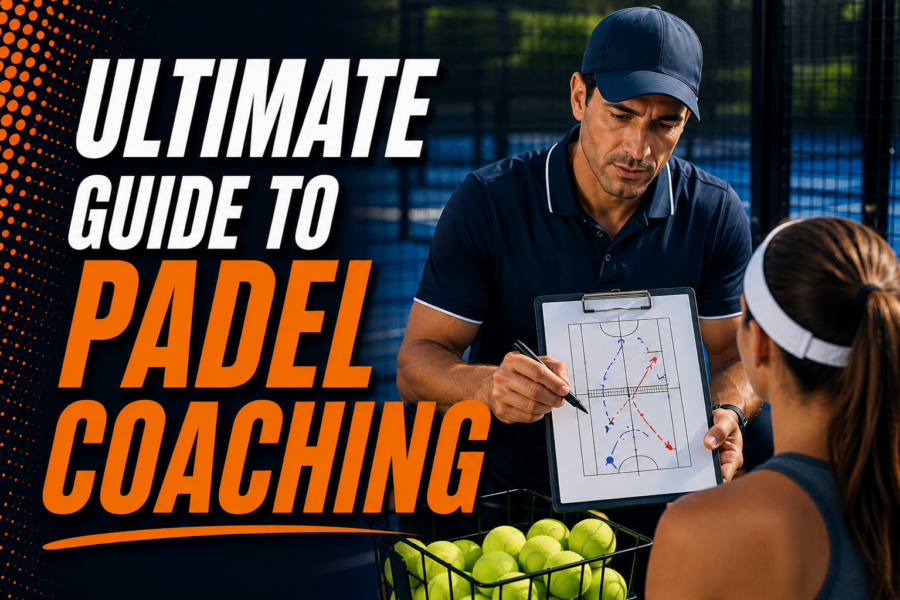
Padel coaching is one of the fastest ways to improve your game, whether you’re completely new to the sport or already competing in tournaments. While simply playing more matches will help you gain experience, a qualified coach can identify weaknesses, improve your technique, develop your tactical awareness, and help you progress much faster than practicing alone.
Because padel is a highly tactical sport that relies on positioning, teamwork, and smart shot selection, coaching can have an even greater impact than many players realize. Learning the correct fundamentals early helps you avoid bad habits while giving you the confidence to play more effectively in every match.
This guide covers everything you need to know about padel coaching, including the different lesson formats, how to choose the right coach, what to expect during training, how coaches improve your game, and even how to become a padel coach yourself.
What Is Padel Coaching?
Padel coaching is the structured process of helping players improve their technical skills, tactical understanding, movement, communication, and overall performance on the court. While many people associate coaching with practicing shots, a coach’s role extends far beyond teaching forehands and backhands.
A good padel coach evaluates your strengths and weaknesses, designs lessons based on your goals, and provides immediate feedback that helps you improve more efficiently.
Since padel is almost always played in doubles, coaching also focuses heavily on positioning, teamwork, communication, and decision-making. Understanding where to move, when to attack, and how to work with your partner often has a bigger impact than simply hitting harder.
To learn more about everything coaches do both on and off the court, read The Role of a Coach.
Why Padel Coaching Is Important
Many recreational players improve simply by playing matches, but structured coaching helps eliminate guesswork and speeds up development considerably.
One of the biggest advantages is learning proper technique from the beginning. Correct grips, movement patterns, volleys, bandejas, viboras, and wall play become much easier when they’re taught correctly from the start.
Coaches also teach players how to think tactically. Since padel rewards patience and positioning more than outright power, understanding strategy often produces larger improvements than technical changes alone.
Another benefit is consistent feedback. Instead of wondering why you’re losing points, a coach can identify recurring mistakes and provide drills specifically designed to correct them.
Regular lessons also help maintain motivation and accountability, making it easier to practice consistently and track your progress over time.
If you’re wondering whether coaching is absolutely necessary, our guide on Can You Improve Without a Padel Coach? explores the advantages and limitations of learning on your own.
Types of Padel Lessons
Different coaching formats suit different players, budgets, and goals.
Private Lessons
Private lessons provide one-on-one instruction with complete focus on your individual development. Every drill and correction is designed specifically for your game, making private coaching the fastest way to improve.
Players preparing for tournaments or trying to fix technical issues often benefit most from private coaching.
If you’re unsure whether they’re worth the investment, read Are Private Padel Lessons Worth It?
Group Lessons
Group lessons combine coaching with social interaction. Players practice together while participating in drills, games, and match situations that simulate real competition.
Although individual attention is reduced compared to private lessons, group coaching provides excellent value and allows players to develop teamwork and tactical awareness.
For a full comparison, see Group Lessons vs Private Coaching: A Comparison.
Competitive Training
Competitive players usually train in smaller groups or private sessions that emphasize advanced tactics, positioning, transitions, communication, and match preparation.
How to Choose the Right Padel Coach
Choosing the right coach can have a significant impact on how quickly you improve.
Start by identifying your goals. Some coaches specialize in complete beginners, while others focus on competitive players or juniors. Finding someone whose experience matches your ambitions will usually produce better results.
Communication is equally important. A coach should explain concepts clearly, provide constructive feedback, and create an enjoyable learning environment where players feel comfortable making mistakes.
Watching a lesson before committing can also be valuable. Observe how organized the coach is, how much feedback players receive, and whether drills are purposeful rather than repetitive.
Lesson availability, pricing, and coaching style should also be considered before making your decision.
Padel Coaching for Different Skill Levels
Padel coaching changes as players gain experience, ensuring lessons remain challenging and productive.
Beginners
Beginners focus on learning the rules, scoring, grips, movement, serves, volleys, and basic positioning. Coaches emphasize consistency and confidence rather than power.
Intermediate Players
Intermediate players refine technique while developing tactical awareness, better court positioning, and improved communication with their partner. Lessons include more realistic match situations and advanced shot selection.
Advanced Players
Advanced players work on maximizing strengths, improving strategic decision-making, and preparing for tournaments. Coaches often use video analysis, match reviews, and highly specific drills to improve performance.
Competitive Juniors
Junior players benefit from structured long-term development that combines technical skills, tactical understanding, athletic development, and mental preparation.
Padel Coaching Equipment
Professional coaching relies on quality equipment to create effective training sessions.
Essential items include padel balls, baskets or hoppers, cones, agility ladders, training targets, and ball carts. These tools help coaches organize drills while improving movement, consistency, and shot accuracy.
Many coaches also use video analysis and performance-tracking apps to evaluate player development more objectively.
For a complete checklist, see Essential Equipment Every Tennis and Padel Coach Should Own.
Can You Practice Padel by Yourself?
Yes, many players improve simply by playing regularly with friends, studying professional matches, and practicing independently.
However, self-learning has limitations. Without experienced feedback, technical mistakes and poor tactical habits can become difficult to correct later.
Players who consistently record matches, analyze their positioning, and deliberately practice specific skills can still improve significantly, especially at the recreational level.
Even so, coaching remains the quickest route to long-term improvement because it provides personalized instruction, structured practice, and immediate feedback.
For a deeper comparison, read Can You Improve Without a Padel Coach?
Common Coaching Mistakes
Players sometimes slow their own improvement despite having an excellent coach.
Expecting immediate results is one of the most common mistakes. Padel requires repetition before new techniques become automatic.
Many players also fail to practice between lessons, making it difficult to build lasting improvements.
Others focus too heavily on winning practice games instead of applying new techniques or tactical concepts introduced by their coach.
Ignoring positioning, poor communication with partners, and constantly changing coaches are additional mistakes that often delay progress.
Learn more in Common Coaching Mistakes in Padel.
Becoming a Padel Coach
Padel coaching has become an increasingly attractive career as the sport continues to grow worldwide.
Successful coaches combine technical knowledge with excellent communication, patience, leadership, and strong organizational skills.
Most begin by obtaining recognized coaching certifications before gaining experience through clubs, academies, or private lessons.
Career opportunities include coaching recreational players, competitive juniors, adults, or building an independent coaching business.
If you’re interested in coaching professionally, read How to Become a Padel Coach and How Much Do Padel Coaches Make?
Final Thoughts
Padel coaching offers one of the fastest and most effective ways to improve your game. From building solid technical foundations to mastering doubles tactics and developing mental resilience, a good coach provides the structure and feedback needed to reach your full potential.
Whether you’re completely new to padel, aiming to compete in tournaments, or considering a coaching career yourself, investing in quality coaching can dramatically accelerate your progress and make the game even more enjoyable.
FAQ
Is padel coaching worth it?
Yes. Personalized instruction helps players improve technique, positioning, tactics, and decision-making much faster than self-learning.
How often should I take padel lessons?
Most recreational players improve with one lesson per week, while competitive players usually train multiple times each week. Read How Often Should You Take Padel Lessons? for more guidance.
Are private lessons better than group lessons?
Private lessons provide personalized instruction, while group lessons offer excellent value and realistic doubles practice. The best choice depends on your goals and budget.
Can adults start padel coaching?
Absolutely. Padel is suitable for players of all ages and experience levels.
How long does it take to improve?
Most players notice meaningful improvements within a few months when combining regular coaching with consistent practice.
Do professional padel players have coaches?
Yes. Professional players work with coaches throughout their careers to improve technique, tactics, fitness, and tournament preparation.