
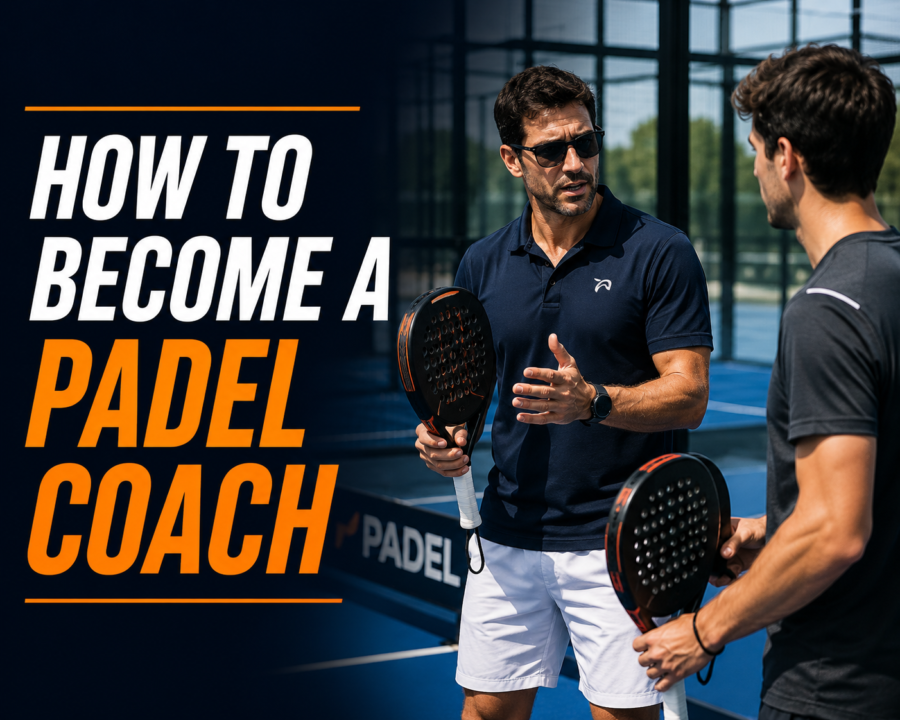
For many padel players, there comes a point when simply stepping onto the court for a few matches each week isn’t enough. They want to share their passion for the sport, help others improve, and play a bigger role in the growth of padel. That’s where coaching becomes the next natural step.
Becoming a padel coach is about much more than teaching players how to hit a better bandeja or vibora. Every lesson gives you the opportunity to build confidence, improve tactical awareness, and help players enjoy the game even more. Whether you’re working with complete beginners or experienced competitors, your guidance can make a lasting impact on their development.
The great thing about becoming a padel coach is that you don’t need to have competed on the professional tour. While playing experience is valuable, successful coaches are defined by their ability to teach, communicate, motivate, and adapt their lessons to every player they work with.
In this guide, you’ll learn the steps required to become a padel coach, from building your understanding of the game and earning coaching certifications to gaining practical experience and developing the skills needed for a successful coaching career.
What Does a Padel Coach Actually Do?
Many people picture a padel coach standing beside the court feeding balls while players practice volleys or overheads. Although that’s certainly part of the job, coaching involves much more than running drills.
A padel coach helps players improve technically, tactically, physically, mentally, and emotionally. Every training session should move players closer to their goals, whether that’s learning the fundamentals, competing in local tournaments, or reaching an advanced competitive level.
Unlike many other racket sports, padel places enormous importance on tactics, teamwork, and decision-making. Coaches spend just as much time teaching positioning, communication, and shot selection as they do correcting technique. Helping players understand when to attack, when to defend, and how to work effectively with a partner is a major part of the job.
The coach’s responsibilities also change depending on the player’s level. Beginners usually need help with grips, basic strokes, court positioning, and understanding how to use the glass. More experienced players often focus on advanced tactics, match analysis, partner communication, and improving consistency under pressure.
Outside of coaching sessions, padel coaches prepare lesson plans, analyze matches, organize clinics, communicate with players, and continue developing their own coaching knowledge. Much of their work happens before players even step onto the court.
A Typical Padel Coach’s Responsibilities
| Responsibility | Examples |
|---|---|
| Teach technique | Forehands, backhands, volleys, bandejas, viboras and smashes |
| Develop tactics | Positioning, transitions, shot selection and doubles strategy |
| Plan training sessions | Design drills based on player goals |
| Improve teamwork | Teach communication and partner coordination |
| Analyze performance | Review matches and identify areas for improvement |
| Create a positive environment | Encourage learning, confidence and sportsmanship |
More Than Teaching Padel
Every player learns differently. Some need detailed technical instruction, while others improve more quickly through repetition and simple feedback. Great coaches understand these differences and adapt their coaching style instead of following the same approach for everyone.
A coach’s ability to motivate players, build trust, and communicate clearly is often just as valuable as their technical knowledge.
Key Takeaway: A great padel coach doesn’t simply teach better shots. They help players become smarter, more confident, and more complete competitors.
Step 1: Build a Strong Understanding of Padel
Before you can coach padel, you need to understand every aspect of the game. That means far more than knowing how to hit every shot. Great coaches understand why techniques work, how tactics influence rallies, and how players develop over time.
Padel is a tactical sport where positioning and decision-making often matter just as much as technical ability. Coaches need to recognize why players lose points, identify weaknesses in their game, and design training sessions that solve those problems.
Building this knowledge takes time. It comes from playing regularly, watching high-level matches, studying experienced coaches, and continually learning about the sport.
Every Padel Coach Should Understand
✅ Stroke technique and biomechanics
✅ Forehands, backhands and volleys
✅ Bandejas, viboras and smashes
✅ Wall shots and glass play
✅ Court positioning and movement
✅ Doubles tactics and formations
✅ Rules and scoring
✅ Padel equipment
✅ Mental preparation
✅ Injury prevention and recovery
Padel Is Constantly Evolving
Padel has become one of the fastest-growing sports in the world, and the way it’s played continues to evolve. Professional players are constantly introducing new tactical ideas, training methods, and technical innovations that influence the sport at every level.
Successful coaches stay ahead by watching professional tournaments, attending coaching seminars, reading educational resources, and learning from experienced coaches.
Pro Tip: Great padel coaches don’t just know how to teach a bandeja or vibora. They understand why each shot is used, when it’s the right choice, and how to teach it to players with different abilities.
Step 2: Improve Your Own Playing Ability
One of the biggest misconceptions about coaching is that you need to be a professional player before teaching others.
That’s simply not true.
Many excellent padel coaches have never competed on the professional tour, while some outstanding players struggle to explain techniques or adapt their coaching to different personalities. Playing ability helps, but coaching is a completely different skill.
That said, improving your own game remains one of the best ways to become a better coach.
Playing regularly helps you understand the challenges your future players will face. You’ll experience difficult opponents, tactical adjustments, pressure situations, communication with partners, and the importance of making smart decisions during long rallies.
Myth vs Reality
| Myth | Reality |
|---|---|
| You must play professionally to become a coach. | ❌ False |
| Playing experience helps you understand the game better. | ✅ True |
| Great players automatically become great coaches. | ❌ False |
| Coaching requires communication as much as padel knowledge. | ✅ True |
While becoming the best player you can is always beneficial, your ability to teach, motivate, and develop others will ultimately determine how successful you become as a coach.
Remember: Players aren’t looking for the coach with the highest ranking. They’re looking for the coach who can help them improve.
Step 3: Earn a Coaching Certification
Although you can begin coaching informally, earning a recognized coaching certification is one of the best ways to build a successful coaching career.
Certification courses teach far more than shot technique. They cover coaching methodology, player development, communication, lesson planning, safety, ethics, and the principles of long-term athlete development. They also demonstrate to clubs and players that you meet professional coaching standards.
Many padel clubs and academies prefer or require certified coaches, particularly those working with juniors or competitive players.
Common Coaching Organizations
| Organization | Region |
|---|---|
| FIP Coaching Programs | International |
| National Padel Federations | Country-specific |
| Certified Private Coaching Academies | Various countries |
The certification process varies depending on where you live, but most organizations offer multiple levels of qualification, allowing coaches to progress as they gain more experience.
Benefits of Becoming Certified
- Strengthens your coaching knowledge.
- Builds credibility with clubs and players.
- Opens more career opportunities.
- Provides structured coaching education.
- Connects you with experienced coaches.
- Encourages continuous professional development.
Certification alone won’t make you an exceptional coach, but it provides an excellent foundation that practical coaching experience can build upon.
Step 4: Gain Real Coaching Experience
Reading books and completing coaching courses will teach you the theory of coaching.
Experience is what transforms that knowledge into practical coaching ability.
Every player learns differently. Some improve quickly, while others need more repetition and encouragement. You’ll encounter different personalities, ages, skill levels, and learning styles, all of which require flexibility and patience.
Many successful padel coaches begin by assisting experienced professionals. Watching how they organize lessons, communicate with players, manage groups, and solve problems provides valuable experience that simply can’t be learned from a textbook.
Great Ways to Gain Experience
- Volunteer at local padel clubs.
- Assist experienced coaches.
- Help with beginner group sessions.
- Work at junior development programs.
- Coach social clinics and club events.
- Observe as many coaching sessions as possible.
Real Experience Beats Perfect Theory
Imagine two new coaches.
Coach A has completed several coaching courses but has only taught a handful of lessons.
Coach B has spent months assisting experienced coaches, observing hundreds of training sessions, and regularly helping beginner players improve.
Although both understand the theory of coaching, Coach B is likely to feel far more comfortable adapting drills, answering questions, and responding to unexpected situations because they’ve experienced them repeatedly.
Every player you coach teaches you something new. The more time you spend on court, the more confident, adaptable, and effective you’ll become.
Key Takeaway: Experience isn’t simply about coaching more hours. It’s about learning something from every lesson, every player, and every challenge you encounter.
Step 5: Develop Great Communication Skills
Having an excellent understanding of padel doesn’t automatically make someone a great coach.
Some highly skilled players struggle to teach because they can’t explain concepts clearly or adjust their communication to different personalities. At the same time, many successful coaches were never elite competitors but excel because they know how to connect with players and make learning enjoyable.
Communication is one of the most important skills you’ll develop as a padel coach.
Every player learns differently. A beginner may need simple instructions and constant encouragement, while an advanced player might benefit from detailed tactical discussions and technical feedback. Great coaches recognize these differences and adjust how they teach instead of relying on the same explanations for everyone.
Listening is just as important as speaking. Players who feel comfortable asking questions are often more engaged during lessons and improve more quickly. By understanding their goals, frustrations, and motivations, coaches can tailor sessions that are both productive and enjoyable.
Great Padel Coaches Communicate By…
✅ Giving simple, easy-to-understand instructions.
✅ Listening before offering solutions.
✅ Providing constructive feedback.
✅ Asking players questions.
✅ Encouraging rather than criticizing.
✅ Adapting their coaching style to each player.
✅ Building trust through consistency.
Example
Imagine a player repeatedly hitting their bandeja into the net.
A coach could simply say:
“Swing higher.”
A great coach might ask:
“What were you trying to achieve with that shot? Did you notice where you contacted the ball?”
Instead of only correcting the mistake, they’re helping the player understand why it happened. Over time, this develops players who can analyze and solve problems during matches without relying on constant coaching.
Key Takeaway: Great coaches don’t just tell players what to do. They help players understand why they’re doing it.
Step 6: Keep Learning Throughout Your Career
The best padel coaches never stop learning.
Padel is one of the fastest-growing sports in the world, and the game continues to evolve every year. Professional players constantly introduce new tactical patterns, training methods, equipment innovations, and techniques that influence how the sport is played.
If coaches stop learning, they eventually fall behind.
Successful coaches regularly study professional matches, attend coaching courses, exchange ideas with other coaches, and reflect on their own lessons. Every session becomes an opportunity to improve both their players and themselves.
Learning doesn’t always require formal education. Watching an experienced coach run a lesson, reviewing your own training sessions, or asking players for honest feedback can be just as valuable.
Ways to Continue Improving
- Watch professional padel matches analytically.
- Attend coaching workshops and seminars.
- Study modern tactics and positioning.
- Learn from experienced coaches.
- Read coaching books and articles.
- Review your own coaching sessions.
- Stay up to date with new equipment and training methods.
- Ask players for feedback after lessons.
Growth Mindset
| Fixed Mindset | Growth Mindset |
|---|---|
| “I already know enough.” | “There’s always something new to learn.” |
| Uses the same drills every lesson. | Continuously updates training methods. |
| Avoids feedback. | Welcomes constructive criticism. |
| Relies only on experience. | Combines experience with ongoing education. |
The coaches who improve the most are usually the ones who remain students of the game throughout their entire careers.
Skills Every Padel Coach Needs
Successful padel coaches combine technical expertise with strong interpersonal skills. While understanding the game is essential, communication, leadership, and adaptability often determine how effective a coach truly becomes.
The best coaches know how to teach the right shot at the right time while creating an environment where players feel motivated to keep improving.
Technical Skills
| Skill | Why It’s Important |
|---|---|
| Stroke analysis | Corrects technical mistakes efficiently. |
| Tactical knowledge | Improves decision-making during points. |
| Match analysis | Identifies strengths and weaknesses. |
| Practice planning | Creates structured and productive lessons. |
| Court positioning | Teaches effective movement and teamwork. |
| Rules and scoring | Ensures players understand competitive play. |
Soft Skills
| Skill | Why It’s Important |
|---|---|
| Communication | Makes learning easier. |
| Patience | Every player develops differently. |
| Leadership | Creates a positive training environment. |
| Organization | Keeps lessons efficient and purposeful. |
| Adaptability | Allows coaches to work with different personalities. |
| Empathy | Builds stronger relationships with players. |
| Problem-solving | Helps players overcome challenges quickly. |
The Best Coaches Consistently…
- Continue learning throughout their careers.
- Stay positive during setbacks.
- Adapt their coaching to each player.
- Lead by example.
- Encourage independent thinking.
- Celebrate improvement as much as victories.
- Make every lesson enjoyable and purposeful.
Remember: Players often choose a coach because of their knowledge, but they stay because of the experience that coach creates.
Final Thoughts
Becoming a padel coach is about far more than teaching players how to hit better shots. It’s about helping people develop confidence, improve their decision-making, work effectively with a partner, and enjoy one of the fastest-growing sports in the world.
Every great coach starts the same way: by learning the game, gaining practical experience, and developing the ability to connect with players. As your coaching journey continues, technical knowledge becomes second nature, but the qualities that truly define exceptional coaches—communication, patience, leadership, and a commitment to continuous learning—keep growing throughout your career.
Whether you dream of coaching beginners at your local club or working with elite competitors, success begins with a genuine passion for padel and a desire to help others improve.
Your players may not remember every drill you ran or every tactical discussion you had, but they’ll remember the confidence you helped them build, the lessons you taught them, and the positive experience you created every time they stepped onto the court. That’s what makes coaching one of the most fulfilling careers in padel.
FAQ
Do you need to be a professional padel player to become a coach?
No. While playing experience is valuable, many successful padel coaches have never competed professionally. Coaching requires teaching ability, communication skills, leadership, and a deep understanding of the game rather than professional results.
Do I need a coaching certification?
It depends on where you plan to coach. Many clubs and academies prefer or require certified coaches, particularly when working with junior or competitive players. Even when certification isn’t mandatory, it improves your credibility and coaching knowledge.
How long does it take to become a padel coach?
There isn’t a fixed timeline. Many coaches begin assisting experienced professionals within a few months, but becoming an excellent coach usually takes several years of practical experience and continuous learning.
Can I become a padel coach without coaching experience?
Everyone starts somewhere. Many coaches begin by volunteering at local clubs, assisting experienced coaches, or helping with beginner group sessions before coaching independently.
Is padel coaching a good career?
For people who love padel and enjoy helping others improve, coaching can be a highly rewarding career. As the sport continues to grow worldwide, opportunities for qualified coaches continue to increase.
What’s the difference between a padel coach and a padel instructor?
A padel instructor primarily teaches technique and organizes lessons, while a padel coach focuses on the player’s overall development, including tactics, teamwork, mental preparation, match analysis, and long-term improvement.