
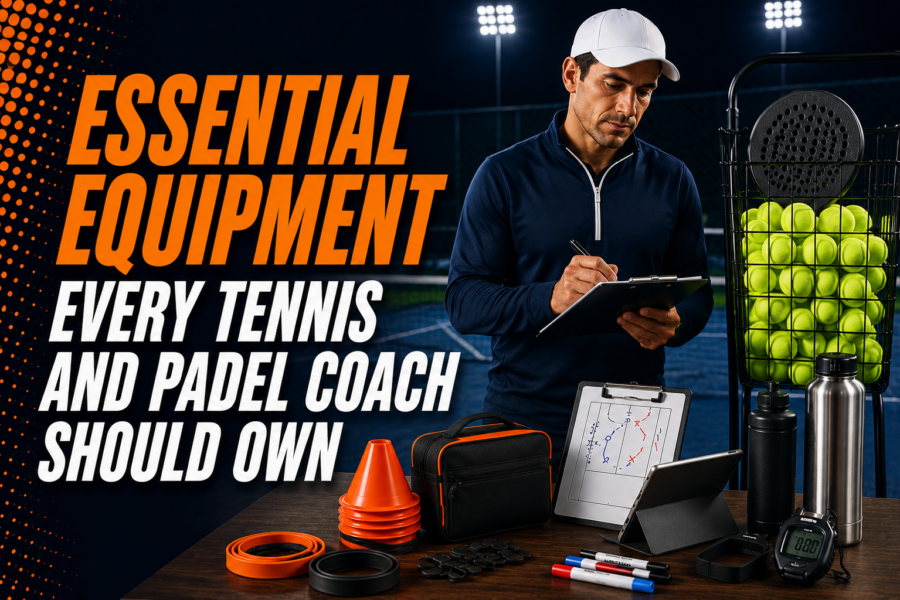
Great coaching isn’t just about knowledge and communication. Having the right equipment allows coaches to run more effective, engaging, and productive training sessions. Whether you’re teaching complete beginners, competitive juniors, or advanced adults, the right tools can help players learn faster, maximize court time, and improve more efficiently.
Fortunately, you don’t need dozens of expensive gadgets to become a successful coach. A small collection of well-chosen equipment is enough to deliver high-quality lessons while keeping sessions organized and enjoyable.
In this guide, we’ll cover the essential coaching equipment every tennis and padel coach should consider.
Tennis and Padel Balls
Embed from Getty ImagesNo piece of equipment is more important than the balls themselves.
Coaches should always have enough balls to keep drills flowing without constant interruptions. Running out of balls slows the pace of practice and reduces the amount of quality repetition players receive.
Many coaches separate newer balls for advanced lessons and older balls for feeding drills or basket practice to extend their lifespan.
| Why They’re Essential |
|---|
| Continuous feeding drills |
| Match play |
| Serving practice |
| Multi-ball exercises |
Ball Basket or Hopper
Embed from Getty ImagesA quality ball basket is one of the biggest time-saving investments a coach can make.
Instead of collecting balls after every few shots, coaches can feed dozens of balls continuously, allowing players to focus entirely on repetition and technique.
Many baskets also double as portable stands, making it easier to feed balls at a comfortable height.
Cones and Court Markers
Embed from Getty ImagesCones are among the most versatile coaching tools available.
They help coaches create movement patterns, target zones, footwork exercises, recovery positions, and tactical drills for players of every level.
Because they’re lightweight, inexpensive, and easy to transport, cones are used in almost every professional coaching session.
Common Uses
- Footwork drills
- Movement patterns
- Target zones
- Agility exercises
- Court positioning
Ball Pickup Tube (Especially for padel)
Embed from Getty ImagesPicking up hundreds of balls every day is physically demanding.
A ball pickup tube allows coaches to collect balls quickly without constantly bending over, saving time and reducing strain on the back during long coaching sessions.
Although simple, it’s one of the most appreciated pieces of equipment among full-time coaches.
Agility Equipment
Embed from Getty ImagesMovement is a major part of both tennis and padel.
Equipment such as agility ladders, mini hurdles, and speed markers helps players improve balance, coordination, footwork, and reaction time.
These tools are particularly valuable during warm-ups or athletic development sessions.
| Equipment | Primary Purpose |
|---|---|
| Agility Ladder | Foot speed |
| Mini Hurdles | Explosive movement |
| Speed Cones | Change of direction |
| Reaction Markers | Quick decision-making |
Resistance Bands
Embed from Getty ImagesResistance bands are inexpensive but extremely useful.
Coaches frequently use them during warm-ups, mobility exercises, shoulder activation routines, and injury prevention programs. They’re especially valuable for players who regularly perform repetitive serving or overhead motions.
Because they’re lightweight and portable, resistance bands easily fit into any coaching bag.
Stopwatch or Training Timer
Keeping track of time helps coaches organize lessons more effectively.
A simple stopwatch or timer makes it easy to control work and rest intervals, rotate players during group sessions, and ensure every activity receives the appropriate amount of attention.
Well-structured sessions tend to feel more professional and productive.
First Aid Kit
Player safety should always come first.
Every coach should carry a basic first aid kit containing items such as adhesive bandages, antiseptic wipes, ice packs, athletic tape, and disposable gloves.
Minor injuries are common during training, and having essential medical supplies readily available demonstrates professionalism while allowing coaches to respond quickly.
Equipment Bag
A dedicated coaching bag keeps everything organized and easy to transport.
Many coaches spend hours moving between courts each day, making organization just as important as the equipment itself.
A well-designed bag should comfortably hold balls, cones, resistance bands, training aids, water bottles, notebooks, and personal belongings.
Optional Equipment for Advanced Coaches
As coaching experience grows, many professionals invest in additional tools that enhance player development.
These aren’t essential for every coach but can add significant value, particularly when working with competitive players.
| Equipment | Benefit |
|---|---|
| Ball Machine | High-volume repetition |
| Video Analysis Software | Technical feedback |
| Radar Gun | Serve speed measurement |
| Heart Rate Monitor | Fitness tracking |
| Tripod and Camera | Match recording |
| Smart Sensors | Performance analysis |
Do You Need Expensive Equipment?
Not at all.
Many outstanding coaches built their careers using little more than quality balls, a basket, cones, and a passion for teaching.
While advanced technology can improve certain aspects of coaching, it’s the coach’s knowledge, communication skills, and ability to motivate players that ultimately make the biggest difference.
Equipment supports great coaching, but it never replaces it.
Final Thoughts
The best coaches understand that effective training isn’t about owning the most equipment. It’s about using the right tools at the right time to help players improve.
Starting with a few essential items such as balls, cones, a ball basket, and training targets allows coaches to deliver engaging and productive sessions for players of every level. As your coaching experience grows, you can gradually add more specialized equipment to expand your coaching options.
Ultimately, your most valuable coaching tool isn’t found inside your equipment bag. It’s your ability to communicate, inspire, and help every player become a little better each time they step onto the court.