
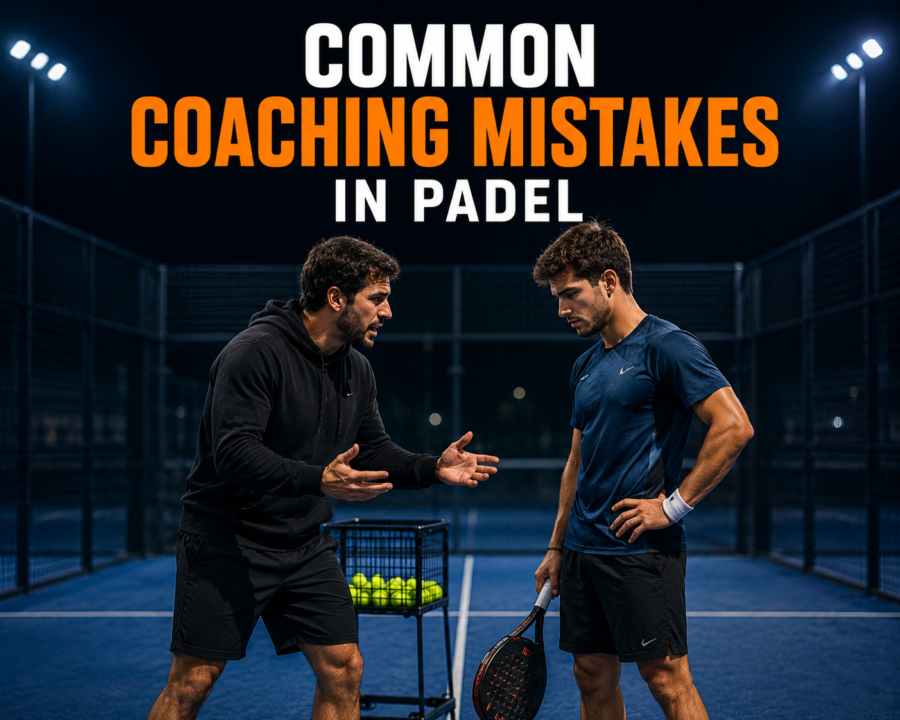
Padel coaching is about much more than feeding balls and correcting technique. A great coach helps players develop tactically, build confidence, improve decision-making, and enjoy the game. However, even experienced coaches can make mistakes that slow a player’s progress or limit their potential.
Because every player learns differently, there is no one-size-fits-all coaching method. The best coaches constantly evaluate their approach, adapt to different personalities, and focus on long-term improvement instead of short-term results.
Below are some of the most common coaching mistakes in padel and how they can be avoided.
1. Focusing Too Much on Technique
Technical fundamentals are important, especially for beginners, but some coaches spend every session correcting swing mechanics while ignoring the tactical side of padel.
Unlike many racket sports, padel is heavily based on positioning, patience, teamwork, and shot selection. A player with perfect technique but poor decision-making will often struggle against smarter opponents.
Good coaching balances technical instruction with tactical awareness from the very beginning.
2. Giving Too Much Information
One of the easiest ways to overwhelm players is by trying to fix everything at once.
A coach might correct the grip, footwork, racket preparation, body position, contact point, follow-through, and recovery all within a few minutes. Instead of improving, the player becomes confused and starts overthinking every shot.
The most effective coaches usually focus on one or two priorities at a time before moving on to the next area.
3. Ignoring Tactical Development
Many recreational players lose matches because of poor decisions rather than poor technique.
Some coaches spend entire lessons drilling strokes without teaching:
- When to attack
- When to defend
- How to move with a partner
- How to build points patiently
- Which shots to avoid under pressure
Padel is often described as “chess with a racket.” Tactical understanding should develop alongside technical skills.
4. Neglecting Teamwork
Unlike singles tennis, padel is almost always played in doubles.
A common coaching mistake is treating players as individuals instead of teaching them how to function as a pair.
Important doubles concepts include:
- Moving together
- Maintaining proper court spacing
- Effective communication
- Covering the middle
- Rotating after lobs
- Knowing who should take the ball
Strong partnerships usually beat stronger individual players who fail to work together.
5. Using the Same Coaching Style for Everyone
Every player learns differently.
Some improve through demonstrations, while others respond better to verbal explanations or repetition. Some enjoy technical detail, whereas others perform best with simple cues.
The best coaches adapt their communication style to each individual rather than expecting every player to learn the same way.
6. Not Encouraging Match Play
Practice drills are essential, but improvement also requires real match situations.
Some coaches spend every lesson feeding baskets of balls without allowing players to apply those skills under pressure.
Competitive points reveal problems that rarely appear during isolated drills, including positioning, communication, shot selection, and mental composure.
Lessons should regularly include game-like scenarios where players can transfer practice into performance.
7. Overcorrecting Every Mistake
Players naturally make errors while learning.
Stopping every rally to point out a mistake interrupts rhythm and can damage confidence.
Instead of correcting every shot, experienced coaches often allow several repetitions before providing concise, actionable feedback.
This keeps players engaged while reinforcing learning through repetition.
8. Forgetting the Mental Side of Padel
Confidence plays a major role in performance.
Some coaches focus entirely on mechanics while overlooking:
- Decision-making under pressure
- Confidence after mistakes
- Emotional control
- Communication with a partner
- Maintaining focus during long rallies
Helping players manage frustration and stay composed often leads to greater improvements than making another technical adjustment.
9. Not Teaching Wall Play Early
The walls are one of padel’s defining features.
Some coaches delay introducing rebounds because they believe players should first master basic strokes.
In reality, understanding how to use the glass is fundamental to becoming a complete padel player. Introducing wall play gradually helps players become comfortable with one of the sport’s most unique aspects.
Common Signs of Effective Coaching
Great coaches generally share several qualities:
| Good Coaching Habits | Why They Matter |
|---|---|
| Clear communication | Players understand exactly what to improve. |
| Simple instructions | Reduces confusion and builds confidence. |
| Balanced feedback | Corrects mistakes while reinforcing strengths. |
| Tactical teaching | Improves decision-making during matches. |
| Match-based practice | Helps players apply skills under pressure. |
| Individual approach | Matches lessons to each player’s needs. |
Final Thoughts
Even experienced padel coaches occasionally make mistakes. What separates great coaches from average ones is their willingness to adapt, communicate effectively, and put long-term player development ahead of short-term results.
The best coaching creates complete players, not just technically sound ones. By combining technical instruction, tactical awareness, mental development, and effective teamwork, coaches help players build skills that continue improving long after the lesson ends.
FAQ
Do good coaches still make mistakes?
Absolutely. Every coach continues learning throughout their career. The best coaches regularly evaluate their methods, seek feedback, and adapt their teaching to improve player development.
Should beginners focus more on technique or tactics?
Both are important, but beginners should develop basic technique while also learning positioning, teamwork, and simple tactical concepts. Ignoring either area can slow long-term progress.
Is match play more important than drills?
Both complement each other. Drills develop specific skills, while matches teach decision-making, communication, and adapting under pressure. A balanced training program includes both.
What makes a great padel coach?
A great coach combines technical knowledge, tactical understanding, strong communication skills, patience, and the ability to adapt lessons to each player’s goals and experience.