
Affiliate disclosure: This page contains affiliate links. If you make a purchase through one of these links, Tennis Overload may earn a commission at no additional cost to you.
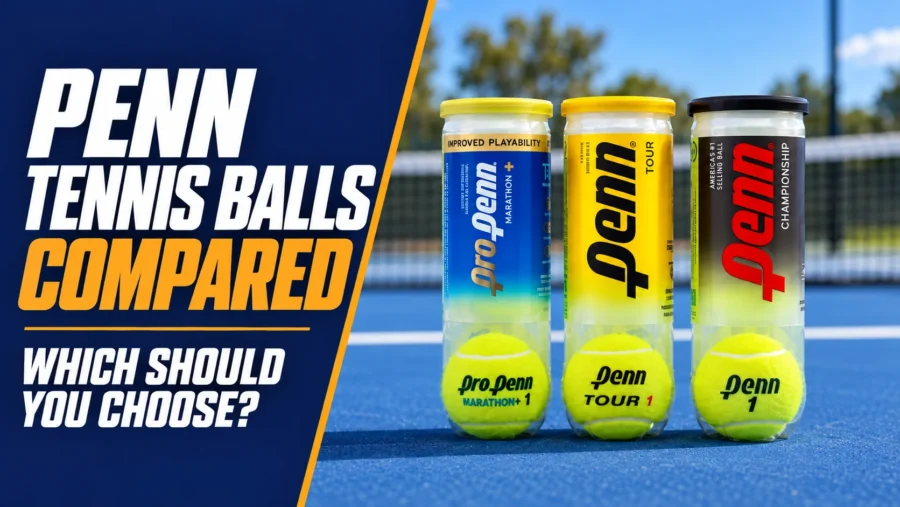
Penn Championship is the best-value choice for recreational matches and routine practice, Penn Tour provides a more refined balance of feel, consistency and longevity, and Pro Penn Marathon+ is the premium option for players and coaches who prioritize durability. The correct felt version still matters: use extra duty on abrasive hard courts and regular duty on clay or smooth indoor surfaces.
All three are pressurized performance balls, so none will stay fresh indefinitely after opening. The higher-priced models aim to preserve a consistent bounce and felt condition for longer, but court texture, temperature, playing intensity and storage can matter as much as the name on the can.
Penn Tennis Balls at a Glance
| Ball | Best for | Position in range | Felt options | Main trade-off |
|---|---|---|---|---|
| Penn Championship | Recreational play and value | Entry performance | Regular duty, extra duty and high-altitude variants | Loses premium feel sooner under heavy use |
| Penn Tour | Leagues and competitive club play | Premium all-round | Regular and extra duty, depending on market | Costs more than Championship |
| Pro Penn Marathon+ | Durability and long sessions | Premium longevity | Regular and extra duty | Firmer, more substantial feel may not suit everyone |
Package size and regional availability change, so compare the same number of cans and the same felt type when evaluating cost.
Penn Championship
Penn Championship is the practical choice for players who open cans frequently and want predictable recreational performance without paying for a premium tournament ball. The current construction uses controlled fiber release for a consistent nap, natural rubber for feel and shock reduction, and interlocked wool fiber intended to improve wear.
The extra-duty version is designed for hard courts, where acrylic and concrete-based surfaces abrade the felt. Regular duty is intended for softer or smoother surfaces such as clay and many indoor courts.
Championship balls feel lively when freshly opened and are suitable for social matches, lessons and league practice. Under hard hitting or on rough public courts, the felt and bounce tend to move away from new-can performance sooner than the higher-tier choices.
Best for: Recreational players, value-conscious clubs and routine practice with fresh cans.
Penn Tour
Penn Tour sits between Championship and Pro Penn Marathon+ as a premium all-round match ball. Penn describes it as combining core and felt technologies for consistency, longevity and overall playability rather than maximizing one quality at the expense of the others.
That balance makes sense for league players who want a cleaner, more stable response than an entry-level ball but do not need the most durability-focused model. Regular-duty Penn Tour is appropriate for clay and smoother courts, while extra-duty availability should be selected for hard-court use.
The main question is value. For casual sets, many players will not gain enough from the more refined feel to justify the price over Championship. Competitive players who notice changes in felt and rebound across a long match are more likely to appreciate the upgrade.
Best for: Club competition, leagues and players who want a premium but neutral Penn ball.
Pro Penn Marathon+
Pro Penn Marathon+ is built around longevity and consistency for demanding match play and high-volume training. The current regular-duty model is positioned for clay courts, while the extra-duty counterpart is the logical choice for abrasive hard courts.
This is the strongest Penn option for coaches who want a pressurized ball that remains useful across longer sessions, or for competitive players who dislike how quickly a basic ball fluffs up and slows. It still provides a more match-like response than a pressureless training ball.
No pressurized construction eliminates pressure loss. A can opened for one lesson will continue changing during storage, even if the felt looks new. The premium only makes sense when its improved playing window offsets the higher purchase cost.
Best for: Serious practice, long matches, teaching professionals and players who prioritize durability.
Penn Championship vs Penn Tour
Choose Penn Championship when fresh-can value matters most. It is easier to justify opening a new can for a casual match, and using the correct duty version provides more benefit than buying a premium ball with the wrong felt.
Choose Penn Tour when you want a more consistent premium response through a competitive session. It is the better middle ground for leagues and club tournaments where feel matters but the durability emphasis of Marathon+ is not essential.
For alternatives from other brands, the guide to the best tennis balls for every court surface compares Wilson, Dunlop and Slazenger models by surface.
Penn Tour vs Pro Penn Marathon+
Penn Tour is the more balanced choice. Pro Penn Marathon+ makes durability the clearer priority and is better suited to extended practice, repeated coaching feeds and players who are hard on felt.
Some players prefer the fresher, less substantial sensation of a standard premium ball and will not automatically like the Marathon+ response. Buy individual cans of each before committing to a case.
Regular Duty vs Extra Duty
The terms describe the felt, not a higher and lower quality grade.
| Felt type | Best surface | Typical behavior | Wrong-surface problem |
|---|---|---|---|
| Extra duty | Abrasive outdoor hard courts | More durable, becomes fluffier as it wears | Can collect clay and feel slow or heavy |
| Regular duty | Clay, grass and smooth indoor courts | Cleaner, livelier flight | Wears quickly on rough hard courts |
An indoor acrylic court can still be abrasive, so “indoor” does not automatically mean regular duty. Choose according to the surface material and texture.
Players new to the equipment can use the beginner tennis equipment checklist to separate essential purchases from optional accessories. To better understand the different types of balls read: Extra Duty vs Regular Duty Tennis Balls: How to Choose.
What About High-Altitude Penn Balls?
Penn sells high-altitude Championship variants for elevated venues where thinner air makes standard balls fly and bounce more aggressively. HEAD recommends its high-altitude Penn ball at elevations of 3,500ft and above.
Do not use a high-altitude model at sea level simply because it sounds specialized. It is pressure-adjusted for a particular environment and can feel underpowered outside that environment.
Tournament players should use the exact ball selected by the event. Local clubs in elevated regions can also provide more practical advice than a universal altitude threshold because surface and temperature interact with elevation.
Pressurized vs Pressureless Penn Balls
Penn Championship, Tour and Pro Penn Marathon+ are pressurized match-style balls. Their internal pressure creates a lively response, but gas gradually moves through the rubber after the can is opened.
Pressureless balls generate more of their bounce from the rubber construction. They last longer in a basket or machine but usually feel firmer and less like a fresh competition ball.
Use pressurized Penn balls for realistic point play. Use pressureless balls when repetition and long storage matter more than exact match feel, as in many exercises from practicing tennis alone.
Which Penn Ball Is Best for a Ball Machine?
Pro Penn Marathon+ is the best of these three when you specifically want a pressurized ball for longer machine sessions. Its durability emphasis is useful, but a basket mixed from cans opened at different times will still produce inconsistent depth.
Pressureless balls are usually more economical for routine machine use. If you use Penn pressurized balls, open all cans for a batch together, mark the batch and remove visibly low balls rather than continually adding new ones.
Coaches should also separate newer balls for point play from older balls for feeding. The guide to essential equipment for tennis and padel coaches explains how a simple equipment system keeps lessons moving.
How Weather Affects the Comparison
Cold conditions reduce the liveliness of pressurized balls, while heat generally makes them feel faster and higher-bouncing. A durability-focused ball can feel particularly heavy on a cold day if the can and court have been stored at low temperature.
Store sealed cans at a stable indoor temperature, away from direct sun and freezing conditions. Do not deliberately heat cans, and never leave them for long periods in a hot vehicle.
In extreme conditions, session planning matters beyond equipment. These tips for training in the heat cover hydration, timing and workload decisions.
How Long Do Penn Tennis Balls Last?
There is no reliable match count. A hard-hitting doubles group on a rough court may wear felt quickly, while light recreational play on a smooth surface can keep the same can usable for several sessions.
Replace match balls when they no longer produce a consistent bounce, feel noticeably soft or develop uneven felt. Older balls can move into serve baskets and feeding drills, but discard split, wet or badly deformed balls.
Professional players examine felt because smoother and fluffier balls move differently through the air. The explanation of why tennis players check the ball before serving shows how even one match creates meaningful variation.
How to Get Better Value
- Buy the correct duty for the court rather than the most expensive model.
- Compare case prices by can, not by package total.
- Open cans only when the group is ready to play.
- Keep each opened batch together instead of mixing ages.
- Move older balls to feeding and serve practice while their bounce remains safe and consistent.
- Recycle through a local tennis-ball program where one is available.
Final Verdict
Penn Championship is the best choice for value and fresh recreational play. Penn Tour is the better all-round premium ball for leagues and club competition, while Pro Penn Marathon+ earns its higher position when durability and a longer consistent playing window matter most.
Whichever model you choose, match regular- or extra-duty felt to the actual surface. That decision normally has more influence on wear and flight than moving one step up the Penn range.