
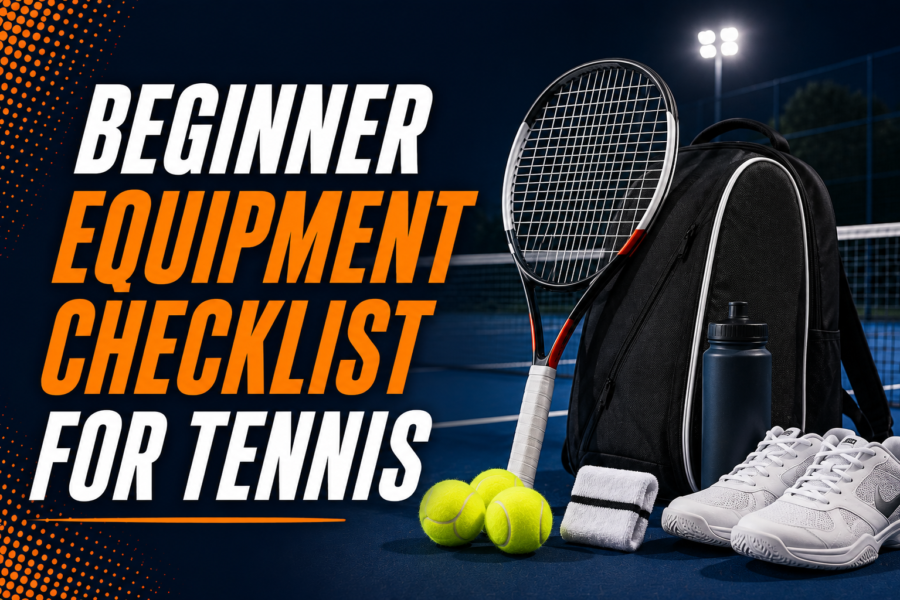
Starting tennis does not require a large collection of expensive equipment. Most beginners only need a suitable racket, comfortable shoes, a few tennis balls, and appropriate clothing to begin playing safely and confidently.
Buying the right equipment from the beginning can make learning easier and reduce the risk of discomfort or injury. This checklist explains the essential tennis equipment every beginner needs, along with a few optional items that can improve practice sessions.
Beginner Tennis Equipment at a Glance
| Equipment | Essential? | Main Purpose |
|---|---|---|
| Tennis racket | Yes | Hitting and controlling the ball |
| Tennis balls | Yes | Practice and match play |
| Tennis shoes | Yes | Grip, support, and safe movement |
| Sports clothing | Yes | Comfort and freedom of movement |
| Water bottle | Yes | Hydration |
| Tennis bag | Optional | Carrying and protecting equipment |
| Overgrips | Optional | Improving handle comfort and grip |
| Hat or visor | Optional | Sun protection |
| Sweatbands | Optional | Managing sweat |
| Sunscreen | Optional | Protecting exposed skin outdoors |
| Dampener | Optional | Changing string vibration and sound |
Tennis Racket
The tennis racket is the most important piece of equipment. Beginners should generally choose a racket that is comfortable, maneuverable, and forgiving rather than selecting a heavy performance model designed for advanced players.
A larger head size provides a bigger sweet spot, making clean contact easier. Many adult beginners are comfortable with a racket between approximately 100 and 110 square inches, although the best option depends on the player’s strength, size, and coordination.
A lighter racket is easier to swing, but it should not feel unstable when contacting the ball. Adult beginners often use rackets weighing approximately 9 to 10.6 ounces (255 to 300 g) unstrung. Younger players should use a junior racket with a length appropriate for their height and age.
Grip size also matters. A grip that is too small may require excessive hand tension, while one that is too large can make the racket difficult to control. When possible, test different rackets or ask a coach or specialist retailer to help you select the correct size.
Tennis Balls
Beginners should bring at least one unopened can of tennis balls when playing on a standard court. Regular pressurized balls are suitable for adults who can already rally, but complete beginners may find slower training balls easier to control.
Modified balls are available in three common stages:
| Ball Type | Speed | Best For |
|---|---|---|
| Red ball | Approximately 25% of standard speed | Young children and complete beginners |
| Orange ball | Approximately 50% of standard speed | Developing juniors and beginner adults |
| Green ball | Approximately 75% of standard speed | Players transitioning to a full court |
| Standard yellow ball | Full speed | Regular adult and competitive play |
Slower balls give beginners more time to prepare, move into position, and develop proper technique. They are not limited to children and can be useful for adults learning the sport.
Tennis Shoes
Tennis involves repeated side-to-side movement, quick stops, and sudden changes of direction. Running shoes are designed primarily for forward movement and may not provide enough lateral support for regular tennis.
Tennis shoes are built with stronger side support, durable outsoles, and better stability during court movement. The correct outsole may depend on whether you play on hard, clay, grass, or artificial surfaces.
Beginners do not need the most expensive shoes available, but they should choose a pair that fits securely and feels comfortable. There should be enough space around the toes without allowing the foot to slide inside the shoe.
Comfortable Sports Clothing
Tennis clothing should allow unrestricted movement and help manage heat and sweat. A breathable shirt with shorts, a skirt, or athletic trousers is enough for most beginner sessions.
You do not need official tennis clothing to start playing. Avoid restrictive materials, heavy clothing, and anything with loose parts that could interfere with movement. Women may also benefit from a supportive sports bra during training.
Weather should influence your clothing choices. Lightweight layers are useful in cooler conditions because they can be removed as you warm up.
Sports Socks
Good socks improve comfort and help reduce friction inside your shoes. Choose moisture-wicking sports socks that fit securely without folding or sliding.
Thin everyday socks may not provide enough cushioning for long sessions. Some players prefer thicker tennis socks or two pairs when breaking in new shoes, but the best option depends on personal comfort and shoe fit.
Water Bottle
Tennis can become physically demanding, even during beginner lessons. Bring a reusable water bottle and drink regularly, particularly when playing outdoors in warm conditions.
For longer sessions or very hot weather, an electrolyte drink may also be useful. Avoid waiting until you feel extremely thirsty before drinking.
Tennis Bag
A dedicated tennis bag is useful but not essential for your first sessions. A normal sports bag can hold shoes, clothing, balls, water, and smaller accessories.
As you begin carrying multiple rackets or more equipment, a tennis-specific bag becomes more practical. These bags usually include separate racket compartments, accessory pockets, and space for footwear or wet clothing.
Overgrips
An overgrip is a thin layer wrapped around the existing racket handle. It can improve comfort, absorb sweat, and provide a more secure connection between your hand and the racket.
Overgrips wear down with use and should be replaced when they become slippery, dirty, or damaged. They are inexpensive and easy to install, making them one of the most useful accessories for beginners.
Sun Protection
Outdoor players should consider bringing sunscreen, sunglasses, and a hat or visor. Tennis courts often provide little shade, and sessions can last for an hour or longer.
Choose sunscreen that remains effective during exercise and sweating. Sunglasses should fit securely and provide clear visibility without moving during play.
Optional Tennis Accessories
Several accessories can be useful, but beginners should not feel pressured to buy everything immediately.
A vibration dampener can be placed between the strings to change the sound and sensation produced when hitting the ball. It does not prevent tennis elbow or transform racket performance, so it should be treated as a personal preference.
Sweatbands and wristbands can help prevent sweat from reaching your hands, while a small towel is useful during hot sessions. Players who practice independently may eventually consider targets, cones, a tennis rebounder, or access to a ball machine.
What Beginners Do Not Need
New players often spend too much money before understanding their preferences. Most beginners do not need multiple rackets, advanced polyester strings, professional-level shoes, expensive training technology, or a large collection of accessories.
Start with reliable essentials and upgrade gradually. Your equipment needs will become clearer as your technique, playing frequency, and personal preferences develop.
Final Thoughts
A beginner tennis setup can remain simple. Start with a comfortable racket, appropriate tennis shoes, suitable balls, breathable clothing, sports socks, and a water bottle. These items provide everything needed for lessons, recreational rallies, and early practice sessions.
Additional equipment such as a tennis bag, overgrips, sun protection, and training accessories can be added over time. Prioritize comfort, correct sizing, and suitability for your level rather than buying equipment based only on professional players or advanced performance features.