
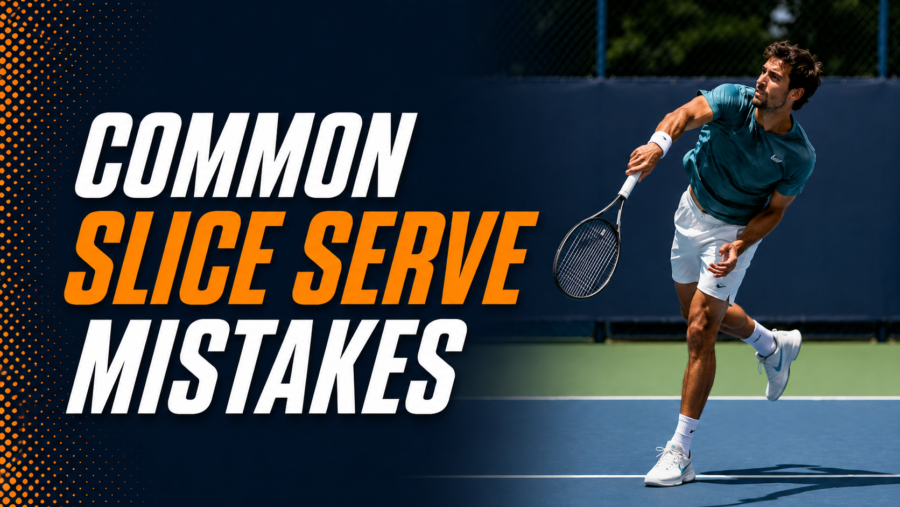
The slice serve is one of the most useful serves in tennis because it creates sideways movement and can pull an opponent away from the court. However, many players struggle to produce effective sidespin because small technical mistakes reduce control, speed, and consistency. Understanding these common errors can make it easier to develop a reliable slice serve in tennis.
Tossing Too Far to the Side
A slightly wider toss can help the racket reach the outside of the ball, but the adjustment should remain small. Tossing too far to the side pulls the body away from the court, reduces upward extension, and often makes the intended serve obvious to the returner.
Keep the toss high, slightly inside the baseline, and only marginally farther to the side than your normal serve toss. You should still be able to reach the ball comfortably without leaning excessively.
Using the Wrong Grip
Many beginners use a forehand grip because it makes it easier to place the strings behind the ball. However, this grip limits racket-head speed and makes it difficult to generate controlled sidespin.
The slice serve should be hit with the continental grip. Although it may feel uncomfortable at first, it allows the racket to approach the ball on edge and rotate naturally through contact.
For a complete serve fix check out The Tennis Serve Fix.
Swinging Only Sideways
The slice serve requires the racket to move across the outside of the ball, but the swing should not travel only sideways. A purely sideways motion creates a weak serve that often lands short or misses wide.
The racket must accelerate upward, forward, and across the ball. This combination produces sidespin while still giving the serve enough pace and depth to pressure the returner.
Snapping the Wrist
Trying to create spin by snapping the wrist can reduce control and place unnecessary stress on the arm. The wrist should remain relaxed, but it should not be forced aggressively around the ball.
Racket speed should come from the legs, shoulder rotation, forearm rotation, and the natural throwing action of the serve.
Contacting the Ball Too Low
Low contact makes it harder to clear the net and reduces the angle available into the service box. It can also cause the racket face to open, sending the ball long.
Reach upward and make contact close to full extension. A high contact point improves both control and the amount of movement you can create.
Slowing Down the Swing
Players often reduce their swing speed because they are afraid of missing. However, spin requires acceleration. A hesitant swing usually produces a floating serve with little movement.
Maintain a smooth and committed motion. Trust the sidespin to help curve the ball into the service box.
Opening the Racket Face
An overly open racket face causes the ball to float or travel long. Approach the ball with the racket on edge and allow the strings to meet the outside of the ball naturally.
The goal is to brush the ball without scooping underneath it. Keep the motion relaxed, accelerate through contact, and finish fully across the body.