
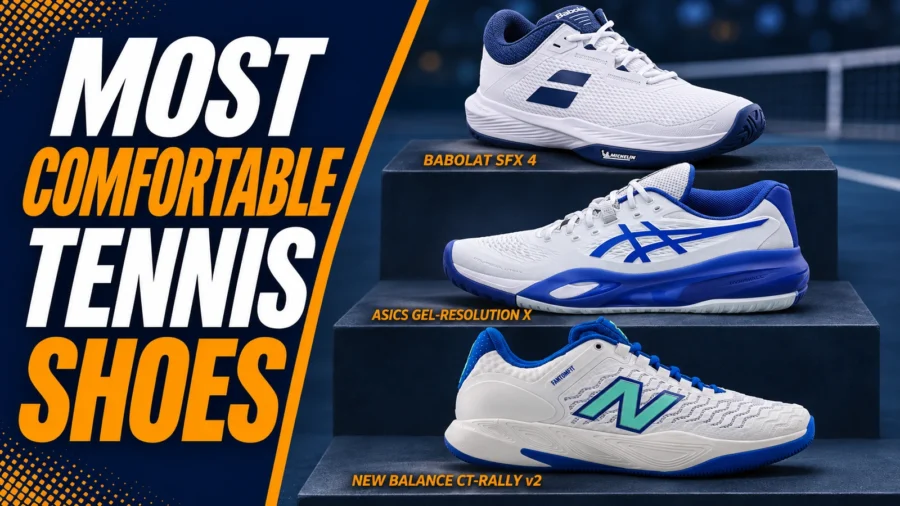
The Babolat SFX 4 is the most comfortable tennis shoe for the widest range of players in 2026. Its higher-volume fit, padded tongue, breathable upper and thick Ortholite insole make it particularly suitable for players who want cushioning and space rather than a narrow, low-profile speed shoe.
The ASICS GEL-Resolution X offers a more supportive, locked-in feel, while the New Balance Fresh Foam X CT-Rally v2 is an alternative for substantial underfoot cushioning. The comparisons below focus on softness, flexibility, pressure points and the tradeoffs that matter during long sessions. Comfort is personal, so fit should take priority over the ranking.
Most Comfortable Tennis Shoes at a Glance
| Rank | Shoe | Comfort strength | Best for |
|---|---|---|---|
| 1 | Babolat SFX 4 | Roomy fit and thick insole | Best overall |
| 2 | ASICS GEL-Resolution X | Cushioning with stability | Baseline support |
| 3 | New Balance Fresh Foam X CT-Rally v2 | Soft cushioning and a substantial platform | Underfoot comfort |
| 4 | K-Swiss Hypercourt Express 3 | Lightweight cushioning | Immediate comfort |
| 5 | Nike GP Challenge 1.5 | Air Zoom and heel padding | Responsive impact protection |
| 6 | Wilson Rush Pro Ace | R-DST+ cushioning and breathable upper | Forefoot comfort |
| 7 | Babolat SFX Evo | Soft, generous fit | Recreational value |
| 8 | Wilson Rush Pro 4.5 | Flexible performance support | Competitive comfort |
The exact fit can differ between men’s and women’s versions. Check the specific version when comparing cushioning, upper pressure and overall feel.
1. Babolat SFX 4: Best Overall Comfort
The SFX 4 is built around comfort rather than a minimal performance fit. Babolat gives it increased width, a padded tongue, a breathable upper and the thickest Ortholite insole in its tennis range.
That combination creates a cushioned, accommodating environment for long club sessions. The heel and midfoot still need to hold securely, so players with narrow feet may find the volume excessive.
The SFX 4 is heavier and less close to the court than a speed shoe. That is a sensible tradeoff for players who value space and softness more than the quickest possible transition.
Best for: Recreational and competitive players with medium-to-wide feet who prioritize cushioning.
2. ASICS GEL-Resolution X: Best Supportive Comfort
The GEL-Resolution X combines FF BLAST PLUS ECO cushioning with a two-piece midsole and DYNAWALL support. DYNALACING helps secure the foot when direction changes become more forceful.
Its comfort comes from a stable, structured platform rather than a loose slipper-like fit. This suits baseliners and players who want the shoe to contain the foot during wide lateral movements.
The raised medial collar and substantial structure will not suit everyone. Check for ankle rubbing and pressure across the instep before using the shoe in a match.
Best for: Players who want cushioning, stability and secure lateral containment.
3. New Balance Fresh Foam X CT-Rally v2: Best Substantial Cushioning
The Fresh Foam X CT-Rally v2 uses a cushioned Fresh Foam X platform. It combines underfoot softness with the durability and stability required for tennis movement, and its broader platform suits players who prefer a planted feel.
The CT-Rally v2 is not a lightweight speed model. Players who want less shoe underfoot should compare the Hypercourt Express 3 or another performance-oriented option.
Best for: Players seeking substantial underfoot cushioning and a planted feel.
4. K-Swiss Hypercourt Express 3: Best Lightweight Comfort
The Hypercourt Express 3 uses Surge 7.0 cushioning and a supportive chassis while retaining the accessible, flexible character of the Express line. It feels less bulky than many maximum-stability models.
The shoe works well for club players who want immediate comfort and quick movement without a long break-in.
Its lighter construction may not provide the same locked-in response as the GEL-Resolution X for the most aggressive movers. Choose based on whether flexibility or containment matters more.
Best for: All-court players who want comfortable cushioning without a heavy platform.
5. Nike GP Challenge 1.5: Best Responsive Cushioning
The GP Challenge 1.5 uses Air Zoom cushioning with extra padding around the heel. A strong midfoot plate and eye-stay webbing help contain the foot during lateral cuts.
Nike also increased forefoot space compared with the original GP Challenge. That improves its appeal for players who liked the cushioning but found the earlier upper restrictive.
The structured plate creates a firmer, more supportive ride than a simple soft-foam shoe. Players sensitive to pressure around the midfoot should try it before buying.
Best for: Players who want responsive cushioning and a stable platform for hard-court movement.
6. Wilson Rush Pro Ace: Best Forefoot Comfort
The Rush Pro Ace uses a wider forefoot and breathable upper with R-DST+ cushioning. Its generous toe box gives the forefoot more room to spread during stops and direction changes.
That space can help players who routinely feel pressure at the sides of the foot, but the heel still needs to lock securely. The Ace offers a roomier alternative to the more contained performance fit of the Rush Pro 4.5.
Best for: Players with broad forefeet who want space, cushioning and all-court traction.
7. Babolat SFX Evo: Best Comfortable Value
The SFX Evo has a larger-volume forefoot and soft Ortholite insole. It is designed for immediate, accessible comfort and is normally positioned below the more performance-focused SFX 4.
The shoe is a practical choice for lessons, social matches and players who do not need the most structured platform. Its generous fit can also reduce pressure for wider forefeet.
Advanced, explosive movers may prefer the additional support of the SFX 4 or GEL-Resolution X. The Evo prioritizes ease and value over maximum containment.
Best for: Beginners and recreational players who want a soft, roomy tennis shoe.
8. Wilson Rush Pro 4.5: Best Performance Comfort
The Rush Pro 4.5 uses a flexible upper, 4D Support Chassis 2.0, Energy Cell and R-DST+ midsole. It blends cushioning with a more performance-oriented fit than the roomy Rush Pro Ace.
This is useful for competitive players who want support during aggressive movement without choosing a very stiff shoe. The fit is more contained, so wide-footed players should compare the Ace.
Best for: Faster players who want a flexible but supportive competitive shoe.
What Makes a Tennis Shoe Comfortable?
Comfort is a combination of fit, cushioning, stability, flexibility, ventilation and pressure distribution. A shoe can have soft foam and still be uncomfortable if its arch, toe box or collar does not match the foot.
Tennis shoes also need lateral support. A soft running shoe may feel pleasant while walking but allow excessive movement during side-to-side cuts. The beginner tennis equipment checklist explains why court shoes are preferable for regular play.
Check Pressure and Flexibility Before Playing
Soft foam cannot compensate for collar rubbing, instep pressure or pinching around the toes. The heel should remain secure, and the upper should hold the midfoot without numbness or pressure points.
Try shoes late in the day with your normal tennis socks. Test short lateral steps, split steps and controlled stops indoors while the return policy still applies. Compare whether you prefer the flexible feel of the Hypercourt Express 3 or the more structured containment of the GEL-Resolution X. Judge comfort during tennis-like movement rather than only while seated.
Cushioning vs Stability
Soft cushioning can reduce the harsh sensation of repeated impacts, especially on hard courts. Excessively soft or tall foam may also feel unstable during lateral loading if the platform and upper do not control movement.
The most comfortable model is therefore not always the softest. The GEL-Resolution X and CT-Rally v2 combine cushioning with broad, structured platforms, while the Hypercourt Express 3 emphasizes flexibility and lower weight.
The best tennis shoes for men and best tennis shoes for women compare performance priorities beyond comfort alone.
Match the Outsole to the Surface
All-court or hard-court outsoles use durable patterns for abrasive surfaces. Clay shoes normally have a fuller herringbone pattern that releases loose material and can slide more predictably.
Using the wrong outsole can make an otherwise comfortable shoe feel insecure or overly restrictive. Read how tennis court surfaces differ and check the exact version of the shoe before ordering.
Can Insoles Make Tennis Shoes More Comfortable?
An insole can alter cushioning, arch contact and internal volume, but it cannot correct a fundamentally poor last. A thick replacement can also raise the heel and reduce space inside the upper.
Read the tennis shoe insoles guide before replacing the factory liner. Players using prescribed orthotics should fit shoes around the orthotic rather than adding it after choosing a tight size.
Are Comfortable Shoes Better for Foot Pain?
A better-fitting shoe may reduce an obvious pressure point, but no model can guarantee treatment or injury prevention. Foot, ankle, knee and lower-leg pain can have multiple causes, including workload and health conditions.
Stop if play causes sharp, worsening or persistent pain and seek appropriate professional advice. Do not keep using a painful shoe simply because it is marketed as cushioned or supportive.
How to Keep Tennis Shoes Comfortable
Loosen the laces before removing the shoes so the heel structure is not crushed. Air them after play, remove damp insoles when appropriate and avoid direct high heat that can damage adhesives and foam.
The guide to cleaning and maintaining tennis shoes explains safer care methods. Replace the shoes when the outsole, cushioning or upper no longer performs its function, not only when the color looks worn.
Which Comfortable Tennis Shoes Should You Choose?
Choose the Babolat SFX 4 for its accommodating fit, padding and thick insole. Select the GEL-Resolution X for supportive cushioning, the CT-Rally v2 for substantial underfoot softness, the Hypercourt Express 3 for lightweight flexibility or the Nike GP Challenge 1.5 for responsive cushioning.
For long sessions, weigh cushioning against upper pressure, flexibility and secure support during lateral movement. A soft first impression is only one part of comfort.