
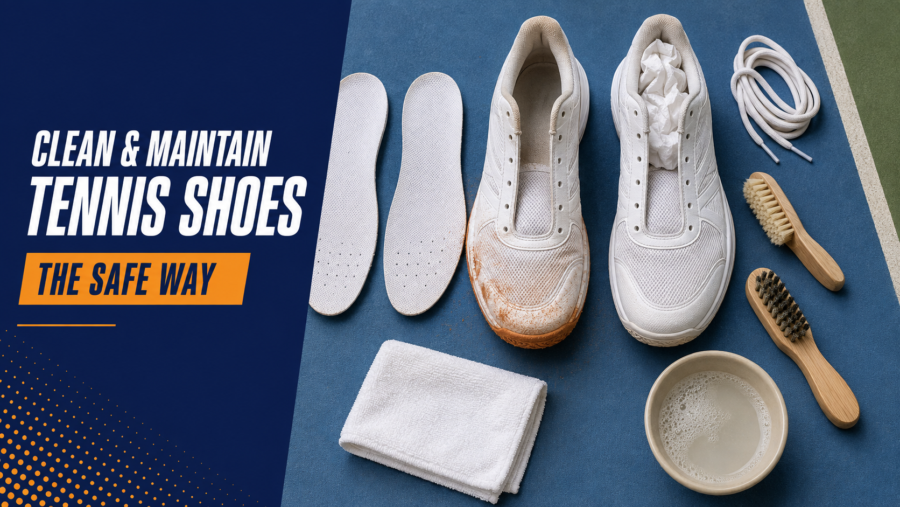
The safest way to clean most tennis shoes is by hand. Remove the laces and removable insoles, brush away loose dirt while the shoes are dry, use a small amount of mild detergent with a soft brush or cloth, wipe away the residue and let every part air-dry at room temperature.
Do not assume tennis shoes can go in a washing machine. Major athletic-shoe manufacturers commonly advise against machine washing because full immersion and agitation can damage uppers, foam, shape or adhesives. Follow the care label for the exact model if it gives different instructions.
Quick Cleaning Method
For routine dirt, use this sequence:
- Remove the laces and any removable insoles.
- Allow wet clay or mud to dry before brushing it away.
- Knock the shoes together gently outdoors to release loose debris.
- Brush the outsole and grooves with a dry brush.
- Mix a small amount of mild, dye-free detergent with lukewarm water.
- Test the solution on an inconspicuous area.
- Clean the upper gently with a soft brush or cloth.
- Use a slightly firmer brush on the rubber outsole, keeping it away from delicate upper material.
- Wipe away soap and loosened dirt with a clean damp cloth.
- Stuff the shoes lightly with plain white paper and air-dry them in a ventilated, shaded place.
Cleaning should remove dirt without soaking the entire shoe. Repeat a gentle pass if necessary instead of using a stronger chemical or scrubbing aggressively.
What You Need
- Two bowls or containers
- Lukewarm water
- Mild, dye-free laundry or dish detergent
- Soft-bristled shoe brush or clean toothbrush
- Slightly firmer brush for rubber outsoles
- Microfiber cloth or clean sponge
- Plain white paper or paper towels
- Specialty suede or leather cleaner when required by the material
Avoid sharing the same dirty water and brush between the outsole and upper. Clay and grit collected from the bottom can scratch or discolor a lighter upper.
Check the Shoe Material First
Tennis shoes combine several materials, and each part may need a different method. The upper is usually more delicate than the outsole.
| Material or area | Recommended approach | Main caution |
|---|---|---|
| Mesh or knit upper | Mild solution, soft brush or cloth, light pressure | Do not saturate, stretch or scrub hard |
| Synthetic leather upper | Damp cloth first, then a small amount of mild solution if needed | Avoid solvents and stiff brushes |
| Natural leather | Product made for the exact leather type | Do not use a generic soaking method |
| Suede or nubuck | Dry suede brush or eraser, followed by approved specialty cleaner | Water can darken, stain or change the texture |
| Rubber outsole | Mild solution and a firmer brush | Keep the firmer brush away from the upper |
| Foam midsole | Damp cloth and gentle spot cleaning | Do not soak or scrape aggressively |
| Removable insole | Light hand cleaning and complete air drying | Soaking can affect foam and shape |
If the manufacturer gives model-specific care instructions, those directions take priority over a general cleaning guide.
How to Hand-Wash Tennis Shoes
1. Remove Loose Dirt
Start while the shoe is dry. Use a brush to remove dust, sand and dried clay from the upper, outsole and space around the tongue.
Pay particular attention to the tread. Packed clay can fill a herringbone pattern and continue transferring dirt to the upper or storage bag.
2. Separate the Laces and Insoles
Removing the laces opens the tongue area and prevents dirt from remaining underneath them. Take out the insoles only if they are designed to be removable.
Do not force out a glued insole. Pulling it can tear the foam or lining.
3. Prepare a Mild Cleaning Solution
Mix a small amount of mild, dye-free detergent with lukewarm water. The solution should be lightly soapy, not highly concentrated.
Test it on a hidden part of the shoe and wait before treating the visible upper. This is particularly important with bright colors, printed graphics and mixed materials.
4. Clean the Outsole
Use the firmer brush on the rubber tread and outsole edge. Work along the grooves to remove embedded clay, grit and small stones.
Keep the outsole brush below the upper. A brush suitable for durable rubber can fray mesh or mark synthetic leather.
5. Clean the Upper
Dip a soft brush or cloth into the solution and remove excess liquid. Work in small sections using light, repeated motions.
Mesh should be brushed with the direction of the fabric rather than scrubbed aggressively. On synthetic leather, start with a damp cloth and use a brush only where the material can tolerate it.
6. Remove the Cleaning Residue
Wipe the shoe with a clean cloth dampened with plain water. The goal is to lift away dirt and detergent without placing the entire shoe under running water.
Several light wipes are safer than one full soak. Soap left in mesh can dry into a visible mark and attract more dirt.
Can You Wash Tennis Shoes in a Washing Machine?
Only machine-wash a tennis shoe when the manufacturer’s care label or model instructions explicitly permit it. Nike and New Balance do not generally recommend washing athletic shoes in a machine, and ASICS guidance also warns that immersion can harm fabric and adhesives.
A washing machine creates three main risks:
- Prolonged saturation of foam and glued layers
- Agitation that can distort the upper or weaken bonds
- Impact between the shoes and the machine drum
The absence of an obvious warning label is not the same as permission. If no clear machine-washing instruction is available, hand cleaning is the safer default.
Never put tennis shoes in a dishwasher. Dishwasher detergents and high temperatures are unsuitable for performance footwear.
How to Clean White Tennis Shoes
White shoes show clay dust, court grime and scuff marks quickly, but a stronger chemical is not automatically better. Begin with the same mild hand-cleaning method used for other colors.
Use separate clean water and a white cloth so dye or transferred dirt does not create new marks. Work on one small section at a time and remove the solution before it dries.
Avoid chlorine bleach unless the shoe manufacturer specifically approves it for that exact material. Bleach can discolor fabric, weaken fibers and affect adhesives. It can also turn some white materials yellow rather than restoring their original color.
White rubber edges can usually tolerate slightly more brushing than the upper. Keep any rubber-focused cleaner off mesh, knit, suede, leather and printed details.
How to Remove Clay-Court Stains
Do not rub wet clay deeper into the fabric. Let the shoes dry in a ventilated place, then remove as much loose clay as possible with a dry soft brush.
Clean the outsole grooves separately before working on the upper. For remaining orange or red marks, use a mild solution and blot or brush gently from the outside of the stain toward its center.
Clay can permanently tint some light mesh, especially if it has been ground into the fibers over several sessions. Repeating a gentle cleaning is safer than using bleach or a harsh stain remover that could damage the material.
After clay-court play, brushing the outsole before placing the shoes in a bag reduces how much dust reaches the upper and other equipment.
How to Clean Hard-Court Dust and Scuffs
Hard courts usually leave fine dust, rubber marks and abrasion rather than packed clay. Brush away dry grit before wiping the shoe so the particles do not scratch smooth surfaces.
Treat a scuff according to the material underneath it. A damp cloth may remove a mark from synthetic leather or a rubber toe guard, while the same rubbing pressure could damage mesh or suede.
Some marks are evidence of normal abrasion rather than removable dirt. If color or surface material has worn away, cleaning cannot restore it.
How to Clean Tennis Shoe Insoles
Remove the insoles only when they are designed to come out. Brush away loose dirt, then wipe or lightly hand-clean them with a mild solution.
Do not leave foam insoles submerged. Press them gently with a clean towel to remove excess moisture and allow them to air-dry completely before reinstalling them.
Persistent odor, compressed foam or a damaged top cover may mean the insole needs replacement rather than stronger washing. The tennis shoe insoles guide explains how cushioning, support and fit differ between replacement options.
How to Clean Tennis Shoe Laces
Laces can be cleaned separately with mild soap and water. Work the solution through them by hand, rinse them thoroughly and hang them to air-dry.
Check the aglets at each end before reinstalling the laces. Frayed or broken ends can make relacing difficult and may indicate that replacement is more practical.
Do not lace the shoes while either the laces or tongue remains damp. Trapped moisture slows drying and can contribute to odor.
How to Reduce Odor
Odor develops more easily when sweat and moisture remain trapped after play. Open the laces, pull the tongue forward and remove a removable insole so air can circulate.
Let the shoes dry before placing them in a closed bag or cupboard. If you carry footwear in one of the best tennis bags and backpacks, leave the shoe compartment open after play so moisture can escape. A small amount of baking soda can be placed inside a fully dry shoe to absorb residual odor, but it should be shaken out before wear and kept away from any material whose care instructions prohibit it.
Cleaning cannot correct every odor problem. An insole that remains damp, a lining that no longer dries properly or footwear stored repeatedly in a closed bag may need replacement.
If the shoe feels uncomfortable after an insole change, confirm that the replacement has not reduced internal space or altered heel fit.
How to Dry Tennis Shoes Safely
Air-dry tennis shoes at room temperature in a shaded, ventilated place. Remove the laces and removable insoles so the interior dries as evenly as possible.
Stuff the toe box lightly with plain white paper or paper towels to absorb moisture and help the shoe retain its shape. Replace the paper when it becomes saturated. Avoid printed newspaper because ink can transfer to a light lining.
Do not use:
- A tumble dryer
- A hair dryer or heat gun
- A radiator or space heater
- Direct intense sunlight
- An oven or dishwasher
Heat can distort foam, harden or shrink components and weaken adhesive bonds. Direct sunlight can also fade colors. The shoe should feel dry inside, not only on the outer surface, before it is worn again.
How Often Should You Clean Tennis Shoes?
There is no fixed schedule for every player. Surface, weather, sweat, storage and frequency of play all change how quickly shoes become dirty.
A useful routine is:
- Brush away loose court material after each session.
- Air the shoes and removable insoles after play.
- Spot-clean fresh marks before they become embedded.
- Perform a deeper hand cleaning when dirt remains after brushing or odor persists after drying.
Frequent full washing is not necessary if regular brushing and airing control the problem. Each saturation and drying cycle places additional stress on materials and adhesive layers.
Players choosing a replacement pair can compare current options in the guides to the best tennis shoes for men and best tennis shoes for women.
Tennis Shoe Cleaning Mistakes to Avoid
Scrubbing Wet Clay
Wet clay spreads easily and can be pushed farther into mesh. Let it dry, then brush away the loose material first.
Using One Brush Everywhere
A stiff outsole brush can damage the upper. Use different tools or clean the softer area before the outsole.
Soaking the Entire Shoe
Full immersion can saturate foam and bonded layers. Use controlled moisture and wipe away residue instead.
Using Bleach or Strong Household Cleaners
These products can affect color, fabric and adhesive. Mild detergent is the safer general option unless the manufacturer approves something more specific.
Drying With Heat
A machine dryer, radiator or hair dryer may be faster, but the heat can deform the shoe and weaken its construction.
Wearing the Shoes Before They Are Dry
An upper can feel dry while the insole and internal foam remain damp. Reassemble and wear the shoes only after every component has dried.
When Cleaning Is Not Enough
Cleaning improves appearance and removes debris, but it cannot reverse structural wear. Replace or stop using a shoe for tennis if the outsole has worn through, lateral support has collapsed, the upper has torn away from the sole or the shoe no longer holds the foot securely during court movement.
Cosmetic scuffs and faded color are different from structural damage. A marked shoe may remain usable, while a clean shoe with a separated outsole is not restored by its appearance.
New players assembling the rest of their court gear can use the beginner tennis equipment checklist to separate essential items from optional accessories.
Frequently Asked Questions
Can tennis shoes go in the washing machine?
Only when the exact manufacturer instructions say they can. Many major athletic-shoe brands recommend hand cleaning because immersion and agitation may damage fabric, foam, shape or adhesives.
Can tennis shoes go in the dryer?
No general athletic-shoe care guide should recommend a tumble dryer. Heat can distort the shoe and weaken glued construction, so room-temperature air drying is safer.
What is the best soap for cleaning tennis shoes?
A small amount of mild, dye-free laundry or dish detergent is a practical general option. Test it on a hidden area and use a specialty product for suede, nubuck or natural leather.
How do you clean tennis shoes after playing on clay?
Let the clay dry, brush away loose material, clear the outsole grooves and then spot-clean the remaining marks with a mild solution and soft brush.
Can you use bleach on white tennis shoes?
Avoid bleach unless the manufacturer explicitly permits it for the exact material. It can weaken fibers, affect adhesives and discolor some white uppers.
How long do tennis shoes take to dry?
Drying time depends on material, saturation, temperature and airflow. Allow at least overnight and continue until the insole, lining and toe box are completely dry rather than relying on a fixed number of hours.
Should you clean tennis shoes after every match?
A full wash is rarely necessary after every match. Brush away loose dirt, air the shoes and spot-clean marks regularly, then deep-clean only when needed.
Final Thoughts
Hand cleaning is the safest default for tennis shoes. Remove dry dirt first, use material-appropriate tools and a mild solution, control how much water reaches the shoe and air-dry every component away from heat and direct sunlight.
The exact care label always takes priority. Mesh, synthetic leather, suede, foam and rubber cannot all be treated the same way, and a washing machine should be used only when the manufacturer clearly permits it.