
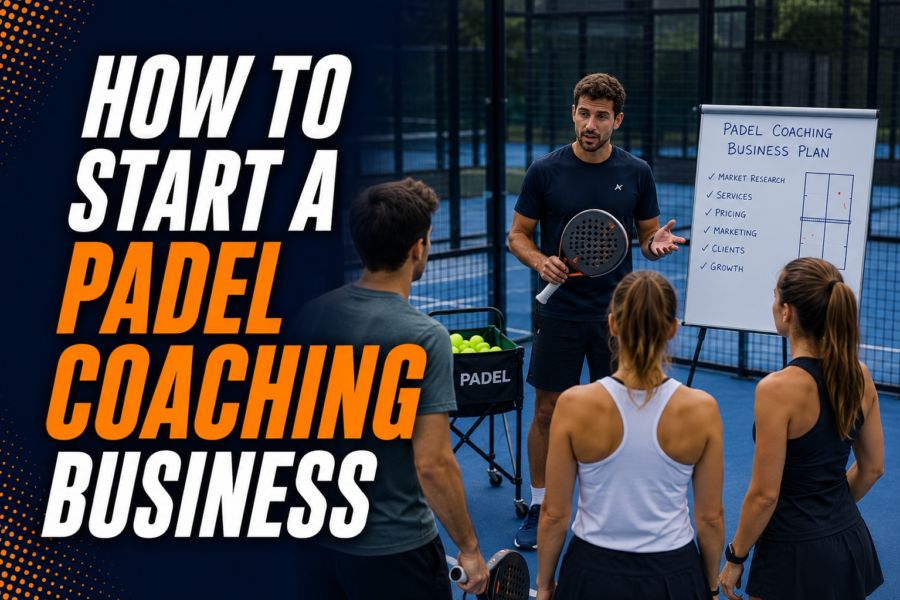
Starting a padel coaching business can turn your knowledge of the sport into a flexible and potentially profitable career. As a coach, you can offer private lessons, group programs, junior development, clinics, match analysis, corporate events, and competitive training without necessarily owning a padel facility.
However, being a good coach is only one part of running a successful coaching business. You must also understand your target customers, find suitable courts, price your services correctly, attract new players, manage bookings, and create an experience that keeps clients returning. This guide explains how to start a padel coaching business from the ground up.
Gain the Right Coaching Qualifications
Before accepting paying clients, make sure you have the technical knowledge and coaching ability required to teach safely and effectively. Playing padel at a good level does not automatically make someone a good coach. Coaching requires communication skills, lesson planning, player assessment, drill organization, safety awareness, and the ability to adapt instruction to different ages and skill levels.
Look for qualifications provided or recognized by the padel federation or coaching organization in your country. The International Padel Federation operates the FIP Academy, which provides official coach education and certification, while national federations may run their own recognized pathways. Requirements can vary depending on where you plan to coach and whether you want to work at an affiliated venue.
A formal qualification also improves credibility when approaching clubs, parents, competitive players, and potential business partners. If you are still preparing for a coaching career, read How to Become a Padel Coach and Padel Coaching Certifications for a more detailed explanation of qualifications, experience, and career pathways.
Choose Your Padel Coaching Business Model
There are several ways to structure a padel coaching business. You can work independently and rent courts, operate as a self-employed coach within an established club, become a contracted coach for multiple venues, or eventually build a larger coaching academy with additional instructors.
Starting as an independent coach usually requires the least investment because you do not need to own a court. Instead, you arrange court access with local clubs and either pay a fixed rental rate, share lesson revenue with the venue, or receive court time as part of a coaching agreement.
Your main business models may include:
- Private one-to-one lessons
- Two-player lessons
- Group coaching
- Beginner courses
- Junior coaching programs
- Competitive player development
- Match analysis sessions
- Holiday camps
- Corporate padel events
- Online video analysis
You do not need to offer every service immediately. Start with two or three clear options, test demand, and expand once you understand what local players are willing to pay for.
Identify Your Target Players
Trying to coach everyone can make your marketing unclear. A stronger approach is to identify the players you are best equipped to help and create services specifically for them.
Beginners are often the largest potential market because new players need help understanding positioning, wall play, grips, volleys, serves, lobs, and overheads. Intermediate players may want tactical coaching, improved consistency, and better movement with their partners, while competitive players usually require more personalized technical and match preparation.
You could also specialize in juniors, adults, women-only groups, older players, corporate clients, or tennis players transitioning into padel. Your specialization should match your qualifications, experience, personality, and local demand.
Research the Local Market
Before setting prices or paying for advertising, research the padel market in your area. Identify nearby clubs, existing coaches, lesson prices, court rental costs, popular playing times, and the types of programs already available.
Speak directly with players and club managers to understand what is missing. A club may already offer plenty of advanced coaching but have no structured beginner pathway. Another venue may need junior sessions, weekend clinics, or someone to organize social coaching for new members.
Market research and competitor analysis help a business understand its customers and find a clear competitive advantage. Your goal is not necessarily to charge less than every other coach. It is to offer a service that is easier to understand, more convenient, more specialized, or more valuable.
Write a Simple Business Plan
Your business plan does not need to be an enormous document. It should clearly explain what you will sell, who you will coach, where lessons will take place, how much you will charge, and how you will attract clients.
Include your expected court rental costs, coaching equipment, insurance, qualifications, marketing, booking software, website expenses, payment fees, and taxes. Official small-business guidance recommends calculating startup expenses before launching, including equipment, permits, insurance, professional services, advertising, and website costs.
Your plan should answer these basic questions:
| Question | What to Decide |
|---|---|
| Who will you coach? | Beginners, juniors, adults, competitors, or mixed groups |
| What will you offer? | Private lessons, groups, courses, camps, or match analysis |
| Where will you coach? | One club, several venues, or your own facility |
| How will you earn money? | Hourly fees, packages, memberships, or venue contracts |
| What will it cost? | Courts, equipment, insurance, marketing, and administration |
| How will clients find you? | Club referrals, social media, search engines, or partnerships |
A simple plan helps you avoid underpricing your services and makes it easier to measure whether the business is actually profitable.
Find a Venue and Negotiate Court Access
Unless you own a padel facility, you will need an agreement with one or more local clubs. Contact venue managers with a clear proposal explaining your qualifications, target players, coaching services, availability, and how your business could benefit the club.
A coach can help a venue attract new players, increase off-peak court use, improve member retention, and create a pathway from beginner lessons into regular court bookings. This gives you negotiating power, especially if you can bring your own clients.
Common court arrangements include paying the normal court rate, receiving a discounted coaching rate, sharing lesson revenue, or working as the venue’s official coach. Make sure responsibilities are clear, including bookings, cancellations, equipment storage, marketing, payments, and what happens when weather or maintenance prevents a lesson.
Decide What Services to Offer
Private coaching provides the most individual attention and usually commands the highest price per player. Group lessons cost less per participant but can generate more total revenue per court hour when enough players attend.
For example, four players paying a moderate group fee may produce more revenue than one private lesson while remaining affordable for each participant. Group sessions are particularly suitable for beginners, juniors, and social players, while private coaching works well for technical corrections and competitive development.
You can also create structured packages instead of selling only individual lessons. A six-week beginner course is easier to market because it offers a clear starting point, schedule, and outcome. Lesson packages also improve cash flow and reduce the risk of clients disappearing after one session.
Useful service ideas include:
| Service | Best For |
|---|---|
| Private lesson | Personalized technical development |
| Two-player lesson | Partners who want to improve together |
| Group clinic | Affordable coaching and social practice |
| Beginner course | Players completely new to padel |
| Junior program | Long-term youth development |
| Match analysis | Tactical improvement and positioning |
| Corporate event | Businesses and team-building groups |
| Holiday camp | Intensive seasonal coaching |
For a closer look at the advantages of different formats, check out: Group Lessons vs Private Coaching: A Comparison and Are Private Padel Lessons Worth It?
Set Your Coaching Prices
Your price should cover more than the time spent on court. It must account for court rental, travel, preparation, equipment, insurance, booking administration, taxes, payment fees, cancellations, and the time required to attract clients.
Research what qualified coaches charge locally, but do not copy competitors without understanding their business model. A club-employed coach who receives free court access has different expenses from an independent coach paying full rental rates.
A simple pricing formula is:
Coaching price = court cost + business expenses + desired coaching income
Create separate prices for private, two-player, and group sessions. You can also offer lesson packages at a small discount, but avoid reducing prices so heavily that the sessions become unprofitable.
Your rates can increase as your qualifications, reputation, demand, and results improve. For realistic expectations about earning potential, see How Much Do Padel Coaches Make?
Register the Business and Check Local Requirements
The legal steps required to start a coaching business depend on your country and location. You may need to register as self-employed, create a company, obtain a tax number, apply for permits, or meet sport-specific coaching requirements.
Licensing and permit requirements can vary by business activity and location, so check with local authorities, your national padel federation, and the venues where you intend to work. Do not assume that being allowed to play at a facility automatically gives you permission to run paid coaching sessions there.
Keep your personal and business finances separate where possible. Use clear invoices, record every expense, track payments, and understand when taxes must be reported or collected.
Get Insurance and Protect Your Business
Coaching involves physical activity, equipment, court surfaces, and a risk of accidental injury. Suitable insurance can protect you if a client is injured, property is damaged, or a dispute occurs.
Depending on your location and services, you may need public liability insurance, professional indemnity coverage, equipment insurance, or additional protection if you employ other coaches. Some accreditation systems include insurance benefits, but you should confirm exactly what is covered rather than assuming every activity or venue is included. Business insurance is designed to protect against unexpected costs such as accidents, damage, and legal claims.
Use written terms covering payments, cancellations, weather interruptions, refunds, late arrivals, injuries, and photography or video recording. If you coach children, follow all local safeguarding, background-checking, and parental-consent requirements.
Buy Essential Padel Coaching Equipment
You can start with relatively little equipment, especially if the club already provides balls and court accessories. However, owning reliable coaching equipment makes sessions easier to organize and allows you to deliver more varied drills.
Your initial equipment may include:
- Several baskets of padel balls
- Ball cart or hopper
- Cones and court markers
- Flat target zones
- Agility equipment
- First-aid kit
- Resistance bands
- Clipboard or tablet
- Tripod for video analysis
- Spare padel rackets
Do not buy every possible training tool before you have clients. Start with the essentials and add equipment when it improves a specific coaching service. For a simple checklist refer to: Essential Equipment Every Tennis and Padel Coach Should Own.
Create a Professional Brand
Your brand should make it easy for players to understand who you coach and how to book. Choose a clear business name, create a simple visual identity, and use consistent information across your website, social media profiles, club listings, and printed materials.
You do not need an expensive website at the beginning, but you should have a professional page explaining your qualifications, services, locations, prices or starting rates, availability, and booking process. Include clear photographs, client testimonials, and a direct call to action.
A confusing booking process loses customers. Let players contact you through one main method, view available sessions, understand cancellation terms, and pay without unnecessary steps.
Market Your Coaching Business
Your first clients are likely to come from clubs, personal contacts, local padel communities, and referrals. Introduce yourself to club members, attend social sessions, offer beginner events, and build relationships with venue staff.
Useful marketing methods include:
- Club noticeboards and newsletters
- Social media coaching videos
- Local search listings
- Beginner open days
- Referral discounts
- Partnerships with schools or businesses
- Free introductory clinics
- Email updates
- Client testimonials
- Short educational articles
Focus on showing how your coaching helps players rather than posting only promotional content. Simple videos explaining positioning, wall rebounds, lobs, volleys, or common beginner mistakes can demonstrate expertise and attract the right audience.
Keep Players Coming Back
A successful coaching business depends on retention, not just attracting new players. Clients are more likely to continue when they can see progress, understand the purpose of each drill, and feel that sessions are organized around their goals.
Keep brief notes on what each player is working on and review progress regularly. At the end of a lesson, explain what improved, what still needs work, and what the player should practice before the next session.
You can also create a clear development pathway. A beginner might start with an introductory course, progress into weekly group coaching, take occasional private lessons, and later join match-play clinics. This gives clients a reason to remain within your coaching system.
Manage Bookings and Cancellations
Missed lessons and late cancellations can quickly reduce your income. Create a clear cancellation policy and communicate it before a player books.
Use a digital calendar or booking platform to manage availability, reminders, payments, and waiting lists. Group sessions should have minimum and maximum participant numbers so that you know whether the lesson remains financially worthwhile.
Plan for bad weather if you coach outdoors. Your policy might include rescheduling, crediting the session, moving indoors, or replacing court time with video analysis or tactical education.
Scale the Business Carefully
Once your schedule is consistently full, you can raise prices, add group programs, work with more venues, organize camps, or bring other qualified coaches into the business. Expanding too early can create unnecessary costs, so make sure your original services are profitable and organized first.
When adding another coach, establish consistent teaching standards, safeguarding procedures, pricing, branding, and payment arrangements. Clients should receive a reliable experience regardless of which coach delivers the session.
Eventually, the business could grow into a coaching academy offering junior pathways, adult programs, tournament preparation, corporate events, online analysis, and international padel camps.
Common Mistakes to Avoid
One of the biggest mistakes is charging too little because you are new. Low prices may attract clients, but they can also make it impossible to cover court rental and operating expenses. Offer a strong introductory service without building the entire business around unsustainable discounts.
Other common mistakes include accepting every type of player, failing to track finances, buying too much equipment, relying on one venue, having no cancellation policy, and providing the same lesson to every client. A successful coaching business should be structured, measurable, and focused on delivering clear value.
Final Thoughts
Starting a padel coaching business requires more than strong playing skills. You need recognized coaching knowledge, a clear target market, reliable venue access, sensible pricing, suitable insurance, and a plan for attracting and retaining clients.
Begin with a simple service, keep your expenses controlled, and focus on delivering organized lessons that produce noticeable progress. As your reputation and client base grow, you can introduce additional programs, work with more venues, employ other coaches, and develop the business into a complete padel academy.
FAQ
Do you need qualifications to start a padel coaching business?
Requirements vary by country, federation, and venue. Even where a specific qualification is not legally mandatory, recognized training improves coaching quality, safety, credibility, and access to clubs.
Can you start without owning a padel court?
Yes. Most independent coaches begin by renting courts or partnering with existing padel clubs. Owning a facility requires much more capital and is not necessary to build a coaching business.
How much does it cost to start?
Startup costs depend on qualifications, insurance, court rental, equipment, registration, and marketing. A mobile independent coach can start with relatively low expenses compared with someone opening a complete padel academy.
Are private or group lessons more profitable?
Private lessons usually produce more revenue per player, while well-attended group sessions can generate more total revenue per court hour. A combination of both formats often creates the most balanced business.
How do padel coaches find clients?
Common methods include club referrals, social media, local search results, beginner courses, open days, partnerships, and recommendations from existing clients.
Can a tennis coach start teaching padel?
A tennis background provides useful experience, but padel has different techniques, positioning, tactics, wall play, and overheads. Tennis coaches should complete padel-specific training before marketing themselves as qualified padel coaches.