
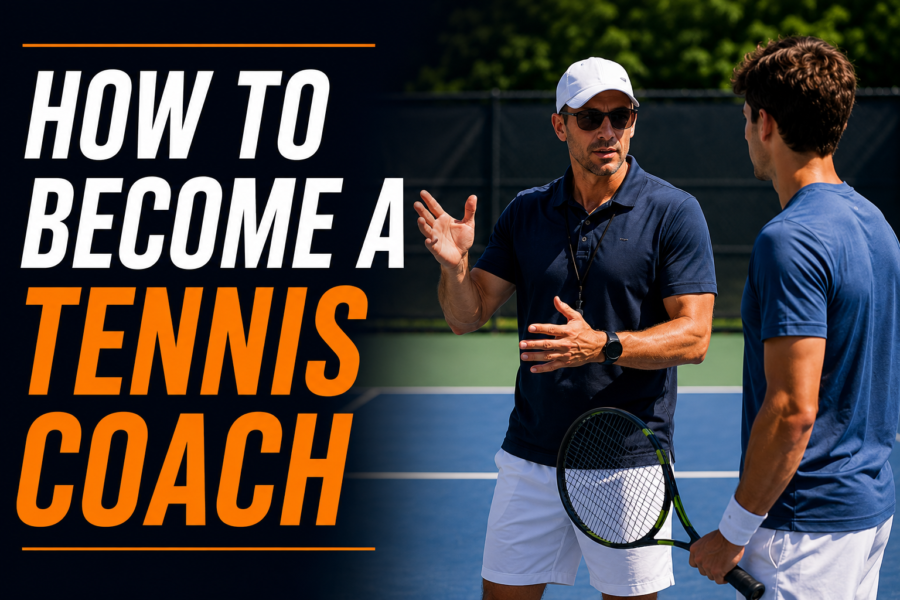
For many tennis players, there comes a point when simply playing the game isn’t enough. They want to share their knowledge, help others improve, and stay connected to the sport they love. That’s where coaching comes in.
Becoming a tennis coach can be an incredibly rewarding career. Every lesson is an opportunity to help someone hit their first rally, overcome a frustrating weakness, or achieve a long-term goal like winning a tournament or earning a college scholarship. The impact a great coach has often lasts far beyond the tennis court.
The good news is that you don’t need to be a former ATP or WTA professional to become an excellent coach. While playing experience is certainly valuable, coaching requires a different set of skills. Great coaches know how to teach, communicate, motivate, and adapt to players of all ages and abilities.
In this guide, you’ll learn the steps required to become a tennis coach, from building your tennis knowledge to earning certifications, gaining practical experience, and developing the skills needed to build a successful coaching career.
What Does a Tennis Coach Actually Do?
Many people imagine a tennis coach standing behind a basket of balls, feeding forehands for an hour. While that’s certainly part of the job, coaching involves much more than running drills.
A tennis coach is responsible for helping players improve technically, tactically, physically, mentally, and emotionally. Every lesson should move players closer to their goals, whether that’s making a high school team, competing in national tournaments, or simply enjoying weekend matches with friends.
The role changes depending on the player. A beginner might need help learning grips and footwork, while an advanced competitor may spend an entire lesson discussing match strategy, court positioning, and decision-making under pressure. Great coaches know how to adapt their approach instead of treating every player the same.
Outside of lessons, coaches also spend time planning practice sessions, analyzing matches, organizing tournaments, communicating with parents or club members, and continuing their own education. In many ways, coaching is just as much about preparation as it is about what happens on the court.
A Typical Tennis Coach’s Responsibilities
| Responsibility | Examples |
|---|---|
| Teach technique | Forehands, backhands, serves, volleys |
| Develop tactics | Point construction, shot selection, match strategy |
| Plan practices | Design drills based on player goals |
| Motivate players | Build confidence and maintain enthusiasm |
| Analyze performance | Review matches and identify areas for improvement |
| Create a positive environment | Encourage learning, sportsmanship, and discipline |
More Than Teaching Tennis
The best coaches understand that every player is different. Some athletes need technical guidance, while others need encouragement after a difficult match or help staying motivated during a long season.
A coach’s ability to communicate, listen, and build trust often has just as much impact as their technical knowledge.
Step 1: Build a Strong Understanding of Tennis
Before you can teach tennis, you need to understand the game inside and out. That doesn’t mean memorizing every coaching manual or copying professional players. It means understanding why certain techniques work, how tactics influence matches, and how players improve over time.
Strong tennis knowledge allows coaches to identify problems quickly, explain concepts clearly, and design practices that produce measurable improvement. Without that foundation, even the best communication skills won’t make someone an effective coach.
Fortunately, building your knowledge doesn’t happen overnight. It develops through playing, studying, observing experienced coaches, and continually learning from the game itself.
Every Coach Should Understand
✅ Stroke technique and biomechanics
✅ Grips and footwork
✅ Singles and doubles tactics
✅ Match strategy
✅ Rules and scoring
✅ Tennis equipment
✅ Mental preparation
✅ Injury prevention and recovery
Tennis Coaching Is Constantly Evolving
Modern tennis looks very different from the game played twenty years ago. Players move differently, rackets have changed, sports science has advanced, and data analysis has become part of everyday coaching.
That’s why successful coaches never stop learning. They watch professional matches, attend coaching workshops, read books, and exchange ideas with other coaches to keep improving.
Pro Tip: Great coaches don’t just know how to teach a forehand. They understand why it works, when to use it, and how to explain it to different types of players.
Step 2: Improve Your Own Playing Ability
One of the biggest misconceptions about coaching is that you must have been a professional player before teaching others.
That’s simply not true.
Many outstanding coaches never competed at the highest level, while some former professionals struggle to communicate their knowledge effectively. Playing ability certainly helps, but coaching and playing are two different skills.
That said, improving your own game remains one of the best ways to become a better coach.
Every match teaches valuable lessons about decision-making, pressure, movement, and shot selection. Experiencing these situations yourself makes it much easier to understand what your future players will go through.
Myth vs Reality
| Myth | Reality |
|---|---|
| You must play professionally to coach. | ❌ False |
| Playing experience helps you understand the game better. | ✅ True |
| Great players automatically become great coaches. | ❌ False |
| Coaching requires communication as much as tennis knowledge. | ✅ True |
You don’t need an ATP ranking to become an excellent coach. However, you should aim to become the best player you can be. Improving your own technique, tactical awareness, and understanding of competition will make you far more effective when teaching others.
Remember: Your ability to explain and develop players matters far more than your highest ranking.
Step 3: Earn a Coaching Certification
While it’s possible to start coaching informally, earning a recognized coaching certification is one of the best investments you can make in your career.
Certification programs teach far more than tennis technique. They cover player development, communication, safety, lesson planning, sports science, ethics, and coaching methodology. They also demonstrate to clubs, parents, and players that you meet professional coaching standards.
Many tennis clubs and academies require coaches to hold an approved certification before they can teach lessons or work with junior players.
Popular Tennis Coaching Organizations
| Organization | Region |
|---|---|
| ITF Academy | International |
| USTA | United States |
| LTA | Great Britain |
| Tennis Australia | Australia |
| Tennis Canada | Canada |
The exact certification process depends on where you live, but most organizations offer several levels of qualification. Coaches typically begin with an entry-level course before progressing to more advanced certifications as they gain experience.
Benefits of Becoming Certified
- Improves your coaching knowledge.
- Increases your credibility.
- Opens more employment opportunities.
- Provides structured learning.
- Connects you with experienced coaches.
- Gives access to continuing education.
Certification doesn’t instantly make someone a great coach, but it provides an excellent foundation that practical experience can build upon.
Step 4: Gain Real Coaching Experience
Reading books and completing certification courses will teach you the theory of coaching.
Experience teaches you everything else.
Every lesson is different. Players ask unexpected questions, struggle with different techniques, learn at different speeds, and respond to feedback in unique ways. The only way to develop these coaching instincts is by spending time on the court.
Many successful coaches begin by assisting experienced professionals. Observing how they organize lessons, explain concepts, manage groups, and communicate with players provides valuable insights that can’t always be learned in a classroom.
Great Ways to Gain Experience
- Volunteer at local clubs.
- Assist experienced coaches.
- Help with junior development programs.
- Work at summer tennis camps.
- Run beginner group lessons.
- Observe as many coaching sessions as possible.
Real Experience Beats Perfect Theory
Imagine two new coaches.
Coach A has completed several certification courses but has only taught a handful of lessons.
Coach B has assisted hundreds of sessions, observed experienced coaches for months, and regularly works with beginner players.
While both have valuable knowledge, Coach B will often feel more comfortable adapting lessons, communicating with players, and solving unexpected problems because they’ve experienced them firsthand.
The more players you coach, the more you’ll learn that every lesson is different. Developing that flexibility is one of the most important steps toward becoming a successful tennis coach.
Step 5: Develop Great Communication Skills
Knowing tennis and knowing how to teach tennis are two very different things.
Some highly accomplished players struggle as coaches because they find it difficult to explain concepts clearly or adapt their communication to different personalities. Meanwhile, many outstanding coaches never reached an elite playing level but excel because they know how to connect with people.
Communication is one of the most valuable coaching skills you’ll ever develop.
Every player learns differently. A beginner may need simple instructions and constant encouragement, while an advanced competitor might prefer detailed tactical discussions and technical feedback. Great coaches recognize these differences and adjust their communication rather than relying on the same explanations for everyone.
Listening is just as important as speaking. The best coaches encourage players to ask questions, share concerns, and discuss their goals. These conversations help coaches understand what motivates each player and allow them to create more effective practice sessions.
Great Coaches Communicate By…
✅ Giving clear, simple instructions.
✅ Listening before offering advice.
✅ Providing constructive feedback.
✅ Asking players questions.
✅ Encouraging rather than criticizing.
✅ Adapting their communication style.
✅ Building trust through consistency.
Example
Imagine a player who misses several forehands in a row.
A coach might simply say:
“Keep your racket lower.”
A great coach might ask:
“What did that shot feel like? Did you notice where the ball contacted the strings?”
Instead of just fixing the problem, they’re helping the player understand why it happened. That approach develops more independent players who can solve problems during matches without relying on constant coaching.
Step 6: Keep Learning Throughout Your Career
The best coaches never believe they’ve learned everything.
Tennis continues to evolve through advances in sports science, biomechanics, equipment, nutrition, recovery methods, and performance analysis. Players also change, meaning the coaching methods that worked ten years ago may not always be the most effective today.
Great coaches stay curious.
They watch professional matches with a coach’s eye, attend workshops, read coaching books, discuss ideas with other coaches, and constantly reflect on their own lessons. Every player they work with becomes another opportunity to improve.
Continuous learning doesn’t always require expensive certifications. Sometimes the biggest improvements come from observing experienced coaches, analyzing your own sessions, or simply asking yourself what could have been done better after each lesson.
Ways to Continue Improving
- Watch professional matches analytically.
- Attend coaching workshops and seminars.
- Read coaching books and research.
- Learn from experienced coaches.
- Study sports psychology.
- Understand modern biomechanics.
- Review your own lessons.
- Ask players for feedback.
Growth Mindset
| Fixed Mindset | Growth Mindset |
|---|---|
| “I already know enough.” | “There’s always something new to learn.” |
| Uses the same drills every lesson. | Regularly updates training methods. |
| Avoids feedback. | Welcomes constructive criticism. |
| Relies on experience alone. | Combines experience with education. |
The players who improve the most usually have coaches who continue improving alongside them.
Skills Every Tennis Coach Needs
Becoming a successful coach requires much more than understanding how to hit a forehand or serve. Technical knowledge provides the foundation, but communication, leadership, and emotional intelligence are often what separate average coaches from exceptional ones.
The most successful coaches combine tennis expertise with strong interpersonal skills, allowing them to teach effectively while building lasting relationships with their players.
Technical Skills
| Skill | Why It’s Important |
|---|---|
| Stroke analysis | Corrects technical errors efficiently. |
| Tactical knowledge | Helps players make smarter decisions. |
| Match analysis | Identifies strengths and weaknesses. |
| Practice planning | Creates purposeful training sessions. |
| Physical preparation | Improves movement and reduces injuries. |
| Rules and scoring | Ensures players compete correctly. |
Soft Skills
| Skill | Why It’s Important |
|---|---|
| Communication | Players understand instructions more easily. |
| Patience | Every player develops at a different pace. |
| Leadership | Creates a positive learning environment. |
| Organization | Keeps practices productive. |
| Empathy | Builds stronger relationships with players. |
| Adaptability | Allows coaches to work with different personalities. |
| Problem-solving | Finds solutions during lessons and matches. |
The Best Coaches Consistently…
- Continue learning throughout their careers.
- Stay positive during difficult moments.
- Adapt to every player.
- Lead by example.
- Encourage independent thinking.
- Celebrate improvement, not just victories.
- Create an enjoyable learning environment.
Remember: Players don’t choose coaches simply because of their tennis knowledge. They stay because they trust them.
Final Thoughts
Becoming a tennis coach is about much more than knowing how to hit every shot correctly. It’s about helping players achieve goals they couldn’t reach on their own while creating an environment where learning is enjoyable, challenging, and rewarding.
Every successful coach starts in the same place: by learning the game, gaining experience, and developing the ability to connect with people. Over time, technical knowledge becomes second nature, but the qualities that truly define great coaches, communication, patience, leadership, and a willingness to keep learning, continue to grow throughout their careers.
Whether your dream is coaching beginners at a local club or working with elite tournament players, the journey begins with a genuine passion for tennis and a commitment to helping others improve.
The players you coach may eventually forget specific drills or practice sessions, but they’ll always remember the confidence you helped them build and the positive impact you had on their journey. That’s what makes coaching one of the most rewarding careers in tennis.
FAQ
Do you need to be a professional tennis player to become a coach?
No. While playing experience is valuable, many successful coaches never competed professionally. Coaching requires communication, teaching ability, leadership, and a deep understanding of the game rather than elite playing results.
Do I need a coaching certification?
It depends on where you plan to coach. Many tennis clubs, academies, and national organizations require coaches to hold a recognized certification, especially when working with junior players. Even when it’s not required, certification improves your knowledge and credibility.
How long does it take to become a tennis coach?
There’s no fixed timeline. You can begin assisting experienced coaches within a few months, but becoming a highly skilled coach usually takes years of learning, coaching experience, and continued education.
Can I become a tennis coach without coaching experience?
Everyone starts somewhere. Many coaches begin by volunteering at local clubs, assisting certified coaches, or working at tennis camps before building their own client base.
Is tennis coaching a good career?
For people who love tennis and enjoy helping others improve, coaching can be an incredibly rewarding career. It offers flexibility, opportunities for continuous learning, and the satisfaction of making a lasting impact on players of all ages.
What’s the difference between a tennis coach and a tennis instructor?
A tennis instructor primarily teaches technical skills and organizes lessons, while a tennis coach focuses on the player’s complete development, including tactics, mental preparation, physical training, and long-term progress.