
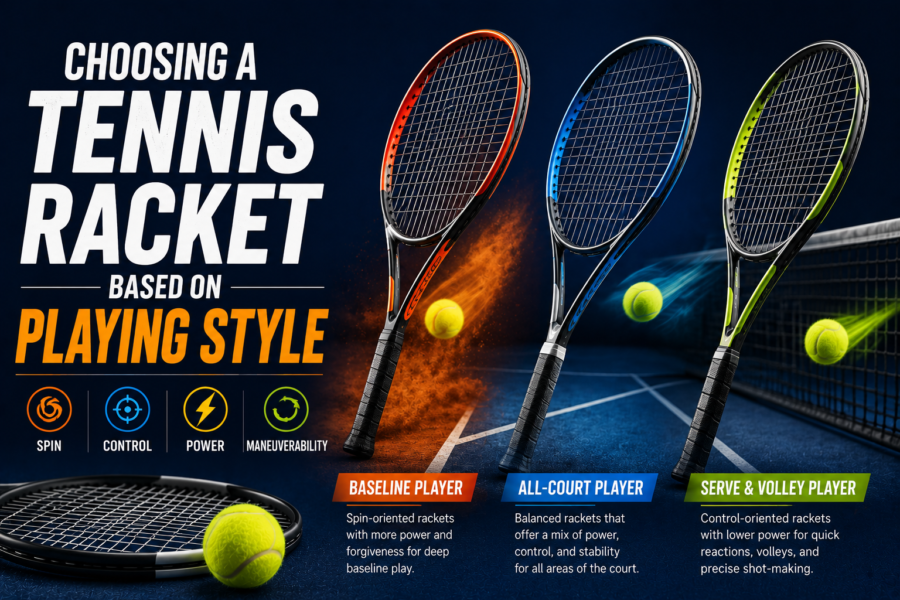
Your playing style is one of the biggest factors when choosing a tennis racket. Two players at the same level may need completely different frames depending on how they construct points, generate pace, and move around the court.
Some players rely on heavy topspin from the baseline, while others attack the net, hit flatter shots, or focus on consistency and defense. The right racket should support your natural strengths instead of forcing you to completely change your game.
Modern rackets are designed around specific styles of play, which is why understanding your tendencies on court makes racket selection much easier.
Best Rackets for Baseliners
Baseliners usually benefit from rackets that emphasize spin, stability, and controlled power. Since modern baseline tennis involves aggressive topspin and long rallies, many baseliners prefer frames that help generate fast racket head speed and heavy ball rotation.
Spin-friendly rackets with aerodynamic beam designs and open string patterns are especially popular among baseline players. These rackets make it easier to create higher net clearance and heavier topspin during aggressive rallies.
Stability also matters because baseliners constantly deal with heavy pace from the back of the court. A racket that feels too light or unstable can struggle during long exchanges against powerful hitters.
Most baseline players prefer rackets that combine:
- Open string patterns
- Moderate to high swingweights
- Good stability
- Fast acceleration
- Spin-friendly response
Modern “spin rackets” are largely built around this style of tennis.
Best Rackets for Aggressive Players
Aggressive players usually prioritize control and precision because they attack frequently and swing fast. These players often take the ball early, flatten out shots, and look to dictate rallies instead of simply rallying safely.
Control-oriented rackets help aggressive players swing freely without losing confidence in shot placement. Slightly heavier frames are also common because they feel more stable during high-intensity hitting.
Many aggressive players prefer:
- Lower-powered frames
- Predictable launch angles
- Stable response
- Precision under pressure
- Controlled spin potential
Advanced aggressive players often use modern player rackets that blend spin and control together instead of extremely powerful frames.
The goal is usually to create enough pace naturally while maintaining confidence during full swings.
Best Rackets for Serve-and-Volley Players
Serve-and-volley players often value maneuverability, touch, and feel more than extreme topspin. Since this style requires quick reactions at the net, many players prefer head-light rackets that move quickly through the air.
Maneuverable frames make volleys, half-volleys, and quick exchanges feel easier and more natural. Flexible rackets are also popular because they provide better touch and feedback during delicate net play.
Serve-and-volley players usually look for:
- Fast handling
- Good touch and feel
- Head-light balance
- Stable volleys
- Precision during transition play
While modern tennis is more baseline-oriented than before, all-court and doubles players still benefit greatly from maneuverable and responsive rackets.
Best Rackets for Doubles Players
Doubles players typically prioritize maneuverability, quick reactions, and net performance. Fast exchanges happen constantly in doubles, so rackets that feel quick and easy to position are usually preferred.
Head-light rackets are especially popular because they allow faster reactions during volleys and return battles. Stability still matters, but many doubles players prefer slightly lighter-feeling setups compared to heavy baseline-focused frames.
Good doubles rackets usually provide:
- Fast handling
- Comfortable volleys
- Easy maneuverability
- Solid touch
- Good stability at the net
Many doubles specialists also prefer slightly more forgiving frames because reaction shots and reflex volleys happen so quickly.
Best Rackets for Junior Players
Junior players should focus on rackets that support proper development instead of copying professional setups too early. One of the most common mistakes young players make is using heavy advanced frames that are too demanding physically.
A junior racket should feel comfortable, manageable, and easy to swing consistently. Lightweight frames help younger players develop proper racket acceleration and timing without placing unnecessary stress on the arm or shoulder.
Proper sizing is also extremely important. Using a racket that is too large or heavy can negatively affect technique and increase injury risk.
As juniors improve physically and technically, they can gradually transition toward more stable and control-oriented frames.
The focus should always be:
- Proper development
- Comfort
- Easy maneuverability
- Forgiveness
- Building confidence
Best Rackets for Seniors
Senior players often benefit most from comfort-focused rackets that provide easy power without excessive strain on the body. As players age, protecting the arm, shoulder, and wrist becomes increasingly important.
Lighter and more arm-friendly frames usually help reduce fatigue during longer sessions. Larger sweet spots and slightly more powerful rackets can also make tennis feel easier and more enjoyable without requiring huge swings.
Comfort-oriented rackets often feature:
- Softer flex ratings
- Larger head sizes
- Easier power
- Better vibration dampening
- More forgiving responses
Many senior players also benefit from avoiding extremely stiff or overly heavy frames, especially when combined with harsh polyester strings.
The best senior racket is usually one that feels comfortable, stable, and easy to swing while still providing enough control and confidence during rallies.