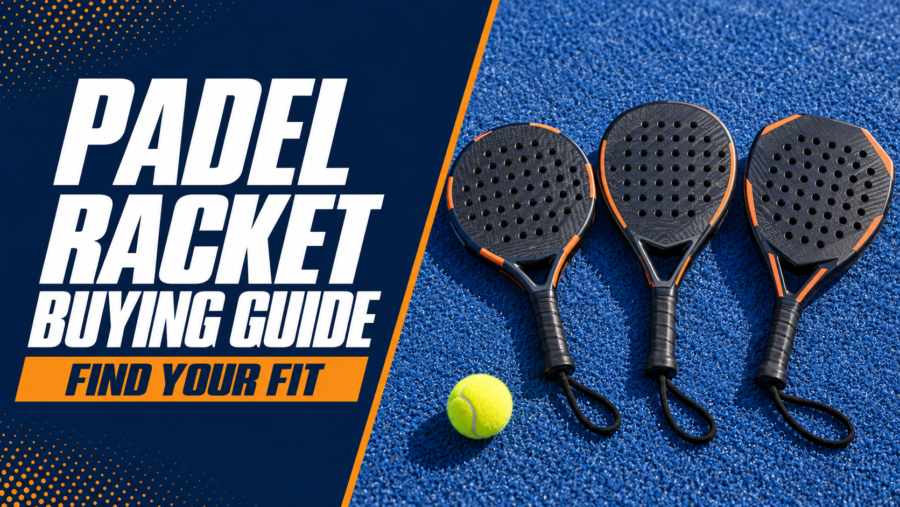
Choosing the right padel racket can completely transform your game. The right racket can give you more control on defensive shots, extra power on smashes, better comfort during long matches, and greater confidence in every exchange. The wrong racket, however, can make even simple shots feel difficult, leading to unnecessary errors and slower improvement.
One of the biggest mistakes players make is assuming there is a single “best” padel racket. In reality, the ideal racket depends on your skill level, playing style, physical strength, and personal preferences. A racket that feels perfect for an advanced attacking player may be far too demanding for a beginner, while a control-focused racket designed for consistency may leave a power player wanting more explosiveness.
Modern padel rackets are also more specialized than ever before. Differences in shape, balance, weight, core density, face materials, and surface texture can dramatically change how a racket performs. Some rackets are built for maximum power and aggressive overheads, while others focus on control, comfort, maneuverability, or all-around versatility. Understanding these differences is the key to making a smart buying decision.
This guide is designed to simplify the process and explain exactly what matters when choosing a padel racket. Whether you are buying your first racket, upgrading from a beginner model, or searching for a high-performance racket to take your game to the next level, you’ll learn how each specification affects performance and which characteristics best match your style of play.
Padel Rackets Explained
A padel racket does far more than simply hit the ball back over the net. Every racket is designed with specific performance characteristics that influence power, control, comfort, maneuverability, and overall feel on court. Even small differences in shape, weight, balance, or materials can completely change how a racket performs during a match.
This is why two players using different rackets can experience the game very differently. One racket may help generate effortless power on smashes, while another provides greater precision and control during defensive exchanges. Understanding what a racket actually does is the first step toward choosing the right one for your game.
What Does a Padel Racket Actually Do?
At its core, a padel racket is responsible for transferring energy from your swing into the ball. How efficiently it does this depends on its construction, materials, balance, and shape.
One of the most noticeable effects of a racket is power generation. Certain rackets are designed to help players produce faster shots and more explosive smashes. High-balance rackets, diamond-shaped designs, and firmer constructions generally create more power because they transfer more energy into the ball during impact.
Control and precision are equally important. A control-oriented racket allows players to place the ball accurately, maintain consistency under pressure, and execute delicate shots with confidence. Round-shaped rackets and lower-balance designs are often preferred by players who prioritize placement and tactical play over raw power.
The sweet spot is another critical factor. This is the area of the racket face that produces the cleanest and most efficient contact. Rackets with larger sweet spots are more forgiving and easier to use because mishits still produce decent results. Smaller sweet spots can offer more precision but require greater consistency and timing.
Maneuverability determines how quickly the racket moves through the air. Lightweight and lower-balance rackets are generally easier to position during fast exchanges, defensive situations, and net play. This allows players to react faster and prepare earlier for incoming shots.
Comfort and vibration absorption also play a major role. Every shot creates vibration that travels through the racket into the hand, wrist, and arm. Softer cores, vibration-dampening technologies, and more flexible constructions help reduce this shock, making the racket more comfortable during long matches and lowering the risk of arm discomfort.
Ultimately, every padel racket is a balance between power, control, maneuverability, forgiveness, and comfort. Different designs prioritize different characteristics, which is why no racket performs exactly the same.
Why Racket Choice Matters
Choosing the right racket can make a significant difference in both performance and enjoyment on court. A racket that suits your game helps you play more naturally, while a poor fit can make even simple shots feel difficult and inconsistent.
Different rackets are designed for different types of players. Beginners usually benefit from forgiving rackets with larger sweet spots and easier handling, while advanced players often prefer more demanding rackets that provide greater precision and power potential. A racket that feels perfect for a professional player may actually make the game harder for a recreational player.
The right racket can also improve confidence. When players trust their equipment, they swing more freely, make decisions more decisively, and focus on tactics rather than worrying about execution. Confidence often translates directly into better performance.
Consistency is another major benefit. A racket that matches your level and style helps produce more predictable results. Defensive players may prefer maneuverability and control, while aggressive players often look for power and stability. Matching the racket to your strengths allows you to maximize your natural game rather than constantly fighting against your equipment.
The goal is not to buy the most expensive racket or the one used by your favorite professional. The goal is to find a racket that complements your skills, supports your playing style, and helps you perform at your best every time you step onto the court.
Understanding Padel Racket Specifications
When comparing padel rackets, the specifications are what determine how the racket actually performs on court. Two rackets may look similar at first glance, but differences in shape, weight, balance, materials, and construction can completely change the way they feel during play.
Understanding these specifications makes it much easier to choose a racket that matches your skill level and playing style. Instead of relying on marketing claims or professional endorsements, you can evaluate exactly how a racket is likely to perform before stepping onto the court.
Racket Shape
Shape is one of the most important factors in padel because it directly affects power, control, sweet spot size, and forgiveness.
Round rackets are designed primarily for control and consistency. Their weight distribution sits closer to the handle, creating a larger sweet spot near the center of the racket. This makes them extremely forgiving and easy to use, especially for beginners and defensive players. Players who value precision, comfort, and consistency often gravitate toward round designs.
Teardrop rackets sit between round and diamond shapes. They offer a balanced blend of power and control, making them the most versatile category on the market. The sweet spot is positioned slightly higher than on a round racket, allowing for more attacking potential while maintaining good forgiveness. Many intermediate players consider teardrop rackets the ideal all-around option.
Diamond rackets prioritize power above everything else. Their weight is concentrated toward the top of the racket, creating greater momentum through the ball during smashes and aggressive shots. The trade-off is a smaller sweet spot and less forgiveness on off-center contact. Diamond rackets are typically best suited to advanced and attacking players who can consistently find the center of the racket face.
Hybrid shapes combine elements of multiple categories. Manufacturers often create hybrid designs to offer a balance between forgiveness, maneuverability, control, and power. These rackets appeal to players who want versatility without committing fully to one style.
Weight
Weight significantly influences how a racket feels during both offensive and defensive situations. Even small differences can change maneuverability, stability, and comfort.
Lightweight rackets are easier to move and position quickly. They improve reaction speed during fast exchanges and reduce fatigue over long matches. Beginners, juniors, seniors, and defensive players often prefer lighter setups because they feel less demanding physically.
Medium-weight rackets offer the most balanced overall performance. They combine reasonable maneuverability with enough stability to handle powerful shots effectively. Most recreational and intermediate players fall comfortably into this category.
Heavy rackets provide superior stability and power because more mass moves through the ball at impact. They tend to feel more solid during volleys and smashes, but they require greater strength and technique to use effectively. Advanced players often appreciate the extra stability, particularly during aggressive play.
Weight affects nearly every aspect of performance. Lighter rackets generally improve maneuverability and comfort, while heavier rackets increase stability and power.
Balance
Balance describes how weight is distributed throughout the racket. Two rackets with identical weights can feel completely different because of their balance points.
Low-balance rackets place more weight closer to the handle. This makes them feel quicker and easier to maneuver, which benefits defensive play, net exchanges, and reaction shots. Most round rackets feature low balance.
Medium-balance rackets distribute weight more evenly throughout the frame. They provide a versatile mix of power and control, making them suitable for a wide range of players and styles.
High-balance rackets concentrate more weight toward the head of the racket. This increases power potential because the racket carries more momentum through the ball. High-balance designs are common in diamond-shaped power rackets but can feel more demanding physically.
The general trade-off is simple:
- Lower balance = more maneuverability and control
- Higher balance = more power and stability
Sweet Spot
The sweet spot is the area of the racket face that produces the cleanest and most efficient contact with the ball. Shots struck within this zone feel more solid, generate better pace, and create fewer unwanted vibrations.
Shape plays a major role in sweet spot size. Round rackets typically offer the largest sweet spots because their weight distribution is centered. Teardrop rackets provide moderately sized sweet spots, while diamond rackets usually have the smallest and most demanding sweet spots.
A larger sweet spot improves forgiveness by allowing players to maintain good performance even when contact is slightly off-center. This is one reason why beginners often benefit from round rackets.
Smaller sweet spots can provide greater precision but require better timing and ball striking consistency.
Thickness
Virtually all modern padel rackets use the standard 38mm thickness allowed by padel regulations. Because of this standardization, thickness itself varies very little between modern rackets.
However, construction within that 38mm profile still affects performance significantly. The combination of core density, face materials, and internal structure determines whether the racket feels soft, firm, stable, or powerful.
Generally speaking, stiffer constructions feel more direct and powerful, while softer constructions feel more comfortable and forgiving.
Surface Texture
Surface texture has become increasingly important as players look for additional spin and ball control.
Smooth surfaces provide a clean and traditional feel. They rely primarily on technique rather than texture to generate spin.
Rough surfaces increase friction between the ball and racket face, helping players create more slice, kick, and spin during contact.
Sandpaper finishes use a gritty coating applied to the racket face. These textures grip the ball effectively and are particularly popular among players who use heavy spin frequently.
3D textured surfaces incorporate raised patterns molded directly into the racket face. These textures are often more durable than painted sandpaper finishes because they do not wear away as quickly.
While textured surfaces can enhance spin potential, technique remains the most important factor in generating spin effectively.
Core Materials
The core is the internal foam or EVA material that largely determines how a racket feels during impact.
Soft EVA cores compress more easily, producing greater comfort, easier power, and a larger sweet spot. They are especially popular among beginners and recreational players.
Medium EVA cores provide a balanced combination of comfort, control, and power. Many all-around rackets use medium-density cores because they suit a broad range of players.
Hard EVA cores compress less during impact, creating a firmer and more precise response. Advanced players often prefer hard cores because they provide better control and power at higher swing speeds.
Foam cores are generally softer than EVA constructions. They offer excellent comfort and vibration absorption but may provide less precision and durability than denser EVA alternatives.
Core density has a huge impact on how a racket feels and is often one of the first specifications experienced players evaluate.
Face Materials
The racket face determines much of the feel, responsiveness, and performance during ball contact.
Fiberglass faces are softer and more flexible than carbon fiber. They provide easy power, comfort, and forgiveness, making them extremely popular among beginners and intermediate players.
Carbon fiber faces are stiffer, stronger, and more responsive. They generate a more direct feel and greater precision, particularly during aggressive shots. Advanced players often prefer carbon because of its stability and control.
Manufacturers frequently advertise different carbon weaves such as:
- 3K Carbon
- 12K Carbon
- 18K Carbon
- 24K Carbon
These numbers refer to the number of carbon filaments woven together. Higher-K constructions generally create stiffer and more responsive surfaces, though the overall feel also depends heavily on resin systems, core materials, and construction methods.
Carbon-aluminized materials combine carbon fiber with aluminum fibers to improve durability and maintain more consistent performance across varying temperatures. These materials are increasingly common in premium performance rackets.
Frame Construction
The frame serves as the foundation of the racket and significantly influences durability, stability, and overall feel.
Carbon frames are stronger, more stable, and generally more durable than fiberglass alternatives. They resist twisting during impact and provide a more solid response, making them common in performance-oriented rackets.
Fiberglass frames offer greater flexibility and comfort but may sacrifice some stability and long-term durability compared to carbon constructions.
Hybrid constructions combine carbon and fiberglass elements to balance comfort, power, durability, and control. Many modern rackets use hybrid designs because they allow manufacturers to target a broader range of player preferences.
A well-designed frame works together with the face and core materials to create the racket’s overall personality. Understanding how these components interact is essential when selecting a racket that matches your game.
How Padel Rackets Affect Performance
Every padel racket is designed to emphasize certain performance characteristics. Some rackets help players generate maximum power on smashes, while others prioritize control, comfort, maneuverability, or defensive consistency. This is why two rackets can feel completely different even when used by the same player.
Understanding how racket specifications influence performance makes it much easier to identify which type of racket suits your game. Shape, balance, weight, core density, and materials all work together to determine how the racket behaves during rallies.
The key is finding the right balance between power, control, comfort, and maneuverability rather than focusing on a single characteristic.
Power
Power is one of the first things players notice when using a new racket. A powerful racket helps generate faster shots and more explosive smashes with less physical effort.
Several factors contribute to power. Diamond-shaped rackets are generally considered the most powerful because their weight distribution places more mass toward the top of the racket. This creates greater momentum through the ball during impact and rewards aggressive swings.
High-balance rackets also increase power potential. Since more weight sits farther from the hand, the racket carries additional force through contact. This helps produce heavier smashes and more penetrating attacking shots.
Core density plays a major role as well. Hard EVA cores compress less during impact, allowing players with faster swing speeds to transfer more energy into the ball. Advanced players often prefer these firmer constructions because they can unlock significant power when struck cleanly.
Stiff face materials such as carbon fiber further enhance power by creating a more direct response. Less energy is absorbed by the racket itself, resulting in greater ball speed and a more explosive feel.
The trade-off is that power-oriented rackets are usually less forgiving and often require better technique to use effectively.
Control
Control refers to a racket’s ability to produce predictable and accurate shot placement. Control-oriented rackets help players direct the ball precisely and maintain consistency during both defensive and offensive exchanges.
Round-shaped rackets are generally considered the best option for control because they feature larger sweet spots and more centralized weight distribution. This creates a balanced and predictable response across a larger hitting area.
Lower-balance rackets also contribute significantly to control. Since the weight sits closer to the hand, players can maneuver the racket more precisely and make adjustments more easily during fast rallies.
Softer racket constructions often improve touch and feel. While they may sacrifice some outright power, they provide better feedback during delicate shots such as volleys, lobs, and drop shots.
Control-focused rackets are particularly valuable for:
- Defensive players
- Beginners
- Tactical players
- Right-side players
- Players prioritizing consistency
The greatest benefit of control-oriented rackets is confidence. Players can swing more freely knowing the racket will respond predictably during pressure situations.
Spin
Spin has become increasingly important in modern padel, particularly for players who use aggressive viboras, bandejas, kick smashes, and sliced volleys.
One of the biggest contributors to spin generation is surface texture. Rough surfaces increase friction between the ball and racket face, helping players grip the ball more effectively during contact.
Modern rackets achieve this through:
- Sandpaper coatings
- 3D textured patterns
- Embedded rough finishes
- Specialized surface technologies
However, racket technology alone does not create spin. Swing speed and technique remain the most important factors. A player with excellent technique can generate substantial spin even with a smooth racket surface.
Textured surfaces simply help maximize spin potential by improving the interaction between the ball and racket during contact.
For advanced players who already produce significant racket head speed, these technologies can provide a noticeable advantage when executing spin-heavy shots.
Comfort
Comfort is one of the most overlooked aspects of racket performance, yet it has a huge impact on long-term enjoyment and injury prevention.
Comfortable rackets absorb shock more effectively and reduce the amount of vibration transmitted into the hand, wrist, elbow, and shoulder. This becomes especially important for players who train frequently or have a history of arm issues.
Softer EVA cores are typically the most comfortable because they compress more during impact and absorb a larger portion of the shock generated by ball contact.
Many modern rackets also incorporate vibration dampening systems within the frame or handle. These technologies help reduce harsh feedback and improve overall feel during play.
Arm-friendly rackets often feature:
- Softer cores
- Flexible materials
- Larger sweet spots
- Better vibration absorption
- Lower shock transmission
Players dealing with tennis elbow or general arm discomfort should prioritize comfort over maximum power, as the wrong racket setup can significantly increase stress on the arm.
Maneuverability
Maneuverability refers to how quickly and easily a racket moves through the air. This characteristic is crucial during defensive play, fast exchanges at the net, and situations requiring rapid reactions.
Weight is one of the biggest factors influencing maneuverability. Lighter rackets accelerate more easily and require less effort to reposition during rallies. This helps players react faster and maintain control in difficult defensive situations.
Balance also plays a major role. Low-balance rackets feel quicker because more of the weight sits near the handle. Even heavier rackets can feel surprisingly maneuverable if they maintain a sufficiently low balance point.
Highly maneuverable rackets offer advantages such as:
- Faster reactions
- Easier defensive play
- Quicker volley exchanges
- Improved comfort during long matches
- Less fatigue
This is one reason why many defensive and right-side players prefer lower-balance designs that prioritize handling speed over maximum power.
Stability
Stability refers to how solid the racket feels during impact, particularly on hard-hit balls and off-center shots. A stable racket resists twisting and maintains a more consistent response when absorbing pace.
Heavier rackets are generally more stable because the additional mass helps the frame remain steady during contact. This creates a more controlled and confident feel when facing powerful opponents.
Carbon construction also contributes significantly to stability. Carbon fiber is extremely strong and rigid, helping the racket maintain structural integrity during high-speed impacts.
Stable rackets are especially useful when:
- Blocking smashes
- Defending hard drives
- Volleys at close range
- Handling powerful opponents
- Returning aggressive shots
The trade-off is usually maneuverability. Extremely stable rackets can feel slower and more physically demanding, especially for recreational players.
The best rackets find an effective balance between stability and maneuverability, providing enough solidity to handle pace without becoming difficult to move quickly around the court.
Understanding Padel Racket Shapes
Racket shape is arguably the most important specification when choosing a padel racket because it influences nearly every aspect of performance. Power, control, sweet spot size, forgiveness, maneuverability, and balance are all heavily affected by shape.
Most modern padel rackets fall into one of three main categories: round, teardrop, or diamond. While manufacturers often market slight variations and hybrid designs, almost every racket can be traced back to one of these fundamental shapes.
Understanding the strengths and weaknesses of each shape is one of the quickest ways to narrow down the right racket for your level and playing style.
Round Rackets
Round rackets are designed primarily for control, consistency, and forgiveness. Their weight distribution sits closer to the center and lower portion of the racket, creating a large sweet spot that is positioned near the middle of the face.
Because the sweet spot is both large and easy to access, round rackets are the most forgiving category. Mishits lose less power and stability compared to teardrop or diamond designs, helping players maintain consistency during rallies. This forgiveness is especially valuable for beginners who are still developing timing and clean ball striking.
Round rackets are also known for delivering excellent control. The centralized balance makes the racket easier to maneuver and position accurately, allowing players to place shots with confidence. Defensive shots, lobs, volleys, and touch play often feel more natural because the racket responds predictably during contact.
Another advantage is comfort. Most round rackets feature lower balance points and easier handling characteristics, reducing strain on the arm and making them more comfortable during long matches.
Round rackets are typically ideal for:
- Beginners
- Defensive players
- Control-oriented players
- Right-side players
- Players prioritizing consistency
- Anyone seeking maximum forgiveness
While they can still generate plenty of power when used correctly, power is usually not their primary focus. Their biggest strength lies in helping players make more shots and maintain control under pressure.
Teardrop Rackets
Teardrop rackets occupy the middle ground between round and diamond designs. They are often considered the most versatile category because they provide a balanced blend of power and control without leaning too heavily toward either extreme.
The sweet spot sits slightly higher than on a round racket, allowing players to access more attacking potential while still maintaining a good degree of forgiveness. This balance makes teardrop rackets incredibly popular among intermediate players who want to expand their game without sacrificing consistency.
One reason teardrop rackets dominate the market is their adaptability. They perform well in virtually every area of the game:
- Attacking shots
- Defensive play
- Volleys
- Smashes
- Bandejas
- Viboras
- Counterattacking situations
Many players find that a teardrop racket grows with their game. Beginners can learn comfortably with them, intermediates can develop more aggressive shotmaking, and advanced players can still compete at a high level with the right model.
Because they offer such a balanced package, teardrop rackets are often the safest recommendation for players who are unsure exactly what they need.
They are particularly well suited for:
- Intermediate players
- All-court players
- Players transitioning from beginner level
- Those wanting both power and control
- Players who enjoy a versatile style of play
For many recreational players, the teardrop category provides the best overall combination of performance and forgiveness.
Diamond Rackets
Diamond rackets are built with one primary objective: maximum power. Their weight distribution sits higher in the racket head, creating more momentum through the ball and helping players generate explosive pace on attacking shots.
The higher balance point allows advanced players to hit harder smashes, more aggressive volleys, and more penetrating overheads. This is why many professional and attacking players gravitate toward diamond-shaped rackets.
However, this additional power comes with compromises. The sweet spot is generally smaller and positioned higher on the racket face, making clean contact more important. Off-center hits can feel less forgiving and may result in greater loss of control or power.
Diamond rackets are also usually more demanding physically. The higher balance makes them feel heavier during play, requiring stronger technique and better racket preparation to maximize performance.
Their biggest strengths include:
- Maximum power potential
- Explosive smashes
- Aggressive net play
- Strong overhead performance
- Greater ball penetration
Diamond rackets are typically best suited to:
- Advanced players
- Aggressive left-side players
- Attack-focused competitors
- Players with good technique
- Those who prioritize power over forgiveness
For players capable of consistently finding the sweet spot, diamond rackets can be devastating offensive weapons. For beginners, however, they often feel unnecessarily difficult to control.
Which Shape Should You Choose?
Choosing the right shape depends primarily on your skill level, playing style, and priorities on court.
If your main goals are consistency, comfort, and control, a round racket is usually the best option. The large sweet spot and forgiving nature make the game easier and more enjoyable, especially for developing players.
If you want a balanced combination of power and control, a teardrop racket is often the ideal choice. It offers versatility across all areas of the game and suits the widest range of players.
If your focus is attacking play, powerful smashes, and aggressive net dominance, a diamond racket may provide the extra power you’re looking for. Just be prepared for a smaller sweet spot and a more demanding learning curve.
As a general guideline:
- Beginners: Round
- Most intermediate players: Teardrop
- Advanced attacking players: Diamond
That said, there are always exceptions. Some advanced players still prefer round rackets for their control, while some intermediate players enjoy the extra power of diamond shapes. The best shape is ultimately the one that complements your strengths and helps you play your most confident padel.
Soft vs Medium vs Hard Padel Rackets
One of the most important factors affecting how a padel racket feels is its core density. The core is the EVA or foam material inside the racket, and its firmness plays a huge role in power, control, comfort, feel, and forgiveness.
Many players focus heavily on shape and weight when choosing a racket, but core density often has an even greater impact on how the racket performs during actual play. Two rackets with identical shapes and balances can feel completely different simply because one uses a soft core while the other uses a harder construction.
Generally speaking, softer rackets prioritize comfort and forgiveness, while harder rackets focus on precision and performance at higher swing speeds. Medium-density cores sit between the two extremes and provide the most balanced overall experience.
Understanding these differences can help you choose a racket that complements both your skill level and your style of play.
Soft Rackets
Soft padel rackets use low-density EVA or foam cores that compress easily when the ball impacts the racket face. This compression creates a softer sensation and helps the racket generate power with less effort.
One of the biggest advantages of a soft racket is comfort. The softer core absorbs more vibration during impact, reducing stress on the wrist, elbow, and shoulder. This makes soft rackets particularly appealing for players who have experienced arm discomfort or simply want a more comfortable playing experience.
Soft rackets also provide easier power. Because the core compresses more readily, the ball rebounds with less effort from the player. This helps beginners and recreational players generate depth and pace without requiring perfect technique or maximum swing speed.
Forgiveness is another major benefit. Soft cores often create a larger effective sweet spot, meaning off-center hits still produce reasonable results. Players who do not consistently strike the center of the racket face usually find soft rackets much easier to play with.
Soft rackets are typically ideal for:
- Beginners
- Recreational players
- Seniors
- Players with arm issues
- Defensive players
- Anyone prioritizing comfort
The main drawback is that very soft rackets can feel less precise during aggressive shots. Advanced players may sometimes find them too powerful or lacking in feedback when hitting hard.
Medium Rackets
Medium-density cores offer a balance between the comfort of soft rackets and the precision of hard rackets. For many players, this category represents the sweet spot of padel racket performance.
A medium core provides enough compression to generate comfortable power while still maintaining good control and responsiveness. This balanced response makes medium rackets extremely versatile across all areas of the game.
Players can defend comfortably from the back of the court, attack confidently at the net, and execute touch shots without feeling that the racket is working against them. This versatility explains why medium-density cores are found in many of the most popular rackets on the market.
Medium rackets typically provide:
- Balanced power
- Reliable control
- Good comfort
- Versatile performance
- Predictable response
- Suitable feedback
Because they do not excel exclusively in one area, medium rackets suit a very wide range of players and playing styles.
They are particularly popular among:
- Intermediate players
- All-court players
- Improving recreational players
- Players seeking versatility
For many people, a medium-density racket is the safest and most adaptable choice because it performs well in almost every situation.
Hard Rackets
Hard padel rackets use high-density EVA cores that compress much less during impact. Instead of absorbing a large amount of energy, these rackets return it quickly and directly, creating a firmer and more responsive feel.
The biggest advantage of a hard racket is precision. Because the core deforms less during impact, players receive clearer feedback and more predictable ball response. Advanced players often appreciate this direct sensation because it allows them to place shots more accurately.
Hard cores also excel when swung aggressively. Players with high racket head speed can generate tremendous power because the racket efficiently transfers energy into the ball. This is one reason many professional and advanced players prefer harder constructions.
Hard rackets often provide:
- Greater precision
- Improved control
- Direct feedback
- Higher power potential
- Faster response
- Better performance at advanced levels
However, they are generally less forgiving. Mishits tend to feel harsher, and players may need better technique to unlock their full performance. Comfort can also be reduced because harder cores absorb less vibration during impact.
For beginners and casual players, a hard racket may feel demanding and unnecessarily difficult to control.
Which Core Density Should You Choose?
The ideal core density depends on your skill level, playing style, physical condition, and personal preferences.
If comfort, forgiveness, and easy power are your priorities, a soft racket is usually the best option. These rackets make the game easier and more enjoyable for many beginners and recreational players.
If you want a balanced combination of power, control, comfort, and versatility, a medium-density racket is often the smartest choice. This category suits the widest range of players and remains popular from intermediate to advanced levels.
If you are an advanced player with strong technique and fast swings, a hard racket may help maximize precision and power. These rackets reward clean ball striking and aggressive play but require greater consistency to perform at their best.
As a general guideline:
- Beginners: Soft core
- Most intermediate players: Medium core
- Advanced and aggressive players: Hard core
That said, there is no universal rule. Some advanced players prefer softer rackets for comfort, while some intermediates enjoy firmer constructions for extra control. The best core density is ultimately the one that gives you the most confidence and comfort on court while supporting the way you naturally play the game.
Fiberglass vs Carbon Fiber
The materials used in a padel racket play a huge role in determining how it feels and performs on court. While shape, balance, and core density are important, the material used in the racket face and frame often defines the racket’s overall personality.
The two most common materials are fiberglass and carbon fiber. Each offers distinct advantages, and neither is automatically better than the other. The ideal choice depends on your skill level, playing style, and what type of feel you prefer during play.
In general, fiberglass focuses on comfort and easy power, while carbon fiber prioritizes responsiveness, stability, and precision. Understanding the differences can help you avoid buying a racket that feels either too soft or too demanding for your game.
Fiberglass Rackets
Fiberglass is the most common material used in beginner and intermediate padel rackets. It is softer and more flexible than carbon fiber, allowing it to bend slightly during impact and create a more forgiving response.
One of the biggest advantages of fiberglass is comfort. The increased flexibility helps absorb shock and vibration, producing a softer feel that is easier on the arm during long matches. Players often describe fiberglass rackets as more forgiving and easier to play with because the ball seems to stay on the racket face slightly longer during contact.
Fiberglass also provides easier power. Since the material flexes more during impact, it creates a trampoline-like effect that helps generate pace without requiring maximum swing speed. This makes it particularly useful for beginners and recreational players who are still developing technique.
Another benefit is forgiveness. Off-center shots generally feel less harsh compared to stiff carbon constructions, making fiberglass an excellent option for players who do not consistently strike the center of the racket face.
Fiberglass rackets are often ideal for:
- Beginners
- Recreational players
- Seniors
- Comfort-focused players
- Defensive players
- Players seeking easy power
The main limitation is precision. As swing speed increases, some advanced players find fiberglass too flexible and less predictable during aggressive shots.
Carbon Fiber Rackets
Carbon fiber is the material most commonly associated with high-performance padel rackets. It is significantly stiffer and stronger than fiberglass, producing a more direct and responsive feel during impact.
One of carbon fiber’s biggest strengths is responsiveness. Because the material flexes less, energy transfer is more immediate, creating a cleaner and more connected sensation when striking the ball. Advanced players often appreciate this direct feedback because it allows them to execute shots with greater confidence and precision.
Carbon also provides superior stability. The material resists deformation during impact, helping the racket remain solid even when facing powerful shots. This stability becomes particularly noticeable during volleys, overheads, and defensive blocks against aggressive opponents.
Precision is another major advantage. Carbon rackets generally produce a more predictable response, allowing experienced players to place the ball accurately and swing aggressively without sacrificing control.
Carbon fiber rackets typically offer:
- Greater responsiveness
- Improved stability
- Better precision
- More direct feedback
- Higher performance potential
- Excellent durability
However, they are usually less forgiving than fiberglass alternatives. Players with slower swings or inconsistent contact may find carbon rackets feel harsher or more demanding.
Carbon Weaves Explained
Modern padel rackets often advertise different carbon weaves such as 3K, 12K, 18K, or 24K carbon. These numbers refer to the number of carbon filaments woven together within the material.
While marketing can sometimes exaggerate the differences, carbon weave does influence how the racket feels.
3K Carbon
3K carbon uses relatively small carbon bundles and is often considered one of the softer carbon constructions. It provides a good balance of comfort, control, and responsiveness while maintaining the durability benefits of carbon fiber.
Many players describe 3K carbon as:
- Comfortable
- Predictable
- Versatile
- Easier to play with than higher-K constructions
It is commonly found in rackets designed for a broad range of skill levels.
12K Carbon
12K carbon uses larger carbon bundles and generally creates a firmer, more responsive feel than 3K carbon.
This construction often provides:
- More direct feedback
- Increased responsiveness
- Better stability
- Greater precision
Many intermediate and advanced players enjoy 12K carbon because it balances performance and playability effectively.
18K Carbon
18K carbon is typically stiffer and more performance-oriented. It provides excellent responsiveness and stability while rewarding clean ball striking.
Players often associate 18K carbon with:
- Higher precision
- Faster response
- More aggressive performance
- Increased power potential
Because of its firmer nature, it is usually more appealing to experienced players.
24K Carbon
24K carbon represents one of the highest-density carbon constructions currently used in padel rackets. These rackets tend to feel extremely responsive and direct.
Common characteristics include:
- Maximum responsiveness
- Exceptional stability
- Precise feedback
- High-level performance potential
However, higher-K carbon does not automatically mean a racket is better. The overall feel still depends heavily on the core density, resin system, frame construction, and racket design.
A well-designed 3K racket may feel far better for a particular player than a poorly matched 24K model.
Which Material Is Right for You?
Choosing between fiberglass and carbon fiber depends primarily on your level, playing style, and personal preferences.
If comfort, forgiveness, and easy power are your priorities, fiberglass is usually the better option. It helps make the game easier and more enjoyable, especially for newer players.
If you want greater precision, responsiveness, and stability, carbon fiber is generally the superior choice. Players with faster swings and more advanced technique often benefit from the direct response carbon provides.
As a general guideline:
- Beginners: Fiberglass or fiberglass-carbon hybrids
- Intermediate players: Fiberglass-carbon hybrids or softer carbon constructions
- Advanced players: Full carbon rackets
- Comfort-focused players: Fiberglass or softer carbon designs
- Aggressive players: Carbon fiber constructions with higher responsiveness
Ultimately, the best material is the one that complements your game and feels comfortable in your hand. A racket that inspires confidence and allows you to play naturally will always perform better than one chosen solely because of marketing terms or professional endorsements.
Understanding Padel Racket Balance
Balance is one of the most important specifications in a padel racket because it determines how the weight is distributed throughout the frame. Two rackets can weigh exactly the same but feel completely different in your hand simply because their balance points are different.
Balance affects nearly every aspect of performance, including power, maneuverability, reaction speed, comfort, and defensive capabilities. Some players prefer rackets that feel quick and easy to move, while others want maximum power and stability on attacking shots.
Most padel rackets fall into one of three categories:
- Low balance
- Medium balance
- High balance
Understanding the differences between these categories can help you choose a racket that complements your playing style and physical abilities.
Low Balance Rackets
Low balance rackets place more of their weight closer to the handle rather than the head. This makes the racket feel lighter during play, even if the actual weight is similar to other models.
One of the biggest advantages of a low-balance racket is handling speed. Because less weight sits at the top of the frame, the racket moves through the air more easily and requires less effort to position during rallies.
This improved maneuverability becomes particularly noticeable during:
- Defensive situations
- Fast volley exchanges
- Counterattacks
- Reaction shots
- Back-court defense
Defensive players often prefer low-balance rackets because they allow quicker preparation and easier adjustments when retrieving difficult balls.
Low-balance designs also tend to feel more comfortable during long matches because they place less strain on the shoulder and forearm. Players who suffer from fatigue or arm discomfort often appreciate the lighter sensation created by this weight distribution.
The main drawback is reduced power potential. Since less mass sits behind the ball during impact, low-balance rackets generally produce less natural power than high-balance alternatives.
Low-balance rackets are usually ideal for:
- Beginners
- Defensive players
- Right-side players
- Comfort-focused players
- Players prioritizing control and maneuverability
Medium Balance Rackets
Medium balance rackets sit between low and high balance designs, providing a balanced blend of maneuverability and power.
This category is often considered the most versatile because it performs well in virtually every area of the game. Players can defend comfortably from the back of the court while still generating enough power for aggressive volleys and overheads.
Many teardrop-shaped rackets feature medium balance because it complements their all-around nature. The racket feels quick enough for defensive play but stable enough for attacking situations.
Medium balance rackets typically provide:
- Balanced power and control
- Good maneuverability
- Solid stability
- Versatility across all shot types
- Comfortable handling
This versatility makes them particularly attractive to intermediate players who are developing different aspects of their game and do not want equipment that favors one style too heavily.
Many recreational players ultimately settle on medium-balance rackets because they offer such a well-rounded playing experience.
They are especially suitable for:
- Intermediate players
- All-court players
- Versatile playing styles
- Players wanting balanced performance
For many people, medium balance represents the safest and most adaptable option available.
High Balance Rackets
High-balance rackets place more weight toward the top of the frame. This shifts the center of gravity away from the hand and increases the amount of momentum generated during swings.
The biggest benefit of a high-balance racket is power. More weight in the head creates greater force through the ball, helping players generate explosive smashes, powerful volleys, and more penetrating attacking shots.
This additional momentum is one reason why many advanced and attacking players prefer high-balance designs. When combined with aggressive technique, they can produce exceptional offensive performance.
High-balance rackets typically offer:
- Greater power potential
- More powerful smashes
- Increased ball penetration
- Stronger volleys
- Enhanced attacking performance
However, this extra power comes at a cost. High-balance rackets generally feel heavier during play and require more effort to maneuver quickly. Defensive reactions can become slightly slower, particularly during fast exchanges near the net or difficult retrievals at the back of the court.
These rackets are also more physically demanding. Players with weaker technique or slower preparation may struggle to fully control them during long matches.
High-balance rackets are usually best suited to:
- Advanced players
- Aggressive left-side players
- Attack-focused competitors
- Powerful hitters
- Players seeking maximum offensive performance
When used correctly, a high-balance racket can become a devastating weapon in attacking situations.
Padel Racket Weight Explained
Weight is one of the most noticeable characteristics of a padel racket because it affects almost every shot you hit. It influences maneuverability, stability, power, comfort, reaction speed, and even fatigue during long matches.
Two rackets may have the same shape and balance, but if their weights differ significantly, they can feel completely different on court. Some players prefer lighter rackets that move quickly through the air, while others favor heavier models that feel more solid and powerful during impact.
There is no universally perfect weight. The best choice depends on your strength, skill level, playing style, and personal preferences. Understanding the advantages and disadvantages of different weight ranges will help you find a racket that feels comfortable and performs consistently throughout an entire match.
Lightweight Rackets
Lightweight padel rackets are typically easier to move and position during play. Because they require less effort to accelerate, they feel quicker in the hand and allow faster reactions during defensive situations and rapid exchanges at the net.
One of the biggest benefits of a lighter racket is maneuverability. Players can prepare earlier, react faster, and adjust more easily when dealing with difficult shots. This becomes particularly useful when defending smashes, blocking volleys, or retrieving balls near the glass.
Faster reactions are often the reason many defensive players prefer lighter rackets. The ability to move the racket quickly can make a significant difference during high-speed rallies where fractions of a second matter.
Another major advantage is reduced fatigue. Since less effort is required to swing and position the racket repeatedly, players often feel fresher during long matches. This can be especially beneficial for:
- Beginners
- Seniors
- Juniors
- Recreational players
- Players with arm or shoulder issues
Comfort also tends to improve with lighter rackets because they place less strain on the arm and shoulder throughout a match. Players who experience discomfort often find lighter setups easier to handle.
However, lighter rackets are not perfect. They may feel less stable against hard hitters and can sometimes lose effectiveness when blocking powerful shots or generating maximum power on smashes.
Heavy Rackets
Heavy padel rackets provide greater stability and a more solid feel during impact. Because they contain more mass, they absorb incoming pace more effectively and transfer more energy into the ball.
One of the biggest advantages of a heavier racket is stability. The frame resists twisting better on off-center hits and remains more stable when blocking powerful shots. This creates a more consistent and controlled response during aggressive rallies.
Power is another major benefit. Additional mass behind the ball helps generate greater momentum through contact, allowing players to hit stronger smashes and more penetrating volleys. Advanced players often appreciate this extra weight because it helps create heavier shots without relying solely on swing speed.
Heavy rackets also improve what players often call “plow-through.” This refers to the racket’s ability to continue moving forcefully through the ball during impact. Greater plow-through creates a more solid sensation and can help maintain stability when facing aggressive opponents.
The benefits of heavier rackets often include:
- Increased stability
- Greater power potential
- Improved plow-through
- Better resistance to twisting
- More solid contact
The trade-off is maneuverability. Heavier rackets generally require more strength and better preparation to move efficiently. Over long matches, they can also become more physically demanding and contribute to fatigue if the weight exceeds what the player can comfortably manage.
Choosing the Right Weight
The ideal racket weight depends on several factors, including your physical strength, skill level, playing style, and personal preferences.
Beginners usually benefit from lighter or moderately weighted rackets because they are easier to maneuver and less physically demanding. At this stage, comfort, consistency, and confidence are typically more important than maximum power.
Intermediate players often perform best with medium-weight rackets that balance maneuverability and stability. These rackets provide enough solidity for attacking shots while remaining comfortable during defensive situations.
Advanced players frequently prefer heavier rackets because they can take advantage of the additional stability and power. Stronger technique and better conditioning allow them to handle the increased demands more effectively.
As a general guideline:
- Beginners: Lighter rackets
- Most intermediate players: Medium-weight rackets
- Advanced and aggressive players: Heavier rackets
It is important to remember that balance and weight work together. A lighter racket with a very high balance can feel heavier during play than a heavier racket with a low balance. This is why weight should never be evaluated in isolation.
Ultimately, the best racket weight is the one that allows you to play comfortably, react quickly, and maintain your performance from the first point of the match to the last. A racket that feels slightly lighter but allows faster movement and better consistency will almost always outperform a heavier racket that leaves you fatigued or struggling to react.
How Professional Players Choose Padel Rackets
Professional padel players spend countless hours testing and refining their equipment because even small differences can affect performance at the highest level. However, the way professionals choose rackets is often very different from the way recreational players should approach the process.
Understanding how professionals select and customize their rackets can be useful, but it is equally important to understand why copying their setups is rarely the best solution for amateur players.
Why Pros Use Specific Shapes
Professional players select racket shapes based on their tactical roles, playing styles, and technical strengths.
Many attacking left-side players prefer diamond-shaped rackets because they provide maximum power for smashes, viboras, and aggressive volleys. The higher balance helps generate tremendous momentum during overhead attacks.
Meanwhile, some defensive specialists and right-side players choose teardrop or even round rackets because they prioritize control, consistency, and maneuverability.
At the professional level, shape selection is highly personalized. Players choose the racket that best complements their strengths rather than simply chasing maximum power.
This is why even within the same brand, professionals often use very different racket models.
Professional Customization
Many professional rackets are customized to achieve very specific performance characteristics.
Customization may include:
- Added weight
- Modified balance points
- Custom grips
- Different overgrip configurations
- Specialized vibration dampening
- Personalized racket matching
Even rackets that appear identical externally may have different specifications internally.
Professional players often own multiple rackets matched to nearly identical weights and balances. This level of precision ensures every racket feels exactly the same during competition.
These adjustments allow professionals to fine-tune stability, maneuverability, power, and feel according to their preferences.
Sponsorship vs Actual Preferences
One aspect many recreational players overlook is sponsorship.
Professional players are sponsored by manufacturers, meaning they promote specific racket models as part of their contractual agreements. While many genuinely enjoy the rackets they endorse, marketing materials do not always tell the full story.
In some cases:
- Rackets may be customized significantly
- Internal specifications may differ from retail versions
- Weight and balance may be adjusted professionally
- Players may use personalized setups unavailable to consumers
The racket sold in stores is usually designed to resemble the professional model closely, but it is not always identical.
This does not mean sponsorship claims are misleading. It simply means consumers should understand that professional equipment is often tailored far beyond what is available off the shelf.
Why Recreational Players Shouldn’t Copy Pros Exactly
Perhaps the most important lesson from professional equipment is that recreational players should not assume professional setups are automatically ideal.
Professional players possess:
- Elite technique
- Exceptional timing
- High swing speeds
- Superior strength
- Daily training habits
These qualities allow them to use demanding rackets that many amateurs would struggle to control effectively.
A recreational player often performs better with:
- Larger sweet spots
- Softer cores
- Lower balance points
- Greater comfort
- More forgiveness
The racket that helps a professional hit devastating winners may actually reduce consistency for an amateur player.
Instead of asking, “What racket does my favorite pro use?” the better question is, “What racket helps me play my best padel?”
The answer is usually found by matching the racket to your own level, style, and physical capabilities rather than trying to replicate a professional setup.
Final Thoughts
Choosing a padel racket is one of the most important equipment decisions you’ll make as a player. The right racket can improve confidence, consistency, comfort, and overall performance, while the wrong one can make the game unnecessarily difficult and prevent you from playing your best.
One of the biggest lessons from this guide is that there is no universally perfect padel racket. Every player has different strengths, weaknesses, preferences, and goals. A racket that feels incredible for an aggressive advanced player may be completely unsuitable for a beginner, while a control-oriented racket designed for consistency may not provide enough power for an attacking specialist.
Understanding the key specifications makes the buying process far easier. Shape influences power and forgiveness, balance affects maneuverability and stability, weight changes how the racket feels during play, and materials determine comfort, responsiveness, and overall performance. When these factors are combined correctly, they create a racket that complements your natural game instead of forcing you to adapt to it.
Comfort should never be overlooked. Many players become obsessed with power and professional-level equipment while ignoring how the racket feels after two hours on court. A comfortable racket that protects the arm and allows you to play confidently will almost always outperform a more demanding model that causes fatigue or discomfort. Enjoying the game and staying injury-free are just as important as maximizing performance.
It is also important to remember that professional equipment is designed for professional players. The fact that a world-class player uses a particular racket does not mean it is the right choice for recreational or intermediate players. The best racket is the one that helps you hit cleaner shots, react faster, defend more effectively, and play with greater confidence.
Whenever possible, testing rackets before purchasing is invaluable. Specifications provide useful guidance, but personal feel remains one of the most important factors. Two rackets with similar characteristics can still feel very different once you step onto the court.
Ultimately, the goal is simple: find a racket that suits your level, supports your playing style, and makes padel more enjoyable. Whether you prioritize control, power, comfort, maneuverability, or versatility, the right racket can have a significant impact on your confidence and performance every time you play.
As your game evolves, your racket preferences may evolve as well. What works perfectly today may not be the ideal choice two years from now as your technique, physical abilities, and playing style continue to develop. That is completely normal and part of the journey every padel player experiences.
The best padel racket is not the most expensive one, the newest release, or the model used by your favorite professional. It is the racket that allows you to step onto the court feeling confident, comfortable, and ready to play your best padel.
