
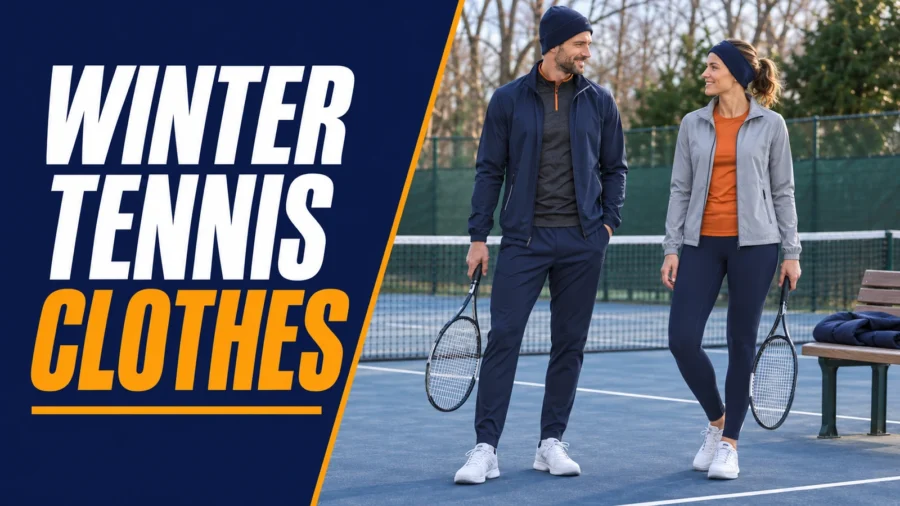
For cold-weather tennis, start with a comfortable moisture-managing base layer, add a light insulating top when needed, and carry a wind-resistant outer layer that you can remove easily. Pair that with tennis-friendly trousers or leggings, suitable court shoes and a warm layer for breaks. The aim is to stay comfortable through both rallies and pauses without restricting your swing.
There is no single outfit for every winter day. Wind, sunshine, dampness, activity level and your own tolerance matter alongside the thermometer. A brisk singles practice and a doubles session with long waits can require different clothes on the same court.
A Practical Winter Tennis Layering System
Think in functions rather than buying three heavy garments. The layer next to the skin handles perspiration, a middle layer adds insulation, and an outer shell reduces exposure to wind or rain. You may need only two while playing, with the third available nearby.
| Part of the outfit | What to look for | What to check on court |
|---|---|---|
| Base top | Comfortable moisture-managing fabric and unobtrusive seams | Does it stay in place through a serve? |
| Light middle layer | Enough warmth without bulky shoulders | Can you rotate and reach overhead freely? |
| Wind layer | Easy opening, secure cuffs and useful ventilation | Does it balloon or catch during the swing? |
| Trousers or leggings | Stretch through hips and knees | Can you lunge and retrieve a ball easily? |
| Break-time layer | More warmth than the playing top | Can you put it on quickly over the outfit? |
| Accessories | Secure hat, appropriate gloves and spare dry socks | Do they interfere with sight, grip or shoe fit? |
You do not need a different tennis wardrobe for every temperature. Start with useful pieces from your existing tennis equipment checklist and add the missing function, such as wind protection or a dry spare top.
Choose a Base Layer That Moves With Your Serve
A lightweight synthetic or merino-blend top is a practical starting point. Fabric construction and personal comfort matter, so choose something that handles perspiration without feeling abrasive against the skin. A heavy cotton sweatshirt is generally better kept for relaxed wear than used as the only layer through a sweaty winter session.
A base layer should not have to be extremely tight. Lift both arms, rotate into a backhand and reach for an overhead before deciding on the size. Check whether the hem pulls out, the underarms bind or the neckline presses against your throat.
Long sleeves are useful when you want coverage without wearing a jacket throughout the match. Short sleeves under a light zip top can be easier to adjust if you warm up quickly. Either arrangement is reasonable if the combined layers move comfortably.
Check the Layers Together
A top that fits well alone can become restrictive under a narrow jacket. Try the exact combination you intend to wear rather than judging each piece separately.
Watch for multiple seams stacked under the arms or a thick cuff trapped beneath another cuff. If removing one layer leaves you with an uncomfortable or unsuitable outfit, reconsider the combination before leaving home.
Jackets and Midlayers: Warmth Without Shoulder Bulk
A light stretch fleece or technical zip top can work well for warming up and for lower-intensity play. A full zip is convenient when you expect to remove the garment; a half zip provides some ventilation without opening the whole front.
For an exposed court, a wind-resistant shell may be more useful than adding another thick sweatshirt. Check the shoulders, upper back and elbows through a complete serve motion. Fabric that feels generous while standing can still tighten across the back during rotation.
A jacket should also stay reasonably quiet and controlled around the hands. Secure loose drawcords, choose cuffs that do not cover your grip, and avoid a hood that falls across your vision when you turn or look upward.
Keep the Heaviest Layer for Waiting
The jacket that makes the journey to the court comfortable may be excessive during continuous hitting. Keep a warmer layer accessible for longer breaks, waiting for a court or watching another match.
This is especially useful in doubles and coaching sessions, where activity can alternate with standing still. Do not leave the extra layer buried beneath your rackets if you expect to need it repeatedly.
Trousers, Leggings and Ball Storage
Choose bottoms that allow a wide split step and a deep sideways lunge. The waistband should remain secure when you bend, and the lower legs should not drag on the court or catch beneath a shoe.
Tennis trousers with usable ball pockets are often the simplest option. Test the pockets with an actual ball: an opening that works for a phone may be too narrow for a quick second-serve routine. Avoid filling pockets with keys or loose objects while playing.
Leggings are another practical option for both men and women. They can be worn alone where appropriate or beneath shorts, a skirt or a dress, provided the layers remain comfortable and the club’s clothing requirements are met.
The wider guide to women’s tennis outfit combinations can help with coordinating those pieces. For winter use, the main checks are movement, warmth and access to a spare ball.
Be Careful With Tight Layers Under Tight Layers
Combining compressive leggings, close-fitting shorts and a tight waistband can create an outfit that feels fine at home but uncomfortable during repeated lunges. More layers do not automatically create a better fit.
If you wear leggings under tennis shorts, check that the shorts still rotate freely over the hips. If you wear them under a skirt, make sure you can still use the intended ball pocket or storage method without pulling several layers aside.
Hands, Head and Feet
A close-fitting hat or ear warmer can add coverage without a bulky hood. Try it while looking up for a serve and turning quickly toward an imaginary ball. It should remain secure without slipping over the eyes.
Gloves need a separate racket-grip test. Thin gloves may feel manageable for some players, while others find that they alter handle feel too much. Practice serves, grip changes and two-handed shots before relying on them in a match.
Between games or longer breaks, you can use warmer gloves that would be impractical during rallies. Keep them dry and easy to reach rather than assuming fingerless gloves provide enough protection for every winter condition.
Keep Your Normal Court-Shoe Fit
Wear shoes appropriate for the playing surface. Winter clothing does not make boots or bulky everyday trainers suitable replacements for tennis footwear.
Check socks inside the actual shoes. Doubling thick socks can crowd the toes or change heel security, so start with one comfortable pair and keep a dry spare. If your feet become wet or uncomfortably cold, address the problem rather than adding layers until the shoe no longer fits.
Adjust Clothing as the Session Changes
An outfit is only useful if you can adjust it. During the early warm-up, notice whether you are becoming hot beneath the shell or whether wind is cutting through the top. Open a zip or remove a layer before the combination becomes excessively uncomfortable.
At a longer pause, put the warm layer back on promptly if you begin cooling down. After play, change a wet top and socks instead of wearing damp clothing through the journey home.
The best adjustment is not always removing an entire garment. Opening the jacket, changing a wet base layer or replacing a heavy top with a lighter one may work better than switching abruptly between too warm and too cold.
| Situation | Useful adjustment |
|---|---|
| Comfortable on arrival but hot after the warm-up | Open or remove the outer layer |
| Wind increases while you are still moving | Add the wind layer and reassess the insulation beneath it |
| Waiting for the next court or match | Put on the warmer break-time layer |
| Base layer becomes wet and you have a long pause | Change into a dry spare in a sheltered place |
| Session ends | Replace wet clothes before standing around or travelling |
Weather affects the ball and tactics too, but those changes are covered separately in adapting your tennis to the weather. Clothing decisions should begin with comfort and safe movement.
When Clothing Is Not Enough
Do not play on a court that is icy, slippery or otherwise unsafe. A warm outfit cannot restore traction, and a waterproof jacket does not make a wet surface suitable for tennis. Follow the venue’s closure and weather guidance.
Cold exposure also deserves attention before conditions become extreme. Being wet from rain or sweat can increase the risk of becoming dangerously chilled, even when the temperature is above freezing.
Stop and seek shelter if you become persistently cold, numb or unable to use your hands normally. Confusion, unusual drowsiness, slurred speech or loss of coordination can signal a medical emergency and require urgent help. People whose health conditions or medication affect cold tolerance should seek individualized advice about outdoor exercise.
What to Pack for a Winter Session
Keep the packing list short and useful:
- A dry base top and spare socks.
- A removable wind layer.
- A warmer jacket for breaks and the journey home.
- A secure hat or ear warmer and gloves suited to your needs.
- A separate place for wet clothing.
- Your usual water, towel and playing equipment.
If your present bag becomes cramped once a jacket is added, compare tennis bags with practical clothing storage. You need enough space to separate the dry spare from the wet outfit, rather than simply a larger advertised racket capacity.
After each session, note which layer you actually used and whether you finished dry, comfortable and able to move freely. That information is more useful for the next winter outing than a rigid outfit chart based only on temperature.