
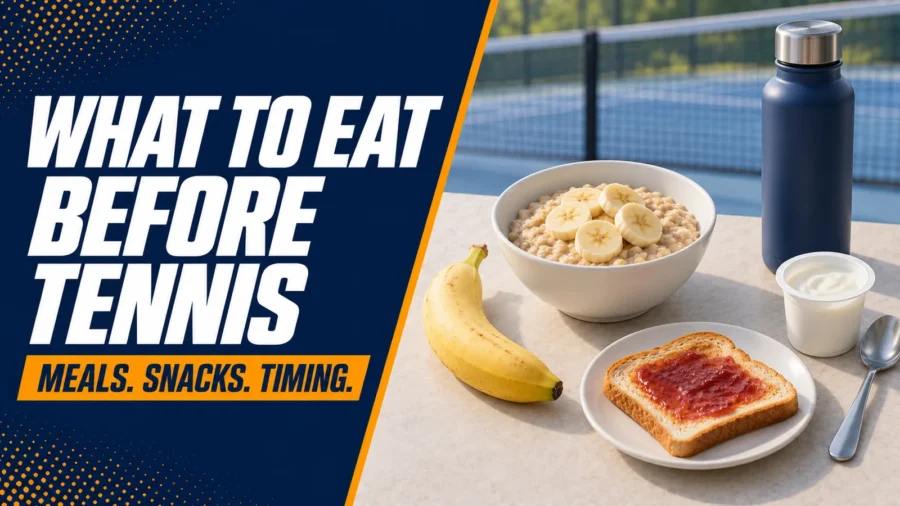
The most practical pre-match choice is a familiar, carbohydrate-rich meal eaten about three to four hours before play, with a moderate amount of protein and enough time to digest. When the match is closer, reduce the portion and choose a simple carbohydrate snack that you already know sits well.
There is no single perfect tennis meal. Body size, appetite, match duration, heat, nerves, food preferences and medical needs all change what is appropriate. The goal is to begin play fueled and comfortable, not full or distracted by hunger.
Pre-Match Food Timing at a Glance
| Time before play | Main goal | Practical approach |
|---|---|---|
| More than 4 hours | Eat a normal meal and leave room for a later top-up | Balanced meal with a substantial carbohydrate source, protein and familiar sides |
| 3 to 4 hours | Build the main pre-match meal | Carbohydrate-focused meal, moderate protein, familiar fluids and a comfortable portion |
| 1 to 2 hours | Top up without a heavy stomach | Smaller meal or snack with easily digested carbohydrate and limited heavy additions |
| 15 to 60 minutes | Address hunger or a late start | Small, familiar carbohydrate snack or drink if tolerated |
| Start time delayed | Maintain energy without repeatedly eating full meals | Use small planned snacks and reassess hunger as the schedule changes |
These are planning windows, not medical prescriptions. A player who digests slowly may need more time, while another may tolerate a light snack closer to the warm-up. Test the routine in training before relying on it in competition.
What a Pre-Match Meal Should Include
Carbohydrate is the main fuel emphasis before tennis. Rice, pasta, bread, oats, cereal, potatoes, fruit and similar foods can provide that base. The portion should reflect the player’s size, usual intake and expected demands rather than an arbitrary plate shared by everyone.
A moderate serving of protein can make a full meal more satisfying. Eggs, yogurt, milk, chicken, fish, tofu or another familiar option may fit, provided the total meal remains comfortable to digest.
Fat and fiber are important parts of an overall diet, but large amounts can slow digestion or aggravate gastrointestinal discomfort for some players when eaten close to exercise. There is no need to eliminate them completely. Adjust the amount and timing according to personal tolerance.
The broader Tennis Diet Guide: Boost Energy and Performance covers day-to-day nutrition. This page stays focused on the hours before a match.
What to Eat 3 to 4 Hours Before Tennis
With several hours available, choose a proper meal built around carbohydrate. Keep the ingredients familiar and avoid turning match day into a food experiment.
Suitable combinations may include:
- Rice with chicken or tofu and a portion of cooked vegetables
- Pasta with a light tomato-based sauce and a familiar lean protein
- Oatmeal with banana and yogurt or milk
- Toast or a bagel with eggs and fruit
- A turkey, cheese or hummus sandwich with fruit
- Potatoes with fish, eggs or tofu and a familiar side
These are templates rather than mandatory menus. A plant-based, gluten-free or dairy-free meal can work just as well when it provides suitable fuel and respects the player’s normal diet.
Choose a portion that leaves you satisfied rather than uncomfortably full. If the match could run long, the answer is not necessarily a much larger meal. A planned snack and an on-court fueling strategy are usually easier to manage than overeating before the warm-up.
What to Eat 1 to 2 Hours Before Tennis
When less digestion time remains, make the meal smaller and simpler. Foods that combine an accessible carbohydrate source with a modest amount of protein may work well if they are already familiar.
Options include:
- A banana with yogurt
- A small bowl of cereal with milk or a tolerated alternative
- Toast, a bagel or an English muffin with jam
- A small sandwich with a light filling
- A simple smoothie made from previously tested ingredients
- Crackers or pretzels with a small serving of yogurt or cheese
The closer the start, the more useful it is to limit very rich sauces, large amounts of oil, heavy fried foods and oversized portions. Players with sensitive stomachs may also prefer lower-fiber choices in this window.
Liquid food is not automatically better, but a familiar smoothie or sports drink can be easier to tolerate when nerves reduce appetite. Check the ingredients and portion beforehand. A dense smoothie containing large amounts of fat, fiber and protein can be as heavy as a solid meal.
What to Eat 15 to 60 Minutes Before Tennis
A small carbohydrate snack can help if you are hungry, the main meal was early or the schedule changed. This is a top-up, not an attempt to replace an entire meal immediately before play.
Common choices include:
- A banana or another tolerated fruit
- Applesauce or a fruit pouch
- A few pretzels or plain crackers
- A slice of toast with jam or honey
- A plain rice cake
- A small cereal bar with familiar ingredients
- A sports drink when it also fits the player’s hydration plan
Some sports foods provide compact carbohydrate, but they are not required for an ordinary match. Do not try a new gel, bar, supplement or highly caffeinated product for the first time just before competition.
Questions about supplements belong outside the basic pre-match meal. For example, Do Tennis Players Take Creatine? explains a separate long-term supplement topic rather than treating creatine as last-minute fuel.
Foods That May Be Harder to Tolerate Close to Play
No food is universally “bad,” and tolerance varies. The following choices are more likely to create problems when the portion is large or the match is close:
- Fried or very high-fat meals
- Large servings of high-fiber foods for players who are not used to them before exercise
- Very spicy foods when they trigger reflux or stomach upset
- Heavy cream sauces and rich desserts
- Large amounts of protein with little carbohydrate
- Unfamiliar foods, drinks or supplements
- Alcohol
Also consider food safety. Perishable meals should not sit unrefrigerated in a hot car or tennis bag. Use an insulated container and cold packs when appropriate, or select shelf-stable options for uncertain schedules.
Do Not Forget Hydration
Food and fluid planning are connected, but hydration needs vary widely with weather, sweat rate, match length and the individual. Arrive having drunk normally through the day, then use a practiced plan rather than forcing a large volume immediately before the start.
The complete Hydration Tips for Tennis Players guide covers fluids, electrolytes and individual sweat-related planning. In hot conditions, Tips for Training in the Heat adds preparation and cooling considerations that a food list cannot replace.
Drinking excessive plain water can also be unsafe, particularly during prolonged heavy sweating. Players with unusual thirst, recurrent heat problems, medical conditions or a history of fluid-balance issues need individualized advice from an appropriate health professional.
Pre-Match Meals for Different Start Times
Early-Morning Match
If a full breakfast feels too heavy, eat a smaller familiar meal after waking and prepare a portable carbohydrate snack for closer to the match. Oatmeal with banana, cereal with milk, toast with eggs, or a bagel with yogurt are practical starting points.
Do not introduce an unusually large breakfast simply because the match matters. Practice the early-start routine before tournament day, including the time needed to wake, eat, travel and warm up.
Afternoon Match
Eat a normal breakfast, then make lunch the main pre-match meal if it falls three to four hours before play. If lunch is earlier, add a small snack closer to the start.
An afternoon schedule can change quickly. Pack a backup snack so a delay does not force reliance on whatever happens to be available at the venue.
Evening Match
Use lunch and an afternoon meal or snack to avoid arriving overly hungry. A moderate carbohydrate-focused meal several hours before play is usually easier than a large dinner immediately before the warm-up.
After a late match, recovery food may still be needed, but that is separate from the pre-match decision.
What to Do When the Match Time Is Uncertain
Tournament schedules, rain and long preceding matches can move a start time. Build a flexible plan rather than eating the same full meal every time the estimated start changes.
Pack a small selection such as fruit, pretzels, crackers, a plain sandwich, cereal bars and an appropriate drink. Choose items that are familiar, easy to portion and safe to store.
When play is delayed:
- Check how long it has been since the main meal.
- Assess actual hunger and stomach comfort.
- Choose a small top-up if needed.
- Avoid repeatedly eating a full portion at every revised start time.
- Keep fluids available without overdrinking.
The same logic applies between matches. The shorter the turnaround, the smaller and easier to digest the food should generally be. A long break allows a more substantial meal.
If Nerves Make Eating Difficult
Competition anxiety can reduce appetite or make normally comfortable foods feel heavy. Smaller portions, bland familiar foods and a tested liquid option may be easier than forcing a large meal.
Start solving the problem during training sessions and lower-stakes matches. A sports dietitian can help when nausea, reflux, repeated gastrointestinal distress, unintentional weight change or persistent difficulty eating interferes with play.
A Simple Pre-Match Planning Checklist
Before leaving for the court, ask:
- When is the realistic start time, and could it move?
- When will the last full meal be eaten?
- Is the meal based mainly on familiar carbohydrate-rich foods?
- Is the portion comfortable for the available digestion time?
- Is a tested snack packed for delays or hunger?
- Can perishable food be kept at a safe temperature?
- Is there a separate fluid plan for the conditions?
- Have all new foods, drinks and supplements been kept away from match day?
The best plan is repeatable. Record what was eaten, when it was eaten and how the stomach felt during practice. Adjust one variable at a time rather than changing the entire routine before an important match.
Special Dietary and Medical Considerations
Players with diabetes, food allergies, celiac disease, gastrointestinal conditions, kidney or heart conditions, or prescribed dietary restrictions should not rely on a general tennis article for individualized timing or quantities. A registered dietitian or other qualified clinician can adapt the plan safely.
Junior players also have growth and development needs in addition to sport demands. Parents and coaches should avoid restrictive diets and supplement protocols without appropriately qualified guidance.
No pre-match meal guarantees performance or prevents cramps, fatigue or heat illness. Food is one part of preparation alongside training, sleep, pacing, hydration and environmental conditions.
Frequently Asked Questions
Is a banana good before a tennis match?
A banana is a practical carbohydrate-rich snack for many players, especially when the start is close. It is only a good choice if the player tolerates it and the portion fits the rest of the pre-match plan.
Is pasta good before tennis?
Pasta can form the carbohydrate base of a meal eaten several hours before play. Keep the serving comfortable and use a familiar sauce rather than assuming a very large bowl will provide better performance.
Should protein be included before a match?
A moderate amount can be included in a full meal. The meal should still emphasize carbohydrate, and a large protein-heavy portion close to play may be difficult for some players to digest.
Should tennis be played on an empty stomach?
Some people tolerate short training sessions with little food, but an important or potentially long match is not the ideal time to test that approach. Use a practiced routine that avoids both distracting hunger and uncomfortable fullness.
What should a player eat when the match starts in less than an hour?
Choose a small, familiar carbohydrate option such as fruit, applesauce, pretzels, toast or a tolerated sports drink. Avoid trying to fit a full meal into the final hour.
How much should be eaten before tennis?
There is no universal portion. Body size, appetite, the expected match, meal timing and individual tolerance all matter. Begin with a normal familiar portion in training and adjust based on comfort and performance, ideally with a sports dietitian when needs are complex.