
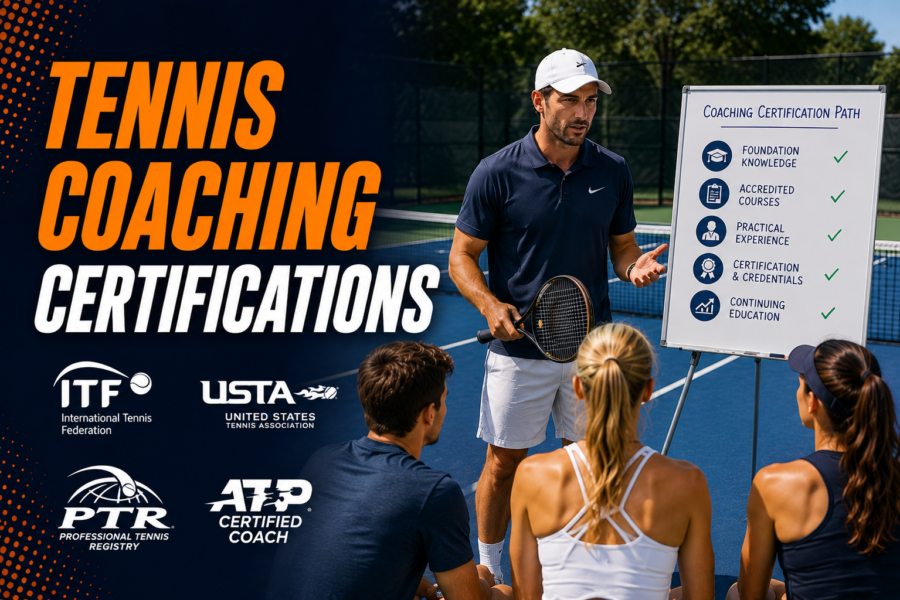
A tennis coaching certification shows that a coach has completed structured education in areas such as technique, lesson planning, communication, player development, safety, and practical coaching. Although requirements vary between countries and facilities, recognized qualifications can improve your credibility, employment opportunities, and ability to work independently.
There is no single worldwide certificate that every tennis coach must hold. Most coaches qualify through their national tennis association, while the International Tennis Federation supports and evaluates coach education systems around the world.
Do You Need a Tennis Coaching Certification?
Whether certification is mandatory depends on your country, employer, and coaching environment. A private coach working independently may face different requirements from someone coaching at an affiliated club, school, academy, or national development program.
Even when certification is not strictly required, clubs and clients may prefer qualified coaches because formal training demonstrates a basic level of professional competence. Certification may also provide access to insurance, coaching resources, professional development, and recognized career pathways.
Coaches working with children may need additional safeguarding education, background checks, first-aid training, and venue approval. For example, coaches leading sessions independently at LTA-registered venues must hold appropriate accreditation.
International Tennis Federation Certification
The International Tennis Federation provides coach education and certification support through its member national associations. Coaches normally access ITF-supported courses through their country’s tennis federation rather than applying directly to the ITF as an independent candidate.
The ITF pathway includes courses aimed at participation-level coaches, developing players, advanced competitors, and high-performance tennis. Coaches who complete ITF education programs receive certification through the relevant national association. Access to certification courses may require endorsement from that association.
The ITF also recognizes national coach education systems that meet its minimum standards. This helps countries develop qualifications that remain locally relevant while following an internationally recognized framework.
International Tennis Federation coaching pathway.
ITF Coach Education Programme and certification levels.
USTA Coaching Certification
In the United States, USTA Coaching offers a professional development and certification pathway for coaches. Its current structure includes three levels:
| Certification | General Purpose |
|---|---|
| USTA Coaching Professional | Establishes a strong coaching foundation |
| USTA Coaching Specialist | Develops expertise with specific players or age groups |
| USTA Coaching Master | Represents the highest level of coaching expertise |
The Professional level is designed to confirm essential coaching skills, while Specialist education allows coaches to focus on areas such as player development or particular coaching populations. Master certification is intended for experienced coaches seeking the highest level of recognition within the pathway.
USTA Coaching Professional requirements.
USTA Coaching certification pathway.
LTA Tennis Coaching Qualifications
The Lawn Tennis Association operates a five-level coaching pathway in Great Britain. Coaches can progress from assisting qualified professionals to independently managing programs and working with high-performance players.
| Level | Qualification |
|---|---|
| Level 1 | LTA Assistant |
| Level 2 | LTA Instructor |
| Level 3 | LTA Tennis Coach |
| Level 4 | Senior Coach or Senior Performance Coach |
| Level 5 | Performance Coaching Pro |
Level 1 introduces basic coaching support, while Level 2 prepares coaches to lead group sessions. Level 3 is the main professional coach qualification and prepares candidates to coach independently. Levels 4 and 5 are aimed at advanced coaches, program leaders, and professionals working within performance pathways.
LTA Tennis Coach qualification
LTA coaching qualification pathway
Tennis Australia Coaching Qualifications
Tennis Australia offers a progressive education pathway that begins with entry-level participation training and continues into development, club professional, performance, and business-focused education. Its courses are recognized by the ITF and are designed to support coaches throughout different stages of their careers.
New coaches can begin with introductory or participation courses before progressing toward qualifications that prepare them to lead programs independently. More advanced courses focus on club coaching, player development, performance tennis, and the management of coaching businesses.
Tennis Australia coaching career pathway
What Does a Certification Course Include?
Course content differs between organizations, but most recognized qualifications cover similar core areas:
- Technical and tactical development
- Lesson planning and organization
- Communication and feedback
- Group and individual coaching
- Player assessment
- Junior development
- Safety and risk management
- Professional conduct
- Practical coaching assessments
Advanced qualifications may also cover performance planning, sports science, tournament preparation, leadership, mentoring, and coaching-business management.
How to Choose the Right Certification
Start with the pathway recognized by the national governing body in the country where you plan to work. This is usually the simplest route into local clubs, academies, schools, and professional development programs.
Choose a qualification that matches the type of coaching you want to provide. An entry-level course may be enough to assist with beginner groups, but independent coaching, junior program management, and competitive player development usually require more advanced education.
Before enrolling, check the course prerequisites, assessment process, total cost, practical experience requirements, safeguarding rules, insurance benefits, and whether the qualification is accepted by local venues.
Can Overseas Qualifications Be Transferred?
Some governing bodies recognize equivalent qualifications earned in other countries, but the process is not always automatic. Coaches may need to provide certificates, complete an assessment, attend additional training, or meet local safeguarding and accreditation requirements.
The LTA, for example, provides a pathway for coaches with overseas or non-LTA qualifications who want to join its system or professional accreditation scheme.
Final Thoughts
A tennis coaching certification gives you more than a document. It provides structured teaching knowledge, practical experience, professional credibility, and a clearer route into clubs, academies, schools, and private coaching.
The best qualification depends on where you live and the players you want to coach. Begin with your national tennis association, complete the appropriate entry-level course, and continue developing as your responsibilities and career goals grow.