
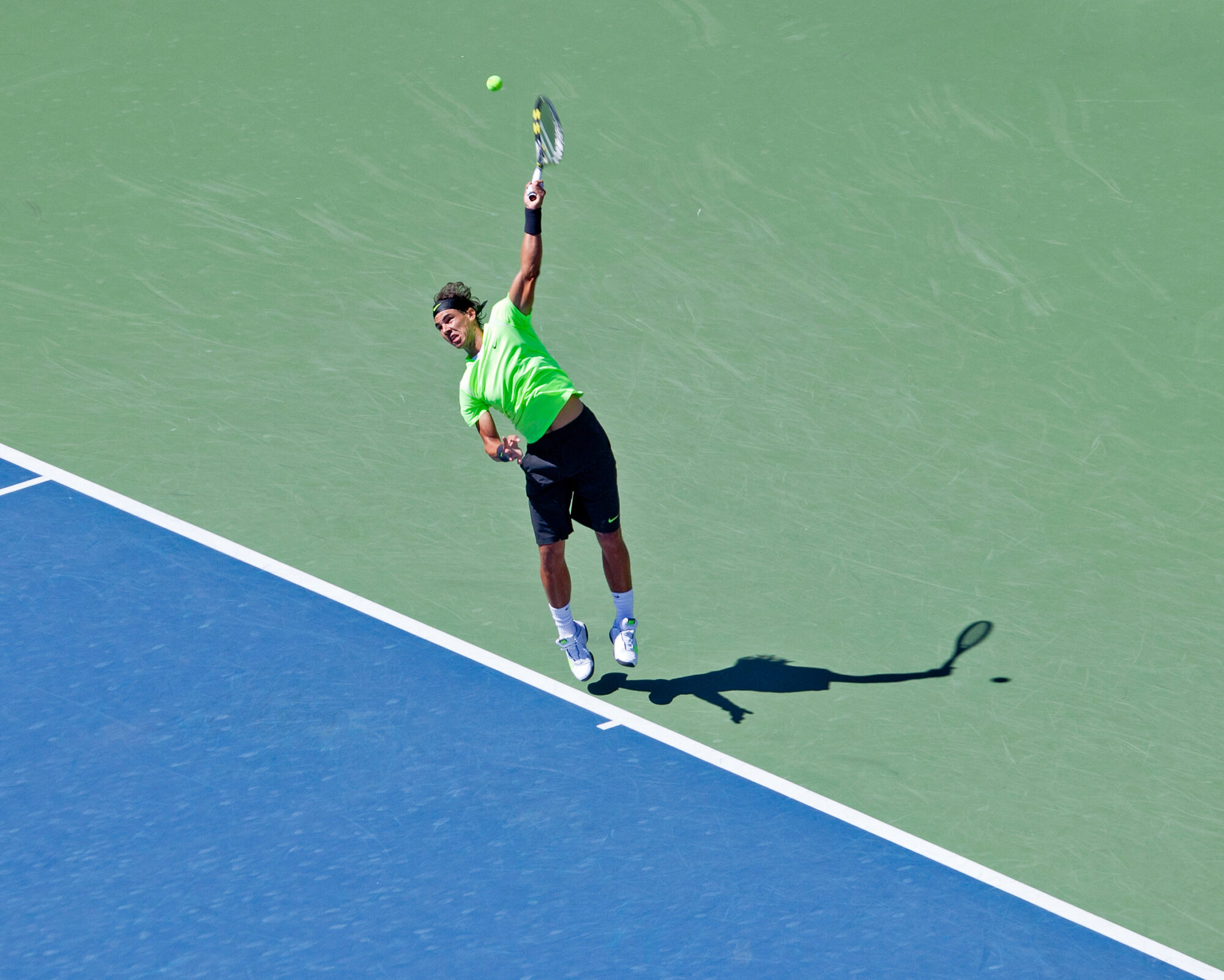
In tennis, the serve is undoubtedly the most important shot, as every point begins with one player serving and the other returning. If you want to put pressure on your opponent, a powerful and accurate serve can completely transform your game. That is the good news. The bad news is that the serve is one of the most demanding and technically difficult shots, not only in tennis but in sports in general.
An effective serve does not rely only on power and coordination. It also requires solid technique, proper body alignment, good understanding of the game, and consistency. In simple terms, serving in tennis is not easy, and it is completely normal for new players to feel frustrated when it is time to practice their serve.
Fortunately, there is a solution. Below are the key steps which, if followed correctly, can turn your serve into one of the strongest weapons in your game.
Grip for the Serve
The correct serve grip is extremely important. Coaches should introduce the proper grip as early as possible to new players and correct any incorrect grip in more experienced players as soon as they notice it.
The correct grip for most serves is the continental grip, also known as the hammer grip. Any other grip on the serve places unnecessary stress on the shoulder, elbow, and wrist.
Embed from Getty ImagesPreparation and stance
For the serve, it is essential to use an open stance for balance and to stand sideways to the net rather than facing it directly. This positioning allows you to use torso rotation later in the motion, which is key to generating an effective and powerful serve.
Arm position
Once the correct stance is established, the next step is arm positioning. For beginners, it is recommended to start with the racket arm positioned behind the head, with the racket head pointing toward the back of the head.
This setup helps ensure that the body is properly turned sideways, allowing for effective torso rotation during the serve.
Ball toss
Next comes the ball toss, a crucial part of the serve. The toss should be in line with your body, not too far to the left or right, and slightly in front of you for most serves. This allows you to move into the ball and land slightly inside the baseline after contact.
Embed from Getty ImagesContact point
After tossing the ball, you prepare to strike the serve. Because of the continental grip, just before reaching the contact point you must rotate your wrist forward so that you hit the ball from behind. If this rotation does not happen, the racket will brush the ball from the side, and the serve will turn into more of a slice serve.
Embed from Getty ImagesFollow-through
After contact, as the racket comes down due to torso rotation, it should finish near the opposite leg. This finishing motion resembles a bow and is a natural result of correct body rotation.
Embed from Getty ImagesAfter every serve, it is very important to return to the center mark and be ready for the next shot.
Read more on tennis technique.