
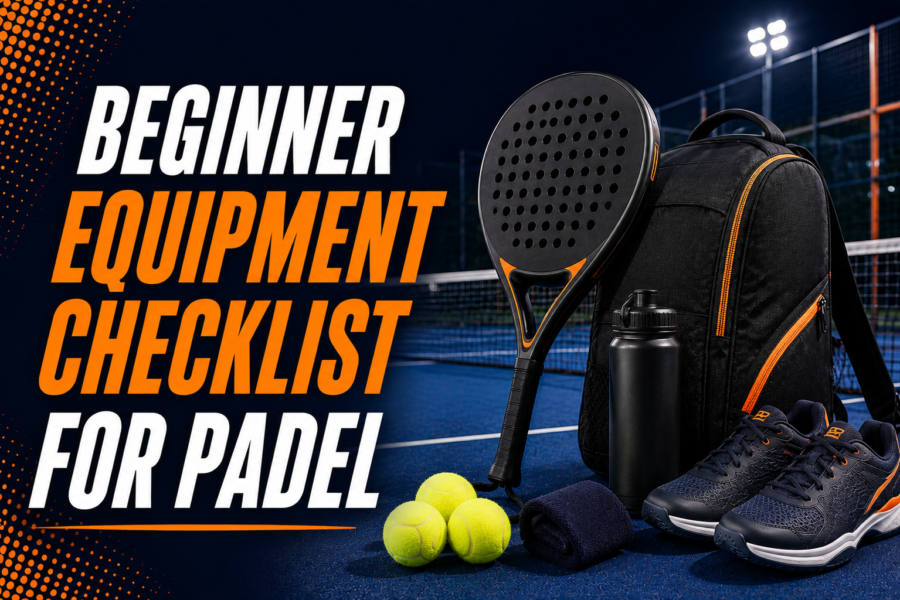
Starting padel does not require a huge collection of equipment. Most beginners only need a suitable padel racket, padel balls, supportive court shoes, comfortable sports clothing, and a few basic accessories.
Choosing the right equipment can make learning easier, improve comfort, and reduce the risk of injury. This beginner padel equipment checklist explains what you need for your first lessons and which optional items can be added later.
Beginner Padel Equipment at a Glance
| Equipment | Essential? | Main Purpose |
|---|---|---|
| Padel racket | Yes | Hitting and controlling the ball |
| Padel balls | Yes | Practice and match play |
| Padel shoes | Yes | Grip, support, and safe movement |
| Sports clothing | Yes | Comfort and freedom of movement |
| Water bottle | Yes | Hydration |
| Overgrip | Recommended | Improving handle grip and comfort |
| Padel bag | Optional | Carrying and protecting equipment |
| Hat or visor | Optional | Sun protection |
| Sweatbands | Optional | Managing sweat |
| Sunscreen | Optional | Protecting exposed skin outdoors |
| Racket protector | Optional | Protecting the frame from damage |
Padel Racket
The padel racket is the most important piece of equipment. Beginners should usually choose a racket that is comfortable, easy to maneuver, and forgiving when contact is not perfectly centered.
Round padel rackets are often the best option for new players because they normally have a larger central sweet spot and lower balance. This makes them easier to control than diamond-shaped rackets, which are usually designed for experienced players seeking more power.
A soft or medium-soft core can also provide additional comfort and help generate depth without requiring a fast swing. Fiberglass faces are common in beginner rackets because they tend to feel softer and more flexible than stiff carbon constructions.
Avoid choosing the heaviest or most powerful racket available. A beginner-friendly racket should feel stable but should not be difficult to move during volleys, defensive shots, or quick exchanges near the net.
Padel Balls
Padel balls look similar to tennis balls, but they are designed specifically for padel. They normally have slightly lower internal pressure, which creates a different bounce and playing speed.
Beginners should use proper padel balls rather than assuming that any tennis ball will provide the same experience. A standard can usually contains three balls, which is enough for a recreational match but may be limiting during a practice session.
Balls gradually lose pressure after the container is opened. Replace them when they become noticeably soft, bounce inconsistently, or make rallies feel unusually slow.
Padel Shoes
Padel requires quick lateral movement, sudden stops, turns, and short sprints. Proper court shoes provide the grip and support needed to move safely on artificial turf and sandy padel surfaces.
Running shoes are designed mainly for forward movement and may not offer enough lateral stability. Their grip can also be unsuitable for padel courts, increasing the risk of slipping or becoming stuck during a change of direction.
Padel-specific shoes are ideal, but some clay-court tennis shoes can also work well because their outsole patterns provide controlled traction on sandy artificial surfaces. Choose shoes that fit securely without squeezing the toes or allowing the heel to move excessively.
Comfortable Sports Clothing
You do not need specialized padel clothing to start playing. Breathable sportswear that allows unrestricted movement is enough for beginner lessons and recreational matches.
A lightweight shirt with shorts, a skirt, or athletic trousers will work well. Avoid heavy fabrics and restrictive clothing that makes it difficult to reach, rotate, or move quickly around the court.
Outdoor conditions should influence what you wear. Light layers can help during cooler sessions, while breathable materials are especially important in hot weather. Women may also benefit from a supportive sports bra during training.
Sports Socks
Comfortable sports socks can reduce friction and provide cushioning inside your shoes. Choose moisture-wicking socks that stay in place during lateral movement.
Thin everyday socks may become uncomfortable during long sessions or cause blisters. A slightly thicker sports sock can provide additional protection, especially when wearing new court shoes.
Water Bottle
Padel can become physically demanding because of the repeated movement, long rallies, and enclosed court environment. Bring a reusable water bottle and take regular breaks to stay hydrated.
Outdoor courts can become particularly hot because the glass walls may reduce airflow. An electrolyte drink may also be useful during longer sessions or warm conditions, but water is sufficient for most beginner lessons.
Overgrips
An overgrip is wrapped around the racket handle to improve comfort, absorb sweat, and create a more secure grip. Most players use one or more overgrips depending on their hand size and preferred handle thickness.
Replace the overgrip when it becomes dirty, slippery, or damaged. Overgrips are inexpensive and can make a significant difference to racket control, especially during hot sessions when your hands become sweaty.
Racket Safety Cord
Padel rackets include a safety cord attached to the handle. Players must place this cord around the wrist before playing so that the racket cannot fly out of the hand during a swing.
The cord should feel secure without being uncomfortably tight. Check it regularly for wear or damage, especially if you play frequently.
Padel Bag
A padel bag is optional for beginners, but it becomes useful once you start carrying shoes, balls, clothing, water, and accessories. Padel-specific bags usually include a shaped compartment that protects the racket during transportation.
A normal sports backpack is perfectly suitable for your first sessions. Upgrade to a dedicated padel bag when you begin playing more often or carrying multiple rackets.
Racket Protector
A racket protector is a strip placed around the top of the frame. It helps reduce cosmetic damage when the racket contacts the glass, fencing, or court surface.
Protectors are not essential, and adding one can slightly change the weight and balance of the racket. However, beginners who frequently make contact with the court or glass may find one useful.
Sun Protection
For outdoor padel, consider bringing sunscreen, sunglasses, and a hat or visor. Apply sunscreen before playing and choose a product that remains effective during exercise and sweating.
Sunglasses should fit securely and provide clear vision without moving during rallies. Some players prefer not to wear them because of reflections from the glass, so test them during practice before relying on them in matches.
Optional Padel Accessories
A small towel can help manage sweat during warm sessions, while wristbands may prevent moisture from reaching your hands. Players may also carry spare overgrips, blister tape, a first-aid kit, and an extra shirt.
As you improve, you might add training accessories such as cones, target markers, resistance bands, or a phone tripod for recording your technique. These items can support practice but are not necessary for your first lessons.
What Beginners Do Not Need
New players do not need several expensive rackets, professional-level shoes, advanced performance technology, or a large collection of accessories. Buying too much equipment before understanding your preferences can lead to unnecessary spending.
Start with a forgiving racket, proper shoes, padel balls, comfortable clothing, and water. Your ideal racket shape, balance, weight, and materials will become clearer as you gain experience and develop your playing style.
Final Thoughts
A beginner padel setup can remain simple and affordable. The essential items are a comfortable padel racket, proper padel balls, supportive court shoes, breathable clothing, sports socks, and a water bottle.
An overgrip is also highly recommended, while a padel bag, frame protector, hat, sunscreen, and other accessories can be added when needed. Prioritize comfort, safety, and ease of use rather than choosing equipment based only on appearance, price, or what advanced players use.