
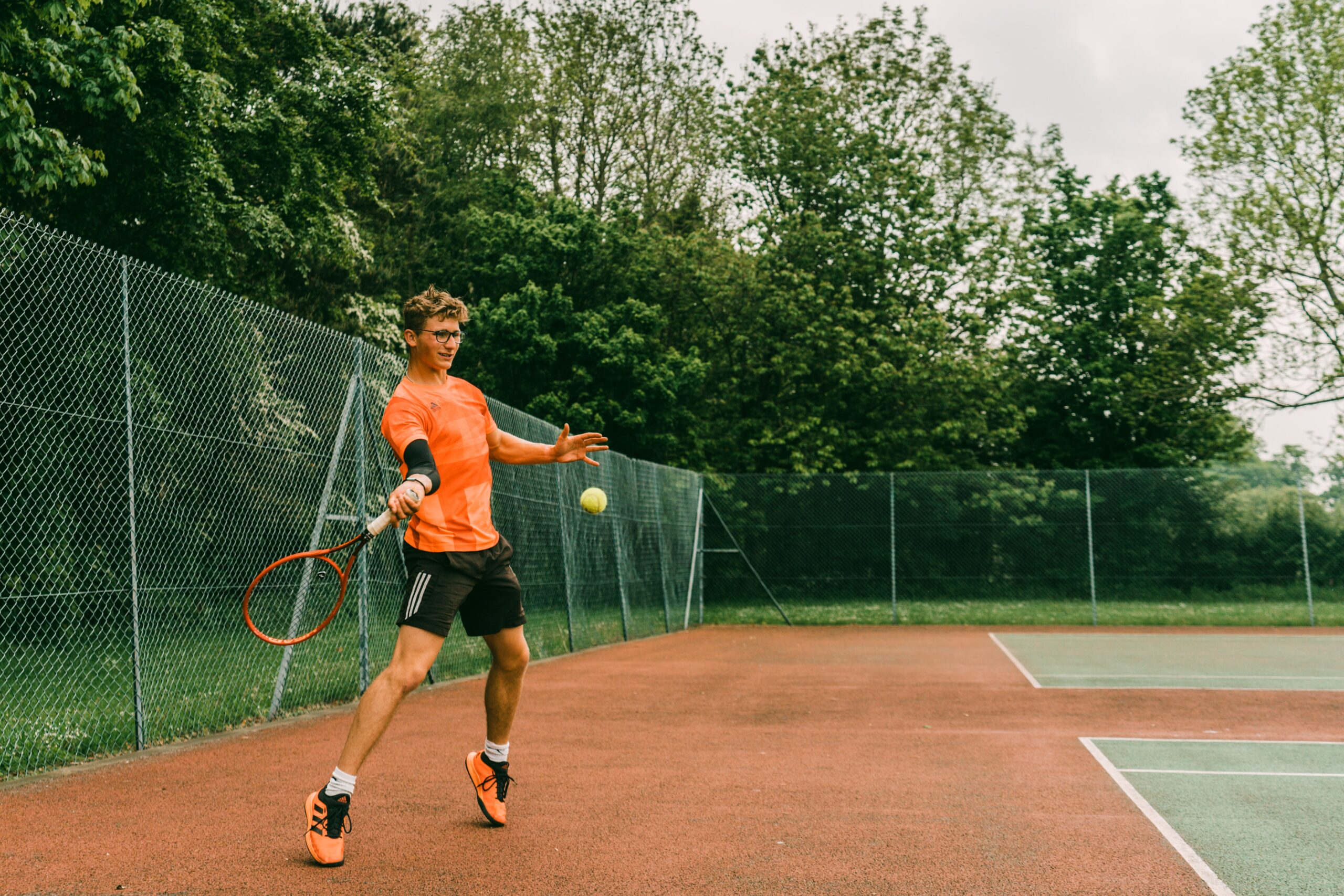
The forehand is considered by many players to be the strongest and most effective groundstroke compared to the backhand. We have already talked about forehand technique, so let’s now look at the five most common mistakes players make on the forehand that can hold their game back.
1. “Wrong” forehand grip
Although we do not believe there is a grip that is completely wrong, since there will always be players who succeed with unconventional techniques, grip choice is very often the main issue. We recommend the Eastern forehand grip, also known as the “pan” grip. Any other grip significantly changes where and how you need to make contact with the ball, and even advanced players can struggle to control the shot consistently.
2. The non-dominant hand is not pointing at the ball
When you turn your body and prepare to hit a forehand, it is important that your non-dominant hand (left hand for right-handed players) points toward the ball. This helps maintain balance. Since your dominant arm moves back during preparation, having the opposite arm in front of you keeps your body stable and well aligned.
3. Poor contact point on the forehand
This mistake often comes from using a non-optimal grip. For example, if you hit your forehand with a continental grip, it feels more natural to make contact closer to your body. If you try to contact the ball further in front with that grip, the shot will often go out. With an Eastern forehand grip, the correct contact point should be on the hitting side of your body and slightly in front.
4. Excessive low-to-high motion for topspin
We have already discussed how to add topspin to your shots, but an exaggerated low-to-high swing only adds spin without sufficient forward drive. The upward motion should continue naturally into the follow-through above the shoulder. In addition, if you aim to play with heavy topspin, proper footwork is essential. You must move toward the ball to give it the forward momentum it needs.
5. Poor follow-through
The follow-through of any tennis stroke, whether forehand or backhand, is one of the most important parts of the shot and should never be ignored. On the forehand, the follow-through should be completed fully. In most cases, this means finishing with the racket wrapping around and ending above the opposite shoulder.