
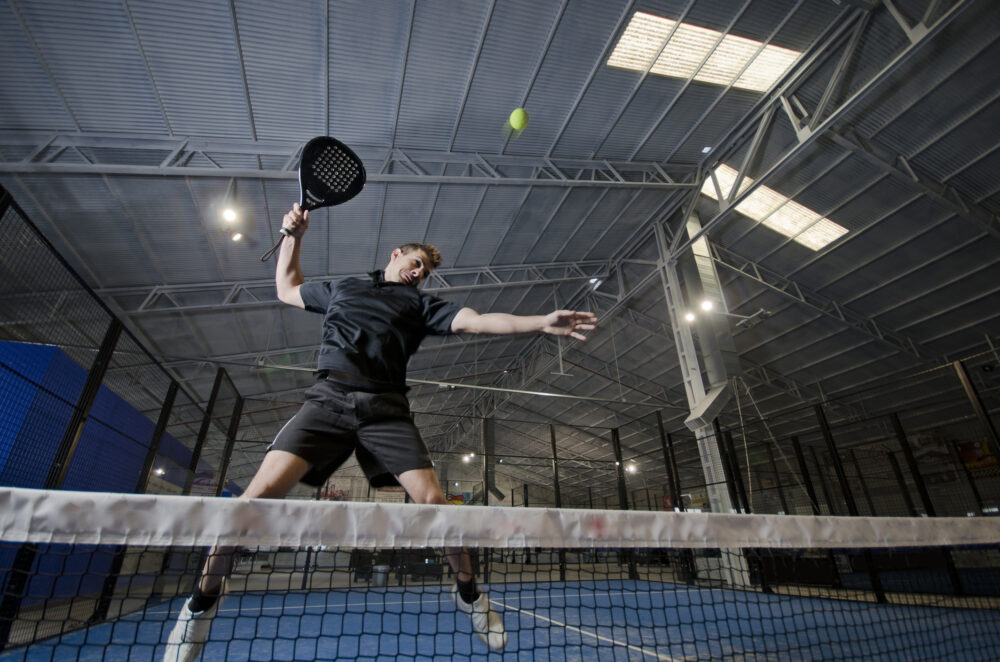
In recent years, padel has skyrocketed in popularity, attracting players of all ages and experience levels.
Tennis, on the other hand, remains a timeless sport that pushes the limits of endurance and technical skill. Both promise intense action, strategy, and adrenaline, but a common question often arises: which of the two is truly more demanding?
In this article, we compare padel and tennis on a physical, technical, and psychological level to help you discover which one best matches your abilities and ambitions.
Physical Demands in Tennis and Padel
Court size and game pace play a key role in determining the physical demands of each sport. In padel, players move within a smaller area but constantly change direction, performing explosive bursts of speed and reacting quickly near the net. Tennis requires longer sprints, more powerful strokes, and greater endurance for extended rallies—especially on clay courts.
In both sports, physical fitness is crucial, but padel places more emphasis on explosiveness and agility, while tennis is dominated by endurance and strength.
Differences in Technical Skills Between Tennis and Padel
In padel, players take advantage of the walls, using angles and rebounds to surprise their opponents. Success depends on precision, patience, and the ability to place the ball strategically rather than relying solely on power.
In tennis, technical skill demands strong and varied strokes, rapid adaptation to different ball speeds and trajectories, and a serve that can decide entire points. While padel rewards creativity and tactical thinking in a confined space, tennis tests a player’s ability to execute high-intensity shots on a much larger court.
Injuries and Physical Strain
Each sport carries its own injury risks. In padel, players mainly stress the knees, shoulders, and elbows due to constant changes of direction and repetitive close-range shots. Ankle injuries are also common because of explosive movements.
In tennis, longer distances and high-intensity strokes place heavy strain on the elbow, shoulder, and lower back, while rotations and sprints increase the risk of knee issues. In both sports, proper warm-ups, strength training, and post-training recovery significantly reduce the risk of injury and help extend an athlete’s playing career.
Conclusion
Both sports challenge athletes, but in different ways. Padel demands quick thinking, explosiveness, and teamwork in a limited space, while tennis requires endurance, power, and high technical precision on a larger court. There is no single sport that is objectively more demanding; the right choice depends on your personality, physical condition, and playing style.
The best way to decide is to try both, experience the unique intensity each one offers, and choose the sport that inspires you to give your very best.